Organ Donation Registration in Belgium: Opt-Out vs Opt-In Rules
Moving to Belgium involves navigating a labyrinth of administrative rules that often feel overwhelming, especially when it comes to personal health decisions. I remember my first visit to the commune when I was asked about my status on the national registry and felt completely caught off guard. This guide clarifies Belgium's organ donation laws to ensure your wishes are respected.
Understanding the Presumed Consent Law in Belgium
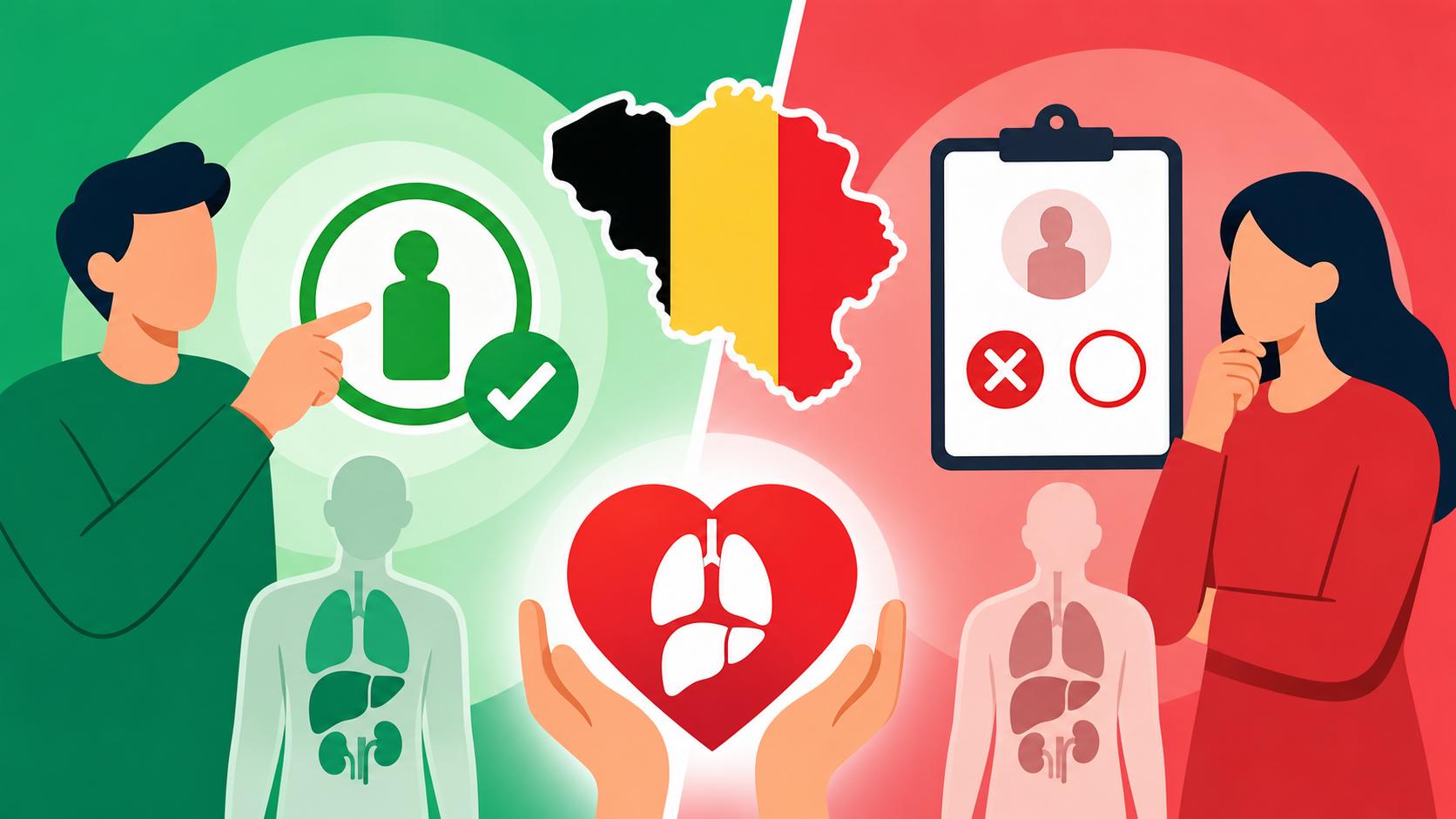
In Belgium, the legal approach to organ donation is fundamentally different from many other countries, particularly the United States or the United Kingdom. Belgium operates under a system of presumed consent, also known as an opt-out system. This means that by law, every citizen and every person who has been registered in the National Register for at least six months is considered a potential donor after their death, unless they have explicitly stated otherwise.
This system was established by the Law of 13 June 1986 and has been refined over the decades to make Belgium one of the world leaders in successful organ transplants. For an expat, this can be a bit of a shock. Back home, you might have had to check a box on your driver’s license application to "opt-in." Here, the silence of the individual is legally interpreted as a "yes." It is vital to understand that this law applies to you once you are officially a resident. If you have already gone through the process of Registering for Public Health Insurance: Step-by-Step at Your Commune, you are likely already part of this national registry.
However, "presumed" does not mean "mandatory." The Belgian system is deeply rooted in the principle of solidarity, but it also respects individual autonomy. If you have strong personal, religious, or philosophical objections to organ donation, the state provides a clear and accessible way to record that objection. Conversely, if you are a passionate supporter of donation, you can also register an "explicit consent." While the law presumes consent, having an explicit "yes" on file provides absolute legal certainty and relieves your grieving family of the burden of making a decision during a traumatic time.
Who is Covered by the Opt-Out Rules
The law applies to anyone who is entered in the National Register. This includes Belgian nationals and foreign residents who have their primary residence in Belgium. If you are an expat living in Brussels, Antwerp, or Ghent on a long-term visa, you fall under these rules. Generally, the law "kicks in" after you have been registered for six months. This timeframe is designed to ensure that you have had enough time to integrate and understand the local regulations.
For those who are just arriving, you might still be navigating the Medical Emergency Checklist for Your First 30 Days in Belgium. During this initial period, if something were to happen, the medical team would look to your family for guidance. However, once that six-month mark passes, the legal presumption shifts. It is also important to note that minors are covered under different rules; their legal representatives (usually parents) must express consent or opposition. Once a child turns 18, they can register their own decision at the commune, just like any other adult.
The Distinction Between Transplant and Research
When you look at the registration forms, you will notice that "organ donation" is actually split into several categories. This is a level of detail that many expats find surprising. In Belgium, you aren't just saying yes or no to a heart transplant; you are potentially making decisions about four distinct areas:
- Organ donation for transplantation into another human being.
- The removal of tissues and cells (like skin, corneas, or heart valves) for transplantation.
- The removal of organs and tissues for the development of new medications or therapies.
- The removal of organs and tissues for scientific research (not involving the development of medication).
Most people are comfortable with the first category but may have different feelings about the third or fourth. The Belgian system allows you to be specific. You can opt-in for transplants but opt-out of scientific research. This granularity is a testament to the system's respect for the donor’s intent. While maintaining your health with products from iHerb or following a strict wellness routine is great for your living years, these legal designations determine your legacy.
How to Register Your Decision at the Commune
If you want to move beyond the "presumption" and make your wishes official, the most common way to do so is at your local town hall, known as the commune in French-speaking areas or the stadhuis in Flanders. This is the same place where you go to update your address or renew your eID card. When I first went to register my decision, I was nervous about the language barrier, but I found that the administrative officers are quite used to this request.
You simply need to ask for the "declaration of health preferences" form. You will need to show your Belgian eID card. The officer will pull up your file on the National Register and record your choices across the four categories mentioned earlier. Once registered, this information is encrypted and only accessible by authorized medical personnel in the event of your death. It is a quick process, and you receive a paper confirmation of your registration. If you are still in the process of Choosing Your First GP (General Practitioner) in Belgium, you can also discuss this with them; while they cannot register the decision for you, they can provide the medical context you might need to make an informed choice.
Managing Your Preferences via MyHealth.belgium.be
Belgium is more digital than ever. If you prefer to avoid the queue at the commune, you can manage your organ donation status entirely online. This is done through the federal health portal. To access this, you will need your eID and a card reader, or more conveniently, the Itsme app. We often tell newcomers that setting up Itsme should be their top priority, right alongside finding Healthcare in Belgium for Expats: Complete System Overview (2027).
Once logged in to the portal, you can find a dedicated section for "Organ Donation." The interface is usually available in French, Dutch, and German, and occasionally English. You can check your current status—which will likely show the "presumed consent" if you haven't registered before—and update it in real-time. This digital record is what hospitals check first. If you decide to change your mind five years down the line, you don't need to go back to the commune; you can simply log in and update your preferences. For more details on navigating this platform, check out our MyHealth.belgium.be Guide: Accessing Your Medical Records Online.
What if You Do Not Have an eID Yet
If you are an expat who has just arrived and is waiting for your plastic residency card—perhaps you are currently holding an Annex 15 (Annexe 15/Bijlage 15) and Can You Work With It—you can still express your wishes. While you might not be able to use the online portal without a national registry number and a digital ID, you can still visit the commune with your passport and your temporary registration documents.
In some cases, you can also have your decision recorded by your GP. Under Belgian law, doctors have the right to enter this information into the registry on behalf of their patients, provided the patient signs a specific document. This is often the best route for those who find the commune atmosphere a bit too bureaucratic. It is also a good time to ensure your Mutuelle and Ziekenfonds: Public Health Insurance Registration Guide is fully sorted, as your medical and administrative identities are closely linked in Belgium.
| Registration Method | Convenience Level | Speed | Requirements |
|---|---|---|---|
| Local Commune / Stadhuis | Medium | Immediate | Belgian eID or Passport |
| MyHealth.belgium.be | High | Real-time | Itsme or eID Card Reader |
| General Practitioner (GP) | High | During Consult | Signed Consent Form |
| No Registration | N/A | Presumed Consent | 6 Months Residency |
The Role of the Family and Ethical Considerations
One of the biggest misconceptions about the Belgian system is that the state "takes" organs regardless of what the family says. While the law technically allows for this under the presumed consent rule, the reality in Belgian hospitals is much more empathetic. In practice, if you have not registered an explicit "yes" or "no," the medical team will always sit down with the next of kin.
The family has a "right of opposition" if the deceased has not expressed a personal wish. This means if your family knows you were against donation but you never got around to registering it, they can tell the doctors, and the donation will generally not proceed. This is why it is so important for expats to talk to their families back home. If your relatives are in another country and don't understand how Belgian law works, they might be confused or distressed if they are contacted by a Belgian hospital. Ensuring you have a solid Private Health Insurance in Belgium: When Do Expats Really Need It? like Cigna Global can also provide peace of mind for your family, as these providers often assist with the logistics and communication hurdles that arise during medical crises.
Family Veto Rights and Explicit Consent
If you feel strongly about being a donor, registering an "explicit consent" is the greatest gift you can give your family. When an explicit "yes" is recorded in the National Register, the family no longer has a legal right to veto the decision. This removes the "guilt" or the agonizing weight of decision-making from their shoulders during their first few hours of grief. The medical team can simply show them the registry record, proving that this was your choice.
Conversely, if you register an "explicit opposition" (a "no"), the medical team is legally forbidden from proceeding. No one, not even a spouse or a parent, can override your registered "no." This legal clarity is one of the strengths of the Belgian system. It ensures that your bodily integrity is respected according to your own values, rather than the shifting opinions of others.
Dealing with Non-Resident Status
What happens if you are in Belgium as a tourist or on a short-term contract of less than six months? In these cases, the presumed consent law does not apply to you. If a tragedy occurs, the rules of your home country are generally considered, or the decision is left entirely to your next of kin. This is why we always recommend that visitors carry a donor card or have their preferences clearly marked in their smartphone's "Emergency Medical ID" section.
If you are a frequent traveler or a "digital nomad" who isn't officially registered in the National Register, you should make sure you have the contact info for Emergency Numbers: Calling 112 in Belgium and What to Expect saved. Belgian emergency responders are highly trained and will look for any indication of your wishes, even if you aren't in their local database.
Practical Tips for Expats Navigating Belgian Healthcare
Navigating the Belgian medical system can feel like a full-time job. Beyond organ donation, you have to worry about reimbursements, specialists, and even the language used in the pharmacy. One thing I've learned is that being proactive saves a lot of heartache. When you go for your first check-up, bring up the topic of the national registry with your doctor. They can explain the nuances of how Finding Medical Care in Belgium: GPs, Specialists, and Hospitals works in your specific region, whether you're in the French-speaking South or the Flemish North.
I also recommend keeping a folder—physical or digital—with all your Belgian administrative details. This should include your mutuelle stickers, your GP's contact info, and a copy of your organ donation registration. If you are managing chronic health issues and use supplements or specialized care, having those records clear is vital. Many expats find that iHerb is a reliable way to get familiar products while they adapt to the Belgian pharmacy system, but remember that anything related to "official" health records must go through the Belgian state portals.
Preparing for Emergencies
The best time to handle these administrative tasks is when you are healthy and calm. I've seen too many fellow expats wait until they have a health scare to look into their insurance or their legal status. If you haven't already, take a Saturday morning to sit down with your laptop, your eID reader, and the Itsme app. Check your status on MyHealth.belgium.be. It takes less than ten minutes to ensure that your preferences regarding organ and tissue donation are accurately recorded.
While you are at it, make sure your family knows where you stand. Even with the best legal system in the world, communication is the key to preventing trauma. If you have international health coverage through Cigna Global, make sure your emergency contacts are updated in their system as well. They can often act as a bridge between the Belgian hospital and your family abroad.
Integrating Donation with Your Overall Health Plan
Think of organ donation registration as a part of your broader "Belgian life" checklist. Just as you eventually figure out the confusing garbage sorting rules or the train schedules, you should figure out your medical footprint. Belgium's healthcare system is one of the best in Europe, and being a part of the donation registry is a way of participating in that community of care.
Whether you choose to be a donor or not, taking control of that decision is an empowering step in your expat journey. It moves you from being a "presumed" participant to an active, informed resident of your new home.
Healthcare Budgeting and Administrative Clarity
Finally, it is worth noting that there is no cost associated with organ donation or registration. Some expats worry that "opting in" might lead to higher medical bills or different treatment in an emergency. This is a myth. In Belgium, the teams responsible for organ transplants are entirely separate from the teams providing life-saving care. Your medical team will do everything in their power to save your life, regardless of your donor status.
In fact, the administrative side of healthcare in Belgium is generally designed to be as low-cost as possible for the user. If you are concerned about medical costs in general, you should look into Healthcare Budgeting: Copays, DMG/GMD, and Reimbursements to see how the system protects you from high out-of-pocket expenses.
Disclaimer
This article is intended for informational purposes only and does not constitute legal or medical advice. Belgian laws and administrative procedures are subject to change. For specific legal questions regarding organ donation or residency status, please consult with a qualified legal professional or your local communal administration. Always discuss your medical decisions with a licensed healthcare provider.