The European Health Insurance Card and Visa Requirements
Moving to Belgium often feels like drowning in a sea of confusing forms and contradictory advice, especially when you are trying to figure out if your European Health Insurance Card (EHIC) actually counts as valid health insurance for your visa or commune registration. This guide untangles the complex relationship between the EHIC and Belgian residency requirements, ensuring you don’t get rejected at the town hall.
The Role of the EHIC During Your First Days in Belgium
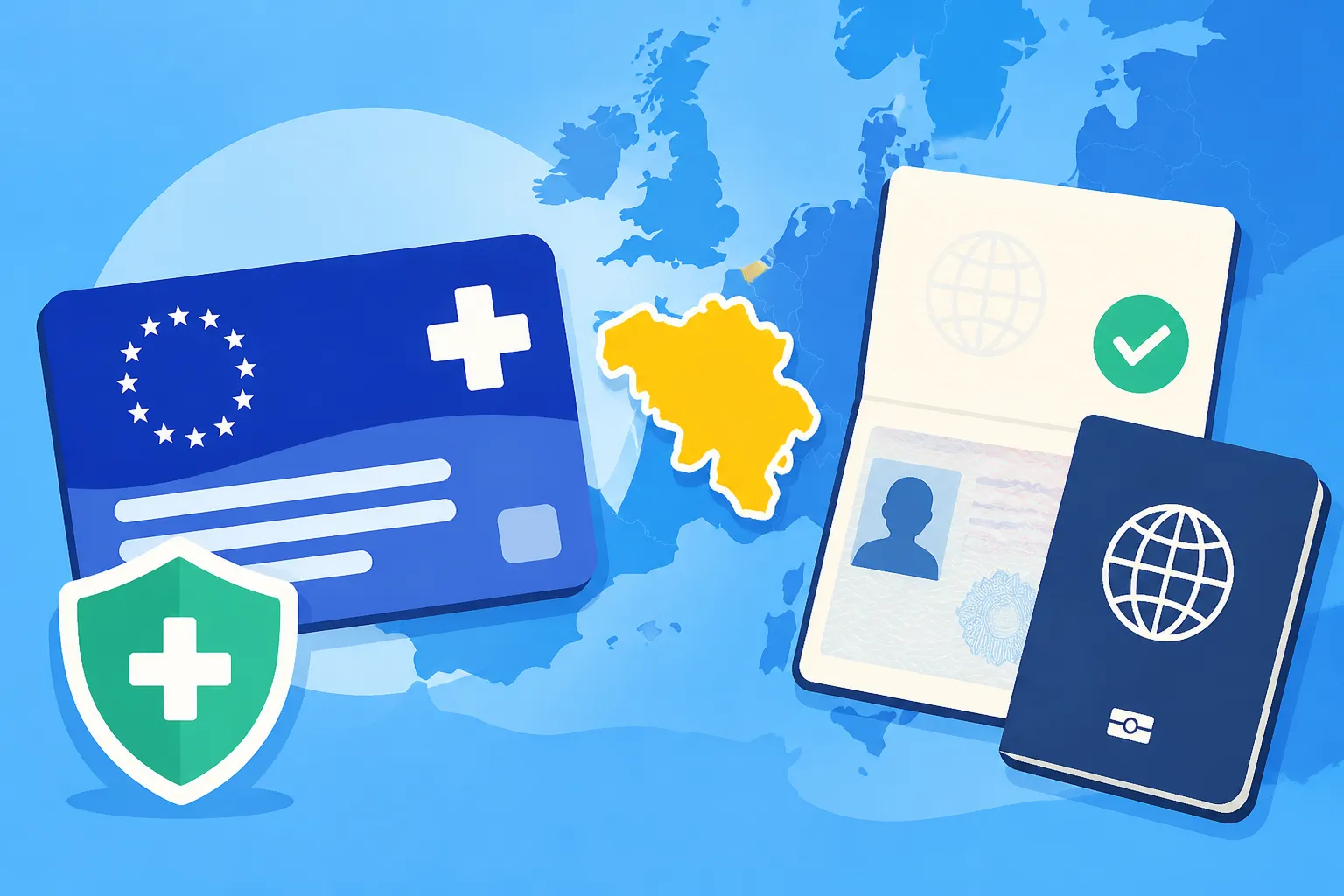
When you first land at Zaventem or arrive via the Eurostar at Gare du Midi, your EHIC is your best friend—but only for a very short window. I remember the relief of having that little blue card in my wallet during my first week in Ixelles. It provides a safety net for "medically necessary, state-provided healthcare during a temporary stay." This means if you trip over a loose cobblestone in the Grand Place or come down with a sudden fever while exploring the Ardennes, you can visit a Belgian doctor and be treated under the same conditions as a local.
However, the key word here is "temporary." The EHIC was never designed to be a permanent residency solution. As a veteran expat, I have seen far too many newcomers assume that because they have an EHIC from their home country (like France, Germany, or Italy), they are fully covered for their entire Belgian life. This is a dangerous assumption. The Belgian authorities view the EHIC as a bridge, not a destination. For those arriving from outside the EU who don't have access to an EHIC, securing comprehensive private coverage through a provider like Cigna Global is often the only way to satisfy initial entry requirements before they can enter the local social security system.
If you are a student or a cross-border worker, the rules might allow you to use your EHIC for longer, but for the average person moving here for a job or family, the clock starts ticking the moment you register your arrival. You need to understand that the EHIC does not cover private healthcare or the costs of being flown back to your home country. It also doesn't provide the "comprehensive" coverage required for many long-term residence permits. If you're coming from a country where your documents aren't in French or Dutch, you'll likely need to use a service like RushTranslate to get your existing insurance certificates or medical records into a format the Belgian commune will actually accept.
Why the EHIC is Rarely Enough for a Long-Stay Visa
If you are applying for a Visa D (the long-stay visa) from your home country, the requirements for health insurance are quite strict. The Immigration Office (DOFI) wants to see proof that you will not become a burden on the Belgian state. While an EHIC proves you have coverage in your home country, visa officers often require a policy that explicitly covers "all risks in Belgium" for the duration of your initial stay. This is one of the most common points of failure for visa applications.
In my experience, relying solely on an EHIC for a visa application is a gamble. If your visa officer is having a particularly "Belgian" day (which usually involves a strict adherence to the letter of the law), they might argue that the EHIC only covers emergency care and not the full spectrum of preventative and routine medical services. For non-EU nationals, this is even more critical. You might need to present a private insurance policy from a company like Cigna Global that satisfies the Schengen requirements for a minimum of €30,000 in coverage, including repatriation.
When you prepare your dossier, make sure any supporting letters from your current insurer are translated perfectly. A poorly translated insurance policy is a one-way ticket to a "missing documents" notification. I always recommend using a professional service like RushTranslate to ensure that the specific legal terminology regarding "comprehensive coverage" and "third-party liability" is accurately reflected in French or Dutch. This small step can prevent weeks of delays. You should also check Is Health Insurance Mandatory for Foreigners in Belgium? to understand the broader legal landscape before you submit your application.
Registering at the Commune: The EHIC Trap
Once you arrive in Belgium, you have eight days to report to your local commune (the Maison Communale or Stadhuis). This is where the EHIC reality check usually happens. During your first appointment, the clerk will ask for proof of health insurance. If you present your EHIC, they might accept it as a temporary measure while they process your Registering at the Commune: The 8-Day Rule After Arrival, but it will not be enough to finalize your residency.
The Belgian system is built on "Mutuelles" (French) or "Ziekenfonds" (Dutch). These are public health insurance funds that you must join to get your medical costs reimbursed. To transition from your EHIC to a Mutuelle, you often need an S1 form from your home country's social security office. This form proves that you are entitled to healthcare in your home country and allows Belgium to "bill" your home country for your care while you live here. Without this form, or without a Belgian work contract, the commune might issue you a temporary What is an Annex 15 (Annexe 15/Bijlage 15) and Can You Work With It?, but your residency won't be fully "green-lit" until your insurance status is settled.
I have sat in the waiting rooms of Schaerbeek and Etterbeek, watching expats get turned away because they didn't realize their EHIC had expired or because they didn't have a Belgian-based insurance solution. If you are struggling to get your S1 form or if you are between jobs, having a private backup like Cigna Global can be a lifesaver. It provides the proof of coverage the commune needs to issue your eID card while you navigate the slow-moving bureaucracy of the public system. Don't forget that after you register, a police officer will visit your home for The Police Address Check: What Happens if You Are Not Home?. They don't check your insurance, but the commune won't even send the police until your file—including insurance—is deemed complete.
Transitioning to the Belgian Mutuelle System
The goal for every expat should be to get off the EHIC and onto a Belgian Mutuelle as soon as possible. This is the only way to access the famous 75% reimbursement system that makes Belgian healthcare so affordable. Once you have your work contract or your S1 form, you can head to a provider like Partenamut, CM, or Helan to sign up. This is a vital part of the Mutuelle and Ziekenfonds: Public Health Insurance Registration Guide.
Once you are registered, you will receive your "vignettes"—small white stickers with your name and a barcode. These are a staple of Belgian life. You'll need to know What Are Mutuelle Stickers Used For and Where to Put Them because you'll be sticking them on every medical bill and prescription you receive. Relying on an EHIC means you often have to pay the full price upfront and then navigate a nightmare of cross-border paperwork to get your money back from your home country. By joining a local Mutuelle, the process becomes much more automated.
For those who want an even deeper dive into how the whole machine works, I highly recommend reading our guide on Healthcare in Belgium for Expats: Complete System Overview (2027). It explains the difference between conventioned and non-conventioned doctors—a distinction that can save you hundreds of Euros. Even if you have a Mutuelle, some expats choose to keep a private policy like Cigna Global for "Comfort" reasons, such as private hospital rooms or faster access to certain specialists, which the public system might not fully cover.
Comparison of Coverage Options
To help you decide which path is right for your specific visa or residency stage, I’ve put together this comparison table.
| Feature | EHIC (EU/EEA Only) | Belgian Mutuelle (Public) | Private Insurance (e.g., Cigna Global) |
|---|---|---|---|
| Primary Use | Temporary/Emergency stays | Long-term residency | Visa apps & supplementary care |
| Visa Acceptance | High risk/Often rejected | Must be resident to join | Highly accepted for Visa D |
| Reimbursement | Via home country (slow) | ~75% (fast/automated) | Up to 100% (depending on plan) |
| GP Visits | Covered (emergency only) | Covered (routine care) | Covered (often worldwide) |
| Hospital Room | Multi-bed/Ward | Shared room standard | Private room often covered |
| Requirement | Must be insured in EU | Residency or Belgian work | None (anyone can buy) |
Specific Scenarios: Students, Freelancers, and Dependents
The EHIC rules shift depending on your "status" in the eyes of the Belgian state. If you are a student coming from another EU country, you can often keep using your EHIC for the duration of your studies, provided you are not working. However, the university will still ask for a scan of the card, and if it's not in a local language, you might need a certified translation. Again, a service like RushTranslate is the standard choice here to avoid any hiccups with the registrar’s office.
Freelancers have it much harder. If you are setting up as an independent, the EHIC is essentially useless for your residency application. You are expected to join a social insurance fund (like Acerta or Xerius) and pay your own contributions, which then gives you access to a Mutuelle. During the "bridging" period when you are setting up your business, the commune might demand proof of private insurance. Many freelancers use a combination of a basic Mutuelle for the legal requirement and a private policy to ensure they are covered for Emergency Medical Care in Belgium: 112, Hospitals, and Pharmacies without gaps.
For dependents—spouses or children—the EHIC can sometimes be used if the primary earner is still insured in their home country. But honestly? It’s a headache. It is much better to "attach" dependents to the primary earner's Belgian Mutuelle. This ensures that the whole family is on the same system, uses the same Itsme Authentication: How to Set Up Belgium's Vital Digital ID to check records, and receives their reimbursements in the same Belgian bank account. If you are in the process of bringing family over, you should read our guide on Family Reunification Visas: Bringing Spouses and Children to Belgium to see how insurance fits into that specific legal puzzle.
Final Advice from a Belgian Veteran
If there is one thing I have learned after years in Brussels, it is that "over-preparing" is the only way to survive the bureaucracy. Never assume the clerk at the commune knows the specific nuances of your EHIC's validity. Carry printed copies of everything. If you are using a private policy from Cigna Global, make sure you have the certificate that explicitly mentions it meets the requirements for Belgian residency. If you are using foreign documents, have them translated by RushTranslate before you even book your appointment.
The transition from a visitor with an EHIC to a resident with a Belgian ID card is a rite of passage. It’s frustrating, it involves a lot of waiting in gray buildings, and you will likely be asked for a document you’ve never heard of at least once. But once you have that eID card in your hand and your Mutuelle stickers in your mailbox, the city starts to feel like home. You stop worrying about "what if I get sick" and start enjoying the best parts of Belgian life—like finding the perfect frikandel at your local frituur or discovering a hidden park in Tervuren.
Disclaimer
The information provided in this guide is for informational purposes only and does not constitute legal or professional medical advice. Immigration rules and healthcare regulations in Belgium are subject to change, and we strongly recommend consulting with the official Belgian Immigration Office (DOFI) or a qualified immigration lawyer before making any decisions regarding your visa or residency. While we strive to keep our content up to date, always verify requirements with your local commune or the relevant embassy.