Emergency Numbers: Calling 112 in Belgium and What to Expect
Imagine the sheer panic of a midnight medical crisis in a city where you still struggle to order a coffee in the local language. I vividly remember my first winter in Antwerp, staring at my phone in terror while my partner struggled to breathe, wondering if 911 worked here. This guide demystifies Emergency Medical Care in Belgium: 112, Hospitals, and Pharmacies to ensure you are never left helpless.
Understanding the Belgian Emergency Landscape
The Belgian emergency system is highly efficient, but it operates on a logic that can feel alien to those coming from North America or even other parts of Europe. While many countries have a single point of contact for everything, Belgium balances a universal European number with specific local lines that might actually get you help faster depending on the situation. Knowing which to pull from your pocket during a crisis is the first step in veteran expat survival.
The 112 Universal Number vs 101
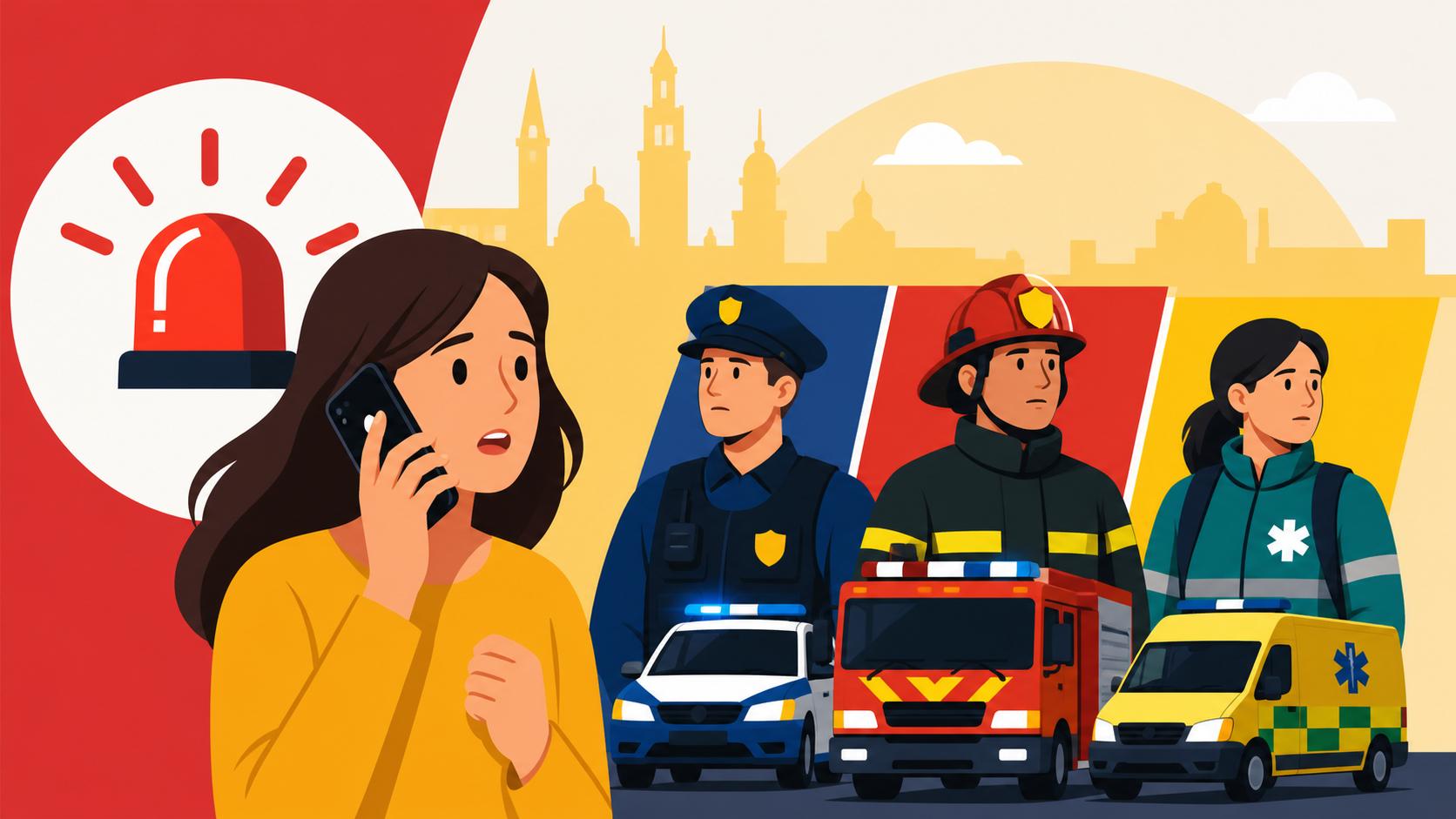
In Belgium, 112 is the number you dial for fire and medical emergencies. It is the pan-European emergency number, and it is the most vital digits you will ever memorize. When you call 112, you are reaching a dispatch center that can send out an ambulance (Ambulance/Ziekenwagen) or a fire truck (Pompiers/Brandweer). If you are in a situation where life is at risk—think heart attacks, unconsciousness, or a major fire—this is your go-to.
However, there is a nuance often missed by newcomers. For police intervention where medical help isn't the primary need, the number is 101. While 112 dispatchers can transfer you to 101, calling the police directly via 101 can save precious seconds in a security emergency. I once made the mistake of calling 112 for a break-in, and while they were helpful, the extra transfer felt like an eternity. If you're dealing with a theft or a non-medical security threat, 101 is the more direct route.
Both numbers are free to call from any phone, even without a SIM card or a positive balance. In 2026, the technology has advanced so that calling 112 from a smartphone automatically triggers Advanced Mobile Location (AML), sending your exact coordinates to the dispatcher. This is a godsend if you are hiking in the Ardennes or lost in the winding streets of Ghent and cannot describe your location.
When to Call vs When to Wait
One of the biggest culture shocks for expats is the Belgian "gatekeeper" approach to emergency rooms. In some countries, you go to the ER for a sore throat because you can't get a GP appointment. In Belgium, that is a quick way to receive a cold shoulder and a very high bill. Emergency services are strictly for life-threatening or urgent situations. If you call 112 for something minor, the dispatcher might actually tell you to contact a GP instead.
For those middle-of-the-night scares that aren't life-threatening—like a child’s high fever or a nasty but non-hemorrhaging cut—Belgium uses the After-Hours Medical Care: On-Call Doctors (Garde/Wacht) system. By dialing 1733, you reach the non-emergency medical service that operates on weekends and public holidays. They will direct you to a "Poste de Garde" or "Wachtpost," which is essentially an out-of-hours clinic.
Using the right level of care isn't just about being a good citizen; it’s about your wallet. The cost of an ER visit without a referral or a genuine emergency can be significantly higher than a visit to a weekend doctor. If you're just feeling under the weather but want to stay ahead of a cold, stocking your medicine cabinet with wellness essentials from iHerb is a much better strategy than trying to navigate the Belgian triage system for a supplement or a simple cough syrup.
The Role of the SMUR and MUG Units
When you call 112 for a serious medical event, you might see more than one vehicle arrive. In Belgium, we have the SMUR (Service Mobile d'Urgence et de Réanimation) in French-speaking areas or the MUG (Mobiele Urgentiegroep) in Flanders. This is not just an ambulance; it is a specialized rapid-response team that includes an emergency doctor and a specialist nurse.
These units are dispatched alongside a standard ambulance for high-gravity calls like cardiac arrests or major trauma. They are essentially a mobile intensive care unit. Having lived here through a few local emergencies, I can tell you that the sight of a MUG vehicle is both terrifying and immensely reassuring. It means the hospital is effectively coming to you.
Be aware that the intervention of a MUG/SMUR team carries its own administrative weight. You will receive separate billing for the ambulance transport and the medical team's intervention. This is where having a robust Mutuelle and Ziekenfonds: Public Health Insurance Registration Guide becomes essential, as they will handle the bulk of these high costs, provided your registration is up to date.
The Step-by-Step Anatomy of a 112 Call
Calling for help is stressful, and doing it in a second (or third) language adds a layer of complexity that can lead to "brain freeze." Knowing exactly what the dispatcher will ask helps you stay calm and provide the information required to get a team to your door.
Dealing with Language Barriers
Belgium is a trilingual country, and while 112 dispatchers are generally very proficient, the primary language of the dispatch center depends on where you are. If you call from Brussels, the operator will likely greet you in French or Dutch. In Flanders, it will be Dutch; in Wallonia, French. The good news for expats is that almost all emergency dispatchers have a functional command of English.
If you find yourself panicking, the best approach is to state clearly: "English, please." The dispatcher will usually switch immediately. If they don't, or if their English is limited, keep your sentences extremely short and use "keyword" communication. Instead of saying, "My friend seems to be having a lot of trouble breathing and I'm really worried," say, "Medical emergency. Difficulty breathing. Location: [Street Name]."
I always recommend that new arrivals keep a small card near their door or a note on their fridge with their address written out phonetically in the local language. Even if you are fluent, your ability to pronounce a complex Dutch street name might vanish when your adrenaline is spiking. For those with Managing Chronic Conditions: Diabetes and Asthma Care in Belgium, having your condition written down in the local language can also be a lifesaver if you are the one needing the call.
Essential Information the Operator Needs
The dispatcher follows a strict protocol to determine the level of response needed. They will ask three primary questions: Where are you? What is happening? Who is involved? Do not hang up until they tell you to do so. They might stay on the line to give you life-saving instructions, such as how to perform CPR or how to stop a bleed, while the ambulance is en route.
When giving your location, be as specific as possible. If you are in an apartment building, the dispatcher needs the floor and the apartment number. If you are in a public park, look for landmarks or the nearest street entrance. In 2026, most dispatchers can see your location via your phone's GPS, but they will still ask you to confirm it to ensure there is no technical error.
The "What is happening?" part is where you need to be clinical. Describe the symptoms rather than your diagnosis. Instead of saying "I think he's having a heart attack," say "He has crushing chest pain and is sweating profusely." This helps the dispatcher decide whether to send a standard ambulance or a MUG unit. Mentioning that you have Private Health Insurance in Belgium: When Do Expats Really Need It? won't change the speed of the ambulance, but it’s good to have your policy details ready for the hospital later.
What Happens After You Hang Up
Once the call ends, your job isn't over. If you are in a secured apartment building, you need to ensure the emergency teams can get inside. If there is a second person available, send them downstairs to stand by the main entrance. Turn on all the lights in your apartment and, if possible, leave your front door unlocked or slightly ajar.
Prepare a "grab bag" immediately. This should include the patient's eID card (electronic identity card), any current medications they are taking, and their "vignettes" (the little yellow or white stickers from your Mutuelle). If the patient is an expat who hasn't fully set up their local insurance yet, grab their passport and any private insurance cards, such as those from Cigna Global.
If you have pets, lock them in a separate room so they don't get in the way of the paramedics or escape through an open door. The paramedics will work quickly to stabilize the patient before deciding which hospital to go to. In Belgium, you generally don't get to choose the hospital during a 112 emergency; they will take you to the nearest one with an available and appropriate emergency department.
Specialized Emergency Services You Should Know
Not every crisis requires a flashing blue light and a siren. Belgium has several specialized services that sit between a GP visit and a 112 call. Knowing these can save you a lot of time and unnecessary stress.
The Poison Centre and After-Hours Doctors
If you suspect someone has swallowed something toxic—whether it’s a cleaning product, a double dose of medication, or a suspicious mushroom from the garden—do not call 112 first unless they are unconscious. Call the Belgian Poison Centre: When to Call 070 245 245. This service is available 24/7, and the experts on the other end can tell you exactly what to do.
I once had a minor heart-stopping moment when my toddler decided a bottle of vitamins looked like candy. The Poison Centre was calm, efficient, and told me exactly which symptoms to look for and when to worry. It saved us an expensive and traumatic trip to the ER. They are also great for identifying interactions between medications you might have ordered from iHerb and local prescriptions.
For general illness that happens outside of office hours, remember the 1733 number mentioned earlier. This connects you to the local "wachtdienst" or "service de garde." This is the best way to find Finding Medical Care in Belgium: GPs, Specialists, and Hospitals when your regular doctor is closed. They can provide a consultation that is much cheaper than an ER visit and will be reimbursed at the standard rate by your Mutuelle.
Pharmacy and Dental Emergencies
If you need a prescription filled at 3:00 AM, you cannot just go to your neighborhood pharmacy. Most pharmacies close by 7:00 PM. You will need to find the "pharmacie de garde" or "apotheek van wacht." You can find the nearest one by visiting the website pharmacie.be or apotheek.be, or by looking at the list posted in the window of any local pharmacy.
Be aware that pharmacies charging "after-hours fees" is standard. If you show up during the night without an urgent prescription, you will likely be charged a small extra fee (around €5-€10), though this is often waived if the prescription is marked as "urgent" by a doctor. For daily wellness, I always suggest expats keep their cupboards stocked with basics from iHerb so they don't find themselves hunting for paracetamol at midnight.
Dental emergencies are perhaps the most frustrating. If you have a raging toothache on a Sunday, you’ll need to contact the specialized dental guard service. Finding an Finding English-Speaking Dentist in Brussels for Emergencies on a weekend can be a challenge, but the guard service will at least get you to a professional who can manage the pain or perform an emergency extraction.
Non-Emergency Medical Care Alternatives
| Service | Number / Contact | Best For |
|---|---|---|
| Universal Emergency | 112 | Life-threatening medical or fire |
| Police Emergency | 101 | Crimes in progress, security threats |
| Poison Centre | 070 245 245 | Accidental ingestion of toxins |
| After-Hours GP | 1733 | Illness on weekends/nights |
| Suicide Prevention | 1813 (Dutch) / 0800 32 123 (French) | Mental health crisis |
| Pharmacy Guard | pharmacie.be / apotheek.be | Late-night prescriptions |
| Child Helpline | 103 (French) / 102 (Dutch) | Issues involving minors |
Financial and Administrative Realities of Emergency Care
The medical care in Belgium is world-class, but the administrative trail it leaves can be a headache for the uninitiated. Understanding how you will be billed—and how to get that money back—is a crucial part of the expat journey.
Ambulance Fees and Mutuelle Coverage
One of the most common misconceptions among expats is that the ambulance is "part of the service." In Belgium, ambulances are a paid service. The federal government sets a fixed price for 112 ambulance interventions, which in 2026 is approximately €70 to €75, regardless of the distance traveled.
While that might seem reasonable, it is an out-of-pocket expense initially. You will receive a bill in the mail several weeks after the incident. You then submit this to your health insurance. For a deep dive into these costs, check out our guide on Ambulance Fees in Belgium: What the Mutuelle Covers. If you have supplementary insurance, the remainder of this fee is often covered, but the "basic" public insurance usually covers about 50% to 75% of it.
If you are transported by a private ambulance (one not dispatched via 112), the costs are significantly higher and are calculated per kilometer. Always ask for a 112 ambulance unless you have a specific reason to use a private one. Keeping track of these invoices is essential for your Healthcare Budgeting: Copays, DMG/GMD, and Reimbursements, as these small costs can add up if you have a year of bad luck.
Private Insurance vs Public Reimbursements
Most expats in Belgium are covered by a "Mutuelle" (French) or "Ziekenfonds" (Dutch). This is the public health insurance system funded by social security. It is excellent, but it doesn't cover everything. In an emergency, the "tiers payant" system usually applies, meaning you only pay your "personal share" (the ticket modérateur) at the hospital, while the hospital bills the Mutuelle directly for the rest.
However, ER visits often involve "non-conventioned" specialists. In Belgium, doctors can choose to follow the official state-negotiated rates (conventioned) or set their own (non-conventioned). In an emergency, you don't get to choose who treats you. If a non-conventioned surgeon operates on you, your Mutuelle will only reimburse you based on the state rate, leaving you to pay the "supplement."
This is where private international insurance like Cigna Global becomes a lifesaver. These plans are designed to bridge the gap, covering those pesky supplements and ensuring you aren't left with a four-figure bill after an emergency surgery. For many expats, having that extra layer of private coverage is the difference between a stressful recovery and a bankrupting one.
Hospital Triage and Paperwork
When you arrive at the hospital, you will be triaged. This means a nurse will assess the urgency of your condition. If you arrived by ambulance but aren't in critical condition, you might still wait several hours while victims of car accidents or heart attacks are treated first. This is normal, though I know how frustrating it feels when you're in pain.
You will be asked for your identity card immediately. If you don't have a Belgian eID yet, they will take your passport and likely ask for a "guarantee of payment" or your private insurance details. If you are struggling with the digital side of things, our MyHealth.belgium.be Guide: Accessing Your Medical Records Online can help you understand how your emergency visit will be recorded in the national system.
One "pro tip" for the hospital: always ask for a "single room" (chambre seule) or a "shared room" (chambre commune). A single room in a Belgian hospital allows the doctors to charge significantly higher fee supplements, which your public insurance will not cover. Unless you have high-end private insurance that explicitly covers single-room supplements, always opt for a shared room to keep your costs down.
Practical Preparation for Expat Households
The best time to handle an emergency is six months before it happens. Taking a few hours to set up your household for a potential crisis will make the actual event much more manageable.
Setting Up Your Emergency Kit
In my first year in Brussels, I spent an embarrassing amount of time trying to find a thermometer in the middle of a flu outbreak. Don't be like me. Create a dedicated "Belgium Emergency Box." This should include a high-quality thermometer, antiseptic, bandages, and basic fever-reducers for both adults and children.
Since Belgian pharmacies can be expensive and sometimes have limited stock of familiar brands, I often use iHerb to get my favorite electrolytes, high-dose Vitamin C, and first-aid supplies. Having these on hand means you aren't forced to navigate a "pharmacie de garde" for a simple box of plasters.
Include a printed "emergency sheet" in this box. It should have your address, the phone numbers for 112 and 101, the number for the Poison Centre, and your Mutuelle membership number. If you have a "Global Medical Record" (DMG/GMD) with your doctor, write down their name as well. This allows the hospital to easily share information with your regular GP later.
Communicating with the Commune
When you first arrive and register at the local town hall (Commune/Stadhuis), you might feel overwhelmed by the bureaucracy. However, this registration is what triggers your access to the Belgian healthcare system. Without a national register number, getting reimbursed for emergency care is a nightmare of manual paperwork and long wait times.
Ensure you have followed the Mutuelle and Ziekenfonds: Public Health Insurance Registration Guide as soon as you have your residence permit (or even your Annex 15). If you are in the middle of a move or waiting for your "Police Check," keep your private insurance details in an easily accessible place.
I also recommend introducing yourself to your nearest GP early on. Having a doctor who already has you in their system makes the "after-care" of an emergency—such as getting follow-up prescriptions or sick notes for work—much smoother. In Belgium, a "certificat médical" is required even for a single day of absence from most jobs, so you'll need a GP who can see you quickly after an ER visit.
Important Note on Emergency Health Information
This guide is intended for informational purposes for expats and tourists navigating the Belgian healthcare system. While we strive to provide the most accurate and up-to-date information, medical emergency protocols and contact numbers can change. This content does not constitute professional medical or legal advice. In the event of a real-life emergency, always prioritize calling 112 or seeking immediate professional help. Always consult with your insurance provider and local municipal authorities to confirm the specific coverage and registration requirements relevant to your personal situation.