Food Waste (Orange Bags): Rules for Composting in the City
Navigating the Belgian waste management system often feels like a part-time job you never applied for. I spent my first three months in Brussels terrified that a stray yogurt pot in the wrong bag would trigger a municipal fine or an angry note from my concierge. This guide solves the confusion surrounding the orange bag mandate and urban composting.
The Mandate Why Belgium Cares About Your Scraps
If you have recently moved into a new apartment found via HousingAnywhere, you might have noticed a small, ventilated orange bin sitting in your kitchen or basement. For years, sorting organic waste was a "nice to do" for the environmentally conscious. However, as of May 2023 in Brussels and various dates across Flanders and Wallonia, the sorting of food waste is no longer optional; it is a legal requirement. The logic behind this is purely industrial. When food waste ends up in the white bag (general waste), it is sent to the incinerator. Because food is largely water, it doesn't burn well, requiring more energy and producing more CO2. By separating it, the city can turn your potato peels into compost or biomethane gas.
I remember the initial frustration of having yet another bin in a tiny Ixelles studio. It felt like the administration was asking for the impossible. However, once you understand the rhythm of the city, it becomes second nature. If you are still setting up your home and need to order supplies like specific bins or liners that fit the Belgian standards, checking options on Amazon Belgium can save you a trip to a crowded Brico. The transition is part of a larger push toward sustainability that is deeply ingrained in the local culture, even if the bureaucratic implementation feels a bit heavy-handed at first.
The enforcement of these rules isn't just about the planet; it is about your wallet. General waste (white bags) is the most expensive to dispose of because the bags themselves are priced higher to cover the cost of incineration. By shifting your heavy organic waste to the orange bag, which is subsidized and cheaper to buy, you are actually lowering your monthly "trash tax." It is one of the few instances where Belgian bureaucracy actually offers a financial incentive for doing the right thing.
The Orange Bag System What Goes In and What Stays Out
The orange bag is specifically designed for "food waste," but that definition is narrower than you might think. It is vital to get this right because "contaminated" bags—those containing plastic or non-organic materials—will often be left on the sidewalk with a red sticker of shame, leaving you to deal with a rotting bag for another week.
The Yes List Your Kitchens Best Friends
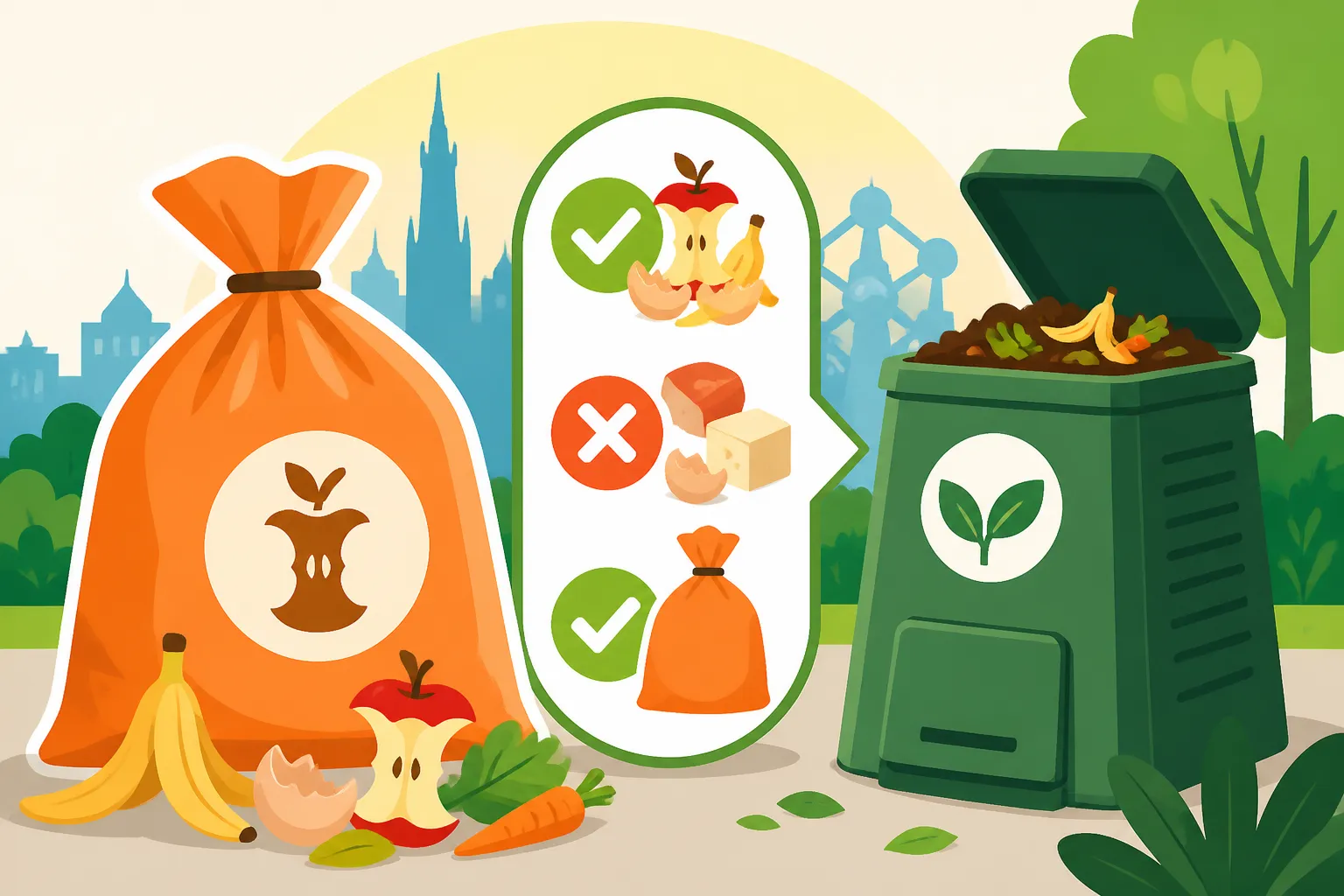
In the orange bag, you can place almost all leftovers from your kitchen. This includes fruit and vegetable peels, coffee grounds (and the paper filters!), tea bags, and stale bread. Unlike home composting piles that struggle with certain items, the industrial composting plants used by Bruxelles-Propreté can handle cooked meat and fish leftovers, as well as eggshells. If you have finished a meal and have scraps on your plate, they belong here.
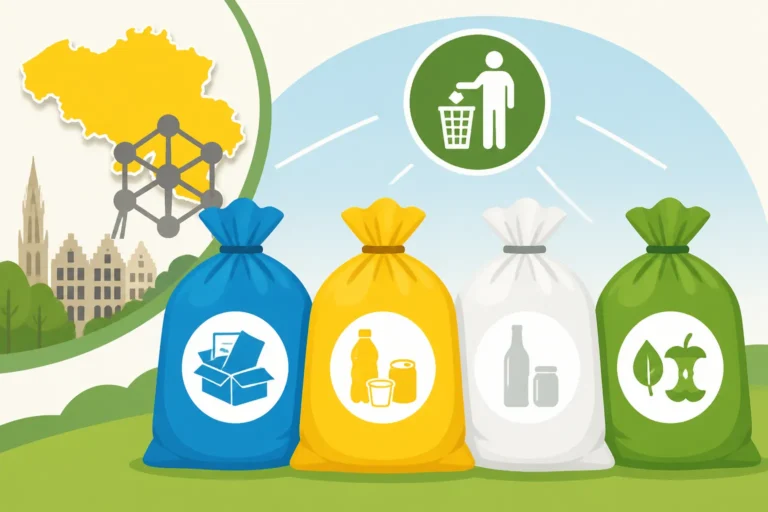
A common question I hear from fellow expats is whether "biodegradable" plastics can go in. The answer is a firm no. Even if a container says it is compostable, it often requires different conditions than the Belgian municipal facilities provide. Stick to raw food scraps and paper-based food waste. If you are struggling to keep track of what goes where, refer to our guide on Garbage Sorting Rules: Blue, Yellow, White, and Green Bags Explained for a full breakdown of the other streams.
The No List Common Mistakes That Ruin the Batch
The biggest enemy of the orange bag is packaging. You would be surprised how many people throw half-eaten yogurt containers directly into the orange bin. You must scrape the yogurt into the orange bag and put the plastic pot into the blue bag. Similarly, bones from large animals (like a beef marrow bone) are often too hard for the quick-turnaround industrial process and should technically go in the white bag, though chicken bones are generally accepted.
Garden waste is another major "no." If you have a small balcony or garden, your dead leaves, grass clippings, and branches belong in the green bag, not the orange one. This is because garden waste is treated differently than food waste. Also, avoid liquids. If you have expired soup, pour the liquid down the drain and put only the solid chunks into the orange bag. For those living in areas with strict rules, like the Brussels Garbage Bags Color Guide: White (General) vs Blue (PMC), following these distinctions is the difference between a clean street and a pest problem.
Finally, never include pet waste. Cat litter, even the "flushable" or "natural" kind, and dog poop must stay in the white bag for hygiene reasons. The pathogens in pet waste are not killed during the standard composting process, and including them can ruin an entire batch of municipal compost. If you are navigating these rules while also trying to figure out other home basics, you might find our article on Standard vs Bi-Hourly Electricity Meters: Day and Night Tariffs helpful for managing your other household overheads.
Logistics Bags Schedules and Neighborhood Differences
The "how" of trash day in Belgium is often more complicated than the "what." Each commune (municipality) has its own calendar, and if you are living on the border of Ixelles and Etterbeek, your neighbors across the street might have a completely different collection day.
Where to Buy Bags and How to Store Them
You cannot use just any orange bag. You must use the official bags with the "Net Brussel" or regional logo. These are available at almost every supermarket, including Delhaize, Carrefour, and Colruyt. Usually, they are kept behind the checkout counter or in a specific aisle near the cleaning supplies. I highly recommend buying the small 30-liter bags rather than trying to find larger ones; organic waste is heavy and the bags are thin.
Storage is the biggest hurdle in an urban apartment. Because the bags are breathable to prevent fermentation, they can leak. Most people use a small ventilated plastic pre-bin (the "orange bucket") provided for free by many communes. If you didn't receive one when you moved in, you can usually pick one up at your local Maison Communale or a Recypark. For those who find the official bins too ugly, you can find more aesthetic stainless steel options on Amazon Belgium that still provide the necessary ventilation. If you are still in the process of moving and haven't gotten your local SIM yet to look up your collection calendar, an e-SIM from Airalo can keep you connected the moment you land.
Regional Differences Brussels vs Flanders vs Wallonia
While I focus on Brussels, the rules in Flanders (Vlaanderen) and Wallonia (Wallonie) can vary. In many Flemish cities like Antwerp or Ghent, they use a "GFT" (Groente-, Fruit-, en Tuinafval) bin—a sturdy green wheelie bin—rather than bags. This bin combines food and garden waste. In these regions, you might pay per kilogram or per collection via an electronic chip on the bin.
In Wallonia, the system is increasingly moving toward "sac d’ordures ménagères résiduelles" and separate organic bags, but some rural areas still rely on centralized drop-off points. Regardless of where you live, the police or "preventive officers" do occasionally check bags for improper sorting. If you are worried about the administrative side of living in the city, such as The Police Address Check: What Happens if You Are Not Home?, know that being a "good neighbor" by sorting your trash correctly goes a long way in making a good impression on the local authorities.
| Bag Color | Waste Type | Common Items | Collection Frequency |
|---|---|---|---|
| White | Residual/General | Non-recyclables, pet litter, cigarette butts | 1-2 times per week |
| Orange | Food Waste | Vegetable peels, coffee grounds, leftovers | Once per week |
| Blue | PMC/Recyclables | Plastic bottles, metal cans, drink cartons | Once per week or bi-weekly |
| Yellow | Paper & Cardboard | Newspapers, clean pizza boxes, envelopes | Once per week or bi-weekly |
| Green | Garden Waste | Leaves, grass, small branches | Seasonal (usually bi-weekly) |
Urban Composting Alternatives for the Apartment-Bound Expat
If the thought of a rotting orange bag in your kitchen for seven days makes you queasy, you are not alone. Many expats opt for alternative methods to manage their organic waste between collection days.
Wormeries and Bokashi Buckets
A "Bokashi" system is an excellent choice for Belgian apartments. It is an airtight bucket where you "pickle" your food waste using a specific bran infused with microbes. Because it is anaerobic (no oxygen), it doesn't smell like rot—it has a slightly vinegary scent. Once the bucket is full, you can let it sit for two weeks and then bury the contents in a garden or, more realistically for city dwellers, take the "pre-compost" to a neighborhood collection point.
Wormeries (vermicompost) are another option, though they require more care. You have a colony of worms that eat your scraps. It produces "liquid gold" (worm tea) for your houseplants. However, worms are sensitive to temperature, so you can't leave them on a balcony during a freezing Belgian winter or a heatwave. If you have a larger house and are employing help through Hiring a Domestic Cleaner via Titres-Services (Dienstencheques), make sure you explain your composting system to them, as many cleaners are used to the standard bag system and might accidentally toss your worm farm.
Neighborhood Compost Points
Brussels is full of "Composts de Quartier." These are community-run composting sites, often located in small parks or hidden courtyards. Joining one is a fantastic way to meet your neighbors and bypass the orange bag system entirely. Usually, you pay a small annual fee (around 10-15 euros), attend a short training session on what the pile can handle, and receive a key or code to the bins.
This is especially helpful if you live in a high-density area like Etterbeek or Ixelles. If you are scouting for a place to live, check our guide on Living in Brussels: Top Expat Neighborhoods (Ixelles, Etterbeek) to see which areas have the best community infrastructure. Be aware that these community piles are often "vegetarian"—they usually don't allow meat or dairy, which you would still need to put in your orange or white bag.
Dealing with The Smell and Other Urban Living Realities
Let’s be honest: the primary reason people hate the orange bag is the smell and the potential for fruit flies (gnats). During the Belgian summer, an orange bag can become a biological hazard in a matter of days.
To mitigate this, I use a trick I learned from a local: keep your high-odor scraps (like fish skins or meat scraps) in a small container in the freezer. Only take them out and put them in the orange bag on the morning of collection. This completely eliminates the "rot" smell in your kitchen. Additionally, ensure your orange bin is ventilated. It sounds counterintuitive, but airflow actually dries out the waste and reduces the smell compared to a sealed plastic bag which encourages wet, stinky fermentation.
If you are dealing with a neighbor who refuses to sort their trash, leading to bags piling up and attracting foxes (a very real Brussels problem!), remember that there are rules about Noise and Apartment Etiquette: Quiet Hours and Sunday Rules and general cleanliness. You can report persistent trash issues to your commune or via the "FixMyStreet" app, which is a lifesaver for getting the city to clean up dumped waste.
Managing your budget is also part of the "living in Belgium" experience. While you are saving money by using orange bags, you might want to look into Grocery Shopping: Aldi and Lidl vs Delhaize for Expat Budgets to see where else you can trim your household expenses. The cost of bags adds up, but the fines for illegal dumping or improper sorting are significantly higher.
Finally, if you find yourself with too much waste after a big move or a spring clean, don't try to stuff it all into your weekly bags. Look into Oversized Waste (Encombrants): Booking a Pickup or Using Recyparks to handle the big stuff. Living in Belgium is about mastering these small, repetitive systems. Once you have the orange bag rhythm down, you will officially be one step closer to feeling like a true "Bruxellois."
Disclaimer
This guide is for informational purposes only. Waste management regulations in Belgium are subject to frequent changes at the regional and municipal levels. Always check the official website of your specific commune or the regional waste authority (e.g., Bruxelles-Propreté, OVAM, or COPIDEC) for the most current rules, collection calendars, and bag pricing. Failure to comply with local sorting mandates can result in administrative fines.