Finding Extracurricular Activities (Académies) for Expat Children
You have finally unpacked the boxes, navigated the bureaucracy of the commune, and successfully managed the hurdle of Enrolling Kids in Local Belgian Schools: Dutch vs French Systems, only to realize that the school day ends surprisingly early. I remember the sheer panic I felt when I realized my son’s Wednesday classes finished at noon, leaving me scrambling to find something—anything—meaningful for him to do. This guide solves the mystery of the Belgian "Académie" system and explains how to navigate the rich world of extracurricular activities to ensure your children thrive socially and culturally.
Understanding the Belgian Académie System
When Belgians talk about an "Académie" (in French) or "Academie" (in Dutch), they aren't just talking about a casual after-school club. They are referring to the Deeltijds Kunstonderwijs (DKO) in Flanders or the Enseignement Artistique à Horaire Réduit (ESAHR) in Brussels and Wallonia. This is a formal, state-subsidized system of part-time arts education that is arguably one of the "hidden gems" of living in Belgium. The quality is incredibly high, and because it is subsidized, the costs are remarkably low compared to private lessons in the US or UK.
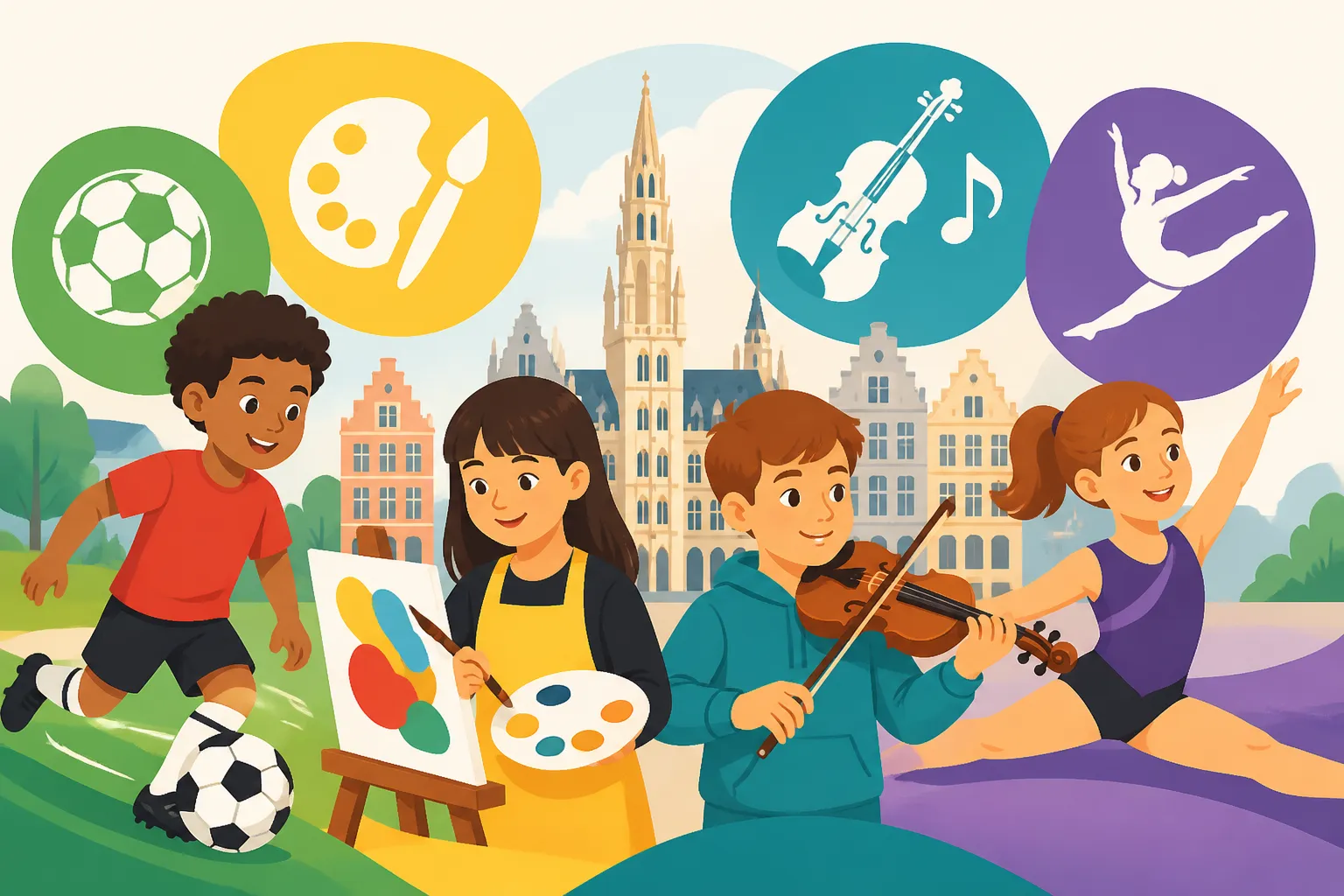
If you are currently searching for a home through a platform like HousingAnywhere, I highly recommend looking at the proximity of local academies. Having one within walking distance can change your life as an expat parent, especially since the "Académie" curriculum is structured and leads to recognized certificates. These institutions are divided into several "domains," typically Music, Performing Arts (Theater/Speech), and Dance. In some larger cities, you will also find Visual Arts academies.
The "I’ve-been-there" reality of the Académie system is that enrollment is strictly regulated. Most registrations happen in late August or the first week of September. I learned the hard way that if you show up in October, you are likely out of luck until next year. The classes usually follow the school calendar, meaning they stop during the "Stages" (holiday camps) and school breaks. For an expat child, this is often the first place they make "real" Belgian friends outside the expat bubble, as these schools are deeply rooted in the local community.
Music and Performing Arts Tracks
The music track is particularly rigorous. Your child won’t just "play the piano"; they will be required to take "Solfège" (Music Theory) alongside their instrument lessons. In the beginning, this can be a bit of a culture shock for children used to more "fun-focused" lessons. However, the long-term benefit is a profound understanding of music. In the French-speaking system, this theory class is called "Formation Musicale," while in the Dutch system, it is "Muziekleer" or "AMV."
The theater and speech tracks are also fantastic for language immersion. If your child is attending a local school, enrolling them in a theater class at the local Académie is the fastest way to build their confidence in French or Dutch. They learn "déclamation" (poetry and prose reading) and "art dramatique." Even if they aren't fluent yet, many teachers are incredibly welcoming to expat children, viewing the arts as a universal language.
Costs and Administrative Requirements
Because these are state-funded, the annual fee is often between €150 and €250 for the entire year, which usually covers multiple classes a week. There are even discounts if you have multiple children enrolled or if you hold certain status at the commune. When you go to register, you will typically need your child’s eID or the "Annex" document you received during your Registering for Public Health Insurance: Step-by-Step at Your Commune process.
Be aware that popular instruments like piano or guitar often have waiting lists. If you are a new arrival, get on the mailing list of your local commune’s "Service Jeunesse" or "Jeugddienst" as early as June. It’s also a good idea to check if your child’s school has a partnership with a specific academy, as some teachers actually come to the school premises to give lessons immediately after the final bell.
Sports Clubs and the Local Sportclub Culture
If your child is more interested in burning off energy than practicing the cello, the Belgian sports club scene is your next stop. Unlike some countries where sports are heavily integrated into the school system, in Belgium, sports happen at the "Club." Whether it’s football (soccer), hockey, tennis, or basketball, these clubs are the heartbeat of social life in Belgian towns.
For many expat families, the "Hockey Fever" in Belgium is a massive surprise. Field hockey is incredibly popular here, particularly in the suburbs of Brussels, Antwerp, and Ghent. If you find yourself living in a family-friendly area via HousingAnywhere, you’ll likely notice everyone heading to the hockey club on Wednesday afternoons and Saturday mornings. It is a very social environment for parents too, often involving a "pintje" or a coffee at the clubhouse while the kids practice.
Finding the Right Club for Your Child
The easiest way to find a club is to search for your commune’s name plus the sport you want (e.g., "Tennis Club Etterbeek" or "Voetbal Mechelen"). Most clubs offer a "proeftraining" or "séance d'essai"—a free trial session. This is vital. You want to see if the coach is comfortable with a child who might still be learning the local language. In my experience, sports coaches are the most flexible people in Belgium when it comes to the language barrier; a whistle and a hand gesture are universal.
Before your child starts, you’ll likely need a basic medical certificate from a GP. This is a standard procedure to ensure the child is fit for competitive sports. You can find more details on how to arrange this in our guide on Finding Medical Care in Belgium: GPs, Specialists, and Hospitals. Once you are a member, keep your "Mutuelle" or "Ziekenfonds" in mind. Most Belgian health insurers offer a small annual refund (usually €25 to €50) toward sports club memberships. You just need to download a form from your insurer’s website and have the club stamp it.
Youth Movements: Scouts and Chiro
You cannot talk about extracurriculars in Belgium without mentioning the "Scouts" and "Chiro." If you see kids running around in beige or green uniforms with countless badges on their sweaters, you are witnessing a pillar of Belgian childhood. These youth movements are massive. They emphasize outdoor play, independence, and "bricolage" (crafting).
- Scouts: Generally more focused on outdoor skills, camping, and traditional scouting values.
- Chiro: A specifically Flemish movement (though there are some French equivalents) that focuses more on play, games, and community spirit.
The commitment is usually every Sunday afternoon. For expat parents, this can be a godsend for integration. However, be warned: the summer camps are legendary and involve "sleeping in tents in the rain" levels of hardiness. If your child joins, you will likely be heading to Amazon Belgium to stock up on sturdy hiking boots, waterproof jackets, and heavy-duty sleeping bags.
Holiday Stages and Vacation Camps
In Belgium, when school stops, "Stages" (in French) or "Kampen" (in Dutch) begin. Since Belgian school holidays are frequent—including the week-long breaks in Autumn and Carnival—these camps are essential for working parents. They are not just for childcare; they are specialized intensive weeks of activity.
You can find a "Stage" for almost anything: circus skills, coding, horse riding, "cuisine" (cooking), or multi-sports. Organizations like "Promosport," "Action Sport," or the local "VGC" (in Brussels) run these programs. I’ve found that these week-long immersions are often where my children’s language skills jumped the most because they were forced to communicate in a high-energy, fun environment.
| Type of Activity | Typical Age Range | Estimated Annual Cost | Social Integration Level |
|---|---|---|---|
| Académie (Music/Arts) | 5 – 18+ | €150 – €250 | High (Local focus) |
| Field Hockey / Football | 4 – 18 | €300 – €600 | Very High (Community) |
| Scouts / Chiro | 6 – 18 | €50 – €100 | Extreme (Immersive) |
| Private English Clubs | 3 – 12 | €500 – €900 | Low (Expat-heavy) |
| Holiday Stages (Weekly) | 3 – 15 | €120 – €200 | Medium (Dynamic) |
When preparing for these camps, I always make sure my kids have a reliable way to contact me if needed. While many camps have a "no phone" policy, having an old smartphone with an Airalo eSIM can be a lifesaver for the commute or for peace of mind during those first few days of "drop-off" anxiety. It allows them to send a quick text when they’ve arrived or if they are staying late for an after-camp "garderie."
Navigating the Language Barrier and Practical Logistics
The biggest concern for most expat parents is the language. "Will my child be left out if they don’t speak French or Dutch?" The answer, surprisingly, is usually no. Children are incredibly resilient, and most extracurricular instructors are used to the international nature of Belgian cities. However, there are a few "survival tips" I’ve picked up over the years.
Firstly, don’t be afraid of the "Maison des Jeunes" or "Jeugdhuis." these are community centers that often offer free or very cheap drop-in activities. They are less formal than an Académie and are a great way to "test the waters" of the local language without a big financial commitment. Secondly, leverage the "Itsme" app. You will need this digital ID for almost everything in Belgium now, including signing up for commune-run activities. If you haven't set it up yet, check Itsme Authentication: How to Set Up Belgium's Vital Digital ID for a step-by-step walkthrough.
Gear and Equipment
Belgium is a land of specialized equipment. If your child starts music, they need the book; if they start hockey, they need the mouthguard and the specific "stick." I’ve spent many hours wandering through sports shops, but honestly, the most efficient way to handle the "I forgot his shin guards" crisis is through Amazon Belgium. They have realized that expat parents are busy and usually offer next-day delivery on most standard sports and school gear.
For parents of toddlers, you might still be navigating the Childcare (Crèche) Waitlists: When to Apply During Pregnancy phase, but it’s never too early to look at "Psychomotricité" classes. These are developmental movement classes for kids aged 2 to 5 and are the precursor to formal sports. They are widely available and a great way to meet other parents in your neighborhood.
Transportation and the "Wednesday Afternoon" Struggle
Wednesday afternoons in Belgium are a logistical puzzle. Since school finishes at midday, the "stadsbus" (city bus) and "tram" are packed with students heading to their various clubs. If your child is old enough to travel solo, ensure they have a Mobib card. You can learn how to manage this in our guide to Public Transport: SNCB/NMBS (National Trains) Fares and Passes.
If you are chauffeuring them yourself, be prepared for "the Brussels crawl." Traffic on Wednesday afternoons is notoriously bad. This is where I find a local Airalo data plan useful for myself as well—sitting in the car or a cafe waiting for a two-hour dance class is much more productive when you have a solid internet connection to catch up on emails or plan your next Weekend Travel: Best Domestic Trips to Bruges, Ardennes, and Coast.
Building a Social Life Through Your Children
Perhaps the most important thing I realized is that extracurriculars in Belgium are as much for the parents as they are for the kids. In a country that can sometimes feel a bit "closed" to newcomers, the sidelines of a football pitch or the hallway of a music academy are where you will make your local friends.
When you start recognizing the same parents every week, don't be shy. A simple "C’est dur, la pluie, non?" or "Het is koud vandaag!" goes a long way. Many of these clubs have a "fête de fin d'année" or a summer BBQ. Go to these events. They are the key to Making Friends Without Speaking Fluent French or Dutch. Your child will see you making an effort, and it will encourage them to do the same.
Remember that accidents do happen during sports or play. This is why most veteran expats will tell you to get "familiale" insurance. If your child accidentally breaks a window with a hockey ball or knocks over a fellow scout, this insurance covers the liability. It’s an essential part of Family Liability Insurance (Assurance Familiale): Why Expats Need It and is very affordable.
Finally, keep an eye on the "School Medical Exams." Occasionally, the school doctors will ask for records of your child’s physical activity or vision if they notice they are struggling in class. Having them enrolled in a structured "Académie" or club provides a great record of their physical and social development, which you can then share during Family Health in Belgium: Pregnancy, Birth, and Pediatric Care checkups.
Disclaimer
This guide is intended for informational purposes only. While every effort has been made to ensure the accuracy of the information provided regarding the Belgian Académie system and extracurricular activities as of 2026, rules and enrollment procedures can vary significantly between communes and regions (Flanders, Wallonia, and Brussels). Always verify specific deadlines and requirements directly with the institution or your local commune's youth department. The author is an expat sharing personal experiences and does not provide legal or official administrative advice.