Epidural Costs in Belgium: Will the Mutuelle Cover It?
One of the most nerve-wracking moments of being an expat in Belgium is staring at a medical invoice that is three pages long and written entirely in technical French or Dutch. When I was preparing for the birth of my first child here, I spent hours obsessing over whether my Mutuelle would actually cover the epidural or if I would be hit with a surprise bill for thousands of euros. This guide breaks down exactly what you will pay for an epidural in Belgium, how the reimbursement system works, and how to avoid the single room trap that can double your costs.
Understanding the Role of the Mutuelle in Childbirth
In Belgium, the public healthcare system is highly efficient but comes with a layer of bureaucracy that can be intimidating for newcomers. Every resident is required to join a Mutuelle (in French) or Ziekenfonds (in Dutch). These are the public health insurance funds that act as the middleman between you and the state. They ensure that basic medical services, including the vast majority of costs related to childbirth, are covered at a subsidized rate.
The very first thing you need to realize is that the Mutuelle does not typically pay the hospital directly for your epidural in full. Instead, you usually pay the bill first—or the hospital sends it to you after discharge—and then the Mutuelle reimburses you. This is why Mutuelle and Ziekenfonds: Public Health Insurance Registration Guide is so essential; without being properly registered, you are on the hook for the full "uninsured" price, which is significantly higher.
The Mutuelle operates on a "conventioned" price list. The Belgian government negotiates fixed rates with doctors and hospitals for every single procedure. An epidural has a specific code and a specific price assigned to it. If your anesthesiologist follows these rates, your out-of-pocket cost is very low. However, if they are "non-conventioned," they can charge whatever they want as a supplement, and your Mutuelle will only cover the base rate. I remember the shock of seeing my first bill because I had not realized my specialist was non-conventioned; it is a mistake you only want to make once.
How Much Does an Epidural Actually Cost in Belgium
To understand the cost of an epidural, you have to look at two different numbers: the "statutory rate" (the price the government says it should cost) and the "supplements" (the extra fees doctors charge). The statutory rate for an epidural is largely covered by the state, but your actual bill depends heavily on your choice of hospital and, more importantly, your choice of room.
In a shared room or a double room, doctors are legally forbidden from charging fee supplements in most cases. This means if you are in a standard ward, the cost of the epidural is almost entirely covered by your insurance. You might only pay a small "patient contribution" (known as the ticket modérateur), which is usually around 20 to 50 EUR for the anesthesia services themselves.
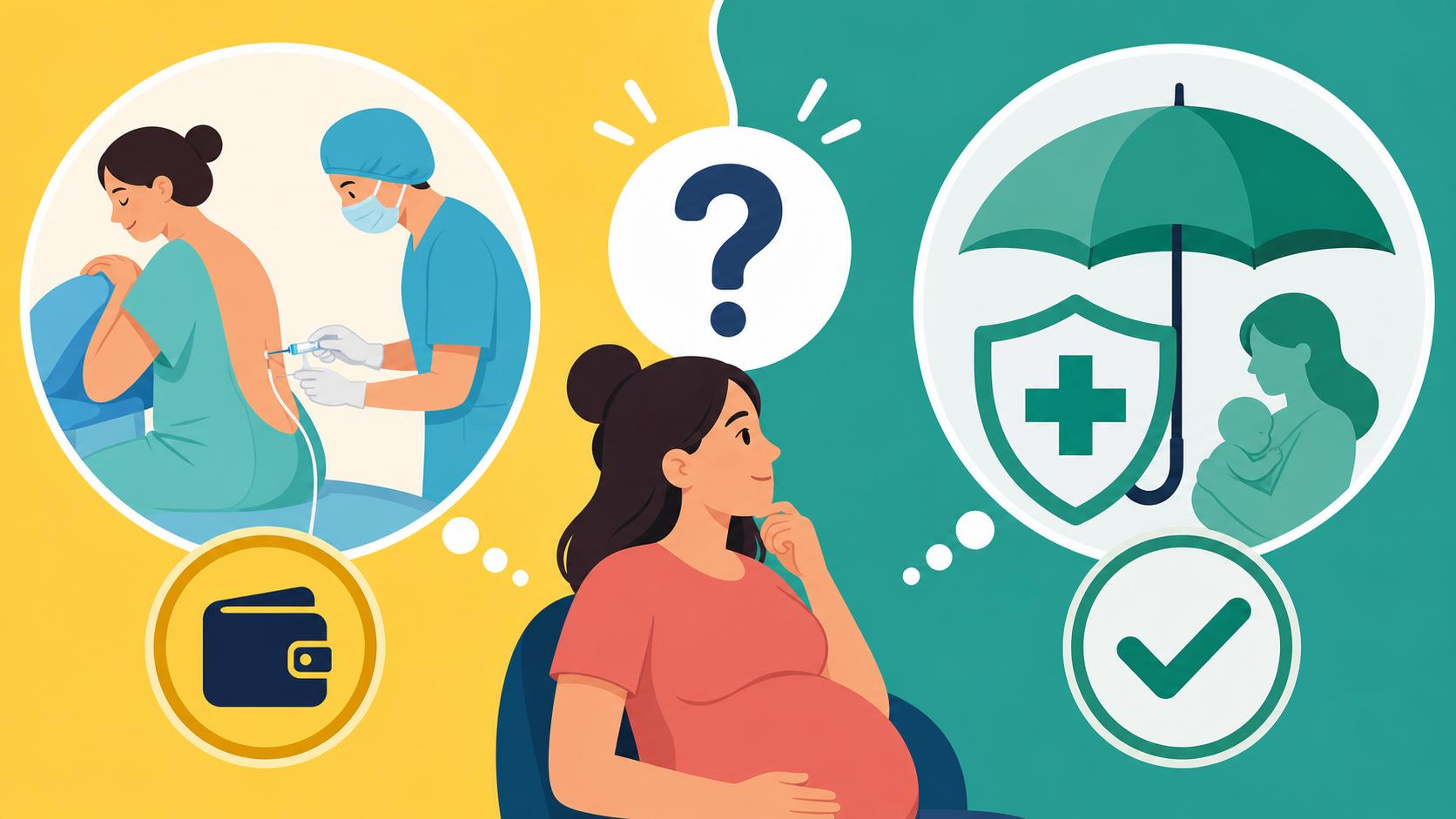
However, the moment you opt for a single room, the rules change completely. In a single room, hospitals and doctors are allowed to charge "fee supplements" that can be 100%, 200%, or even 300% of the base rate. For an epidural that costs 250 EUR at the base rate, an anesthesiologist could legally bill you 750 EUR in a single room. Because these are supplements, the Mutuelle will not reimburse them. This is a critical detail to keep in mind when Choosing a Hospital for Delivery: Public vs Private Rooms. If you do not have private insurance like Cigna Global to pick up these supplements, the "luxury" of a single room could end up costing you an extra 1,500 EUR in total doctor fees by the time you leave.
The Conventioned vs Non-Conventioned Choice
When you walk into a Belgian hospital, you have the right to know if your doctor is "conventioned." A conventioned doctor agrees to stick to the official state prices. For an expat on a budget, this is your safest bet. If your anesthesiologist is conventioned, they cannot charge you extra supplements regardless of the room you are in (though there are some exceptions for very specific hospital types).
If you are worried about these costs, it is worth checking Finding Medical Care in Belgium: GPs, Specialists, and Hospitals to understand how to search for doctors who adhere to the state's pricing agreements. Many hospitals have a mix of both conventioned and non-conventioned staff. During a high-stress moment like active labor, you might not be in the mood to ask your anesthesiologist about their pricing status, which is why doing the legwork during your second trimester is a lifesaver.
I personally recommend asking for a "cost estimation" (an estimation de frais or kostenraming) from the hospital’s financial department around week 30 of your pregnancy. They can tell you exactly what their anesthesiologists typically charge for an epidural and how much your specific Mutuelle is likely to pay back. It takes the guesswork out of the process and lets you focus on the actual birth.
Mutuelle Coverage vs Private Hospitalization Insurance
While the Mutuelle is fantastic for the basics, it is often not enough for a completely "zero-cost" birth. Most Belgians and long-term expats carry "Hospitalization Insurance" (either through their employer or a private provider). This insurance is designed specifically to cover the gaps that the Mutuelle leaves behind—namely, those pesky supplements in single rooms.
If you have a policy with a provider like Cigna Global, you can generally choose a single room and have your epidural supplements covered in full. Without this, you are navigating the Understanding the 75% Reimbursement System for Medical Consultations rules, which apply to many outpatient services but get more complex during a hospital stay. The Mutuelle usually covers about 75% to 90% of the base fee, but 0% of the supplements.
| Cost Category | Shared Room (Mutuelle Only) | Single Room (Mutuelle Only) | Single Room (Private Insurance) |
|---|---|---|---|
| Epidural Base Fee | ~90% Reimbursed | ~90% Reimbursed | 100% Covered |
| Doctor Supplements | 0 EUR (Usually) | 100% – 300% (Out of pocket) | 100% Covered |
| Material Costs | Mostly Covered | Mostly Covered | 100% Covered |
| Patient Co-pay | ~25 – 50 EUR | ~25 – 50 EUR | 0 EUR |
As you can see from the table, the "shared room" option is incredibly affordable for anyone registered with a Mutuelle. If you are a new arrival and still waiting on your ID card, make sure you understand the process of Registering for Public Health Insurance: Step-by-Step at Your Commune so you don't miss the window for coverage.
Preparing for Post-Birth Administration
Once the epidural is done and the baby has arrived, the paperwork isn't quite over. The hospital will eventually send a bill to your home, often several weeks or even months after the birth. Don't panic when you see it. You will need to take this bill (or the digital version) and submit it to your Mutuelle for reimbursement.
In some cases, the hospital uses the tiers-payant system, where they bill the Mutuelle directly for the covered portion, and you only receive a bill for your personal share. This is becoming more common, especially if you have linked your eID card correctly at the admissions desk. However, if you have incurred costs for supplements, you will have to pay the hospital first and then send the claim to your private insurer.
During your recovery, you might find yourself needing various health supplies or vitamins. I found that using iHerb was a great way to stock up on high-quality postnatal supplements that aren't always easy to find in the local pharmacie. It is one less thing to worry about while you are also navigating Maternity Leave Medical Certificates: What Your Doctor Must Fill Out and other administrative hurdles.
Additional Medical Support and Considerations
An epidural is just one part of the birth cost. You also have to consider the pediatrician’s visit in the hospital, the room charges, and the follow-up care. Belgium has a wonderful system for new parents, including home visits from midwives. For more on how to manage the days after you leave the hospital, check out Postpartum Care: Kind en Gezin, ONE, and Home Nursing Visits.
If the birth was particularly difficult or if you are struggling with the transition to parenthood in a foreign country, remember that mental health is just as important as physical health. There are many resources available, and you can find English-Speaking Psychologists in Belgium: Therapy Access to help you through the "baby blues" or more serious postpartum anxiety. Many Mutuelles actually offer a small reimbursement for a certain number of therapy sessions per year, which is worth checking.
Lastly, make sure your The Global Medical Record (DMG/GMD): Why You Need It for Better Refunds is up to date. Having a GMD with your regular GP ensures that your overall healthcare costs, including those related to pregnancy follow-ups, are reimbursed at a higher rate. It is a simple administrative step that saves you money on every doctor visit.
Practical Steps to Manage Your Epidural Costs
To wrap this up, here is a checklist I wish I had when I was eight months pregnant and staring at a hospital brochure:
- Check your room preference: If you want a single room, call your insurance provider (like Cigna Global) and confirm they cover "100% of medical supplements." If they don't, be prepared to pay for the epidural supplement yourself.
- Ask about conventioned status: When you have your pre-birth consultation with the hospital's anesthesia department, ask: "Are all the anesthesiologists in this ward conventioned?"
- Submit your receipts quickly: Don't let the hospital bills pile up. Submit them to your Mutuelle as soon as they arrive to keep your cash flow steady.
- Confirm your registration: Ensure your Mutuelle is active and your "stickers" (vignettes) are ready. If you just moved, double-check that your commune registration is finalized.
Belgium truly offers some of the best obstetric care in the world. The doctors are highly trained, and the hospitals are clean and modern. While the pricing system for an epidural seems complex at first glance, it is actually quite fair once you understand the difference between the base rate and the supplements. By making an informed choice about your room and your insurance, you can ensure that the only thing you have to worry about on the big day is welcoming your new little one.
Disclaimer
This article is provided for informational purposes only and does not constitute legal, financial, or medical advice. Healthcare regulations and reimbursement rates in Belgium are subject to change. Always consult with your Mutuelle, private insurance provider, or a qualified medical professional regarding your specific situation and coverage details.