Getting Contact Lenses Reimbursed: What the Rules Say
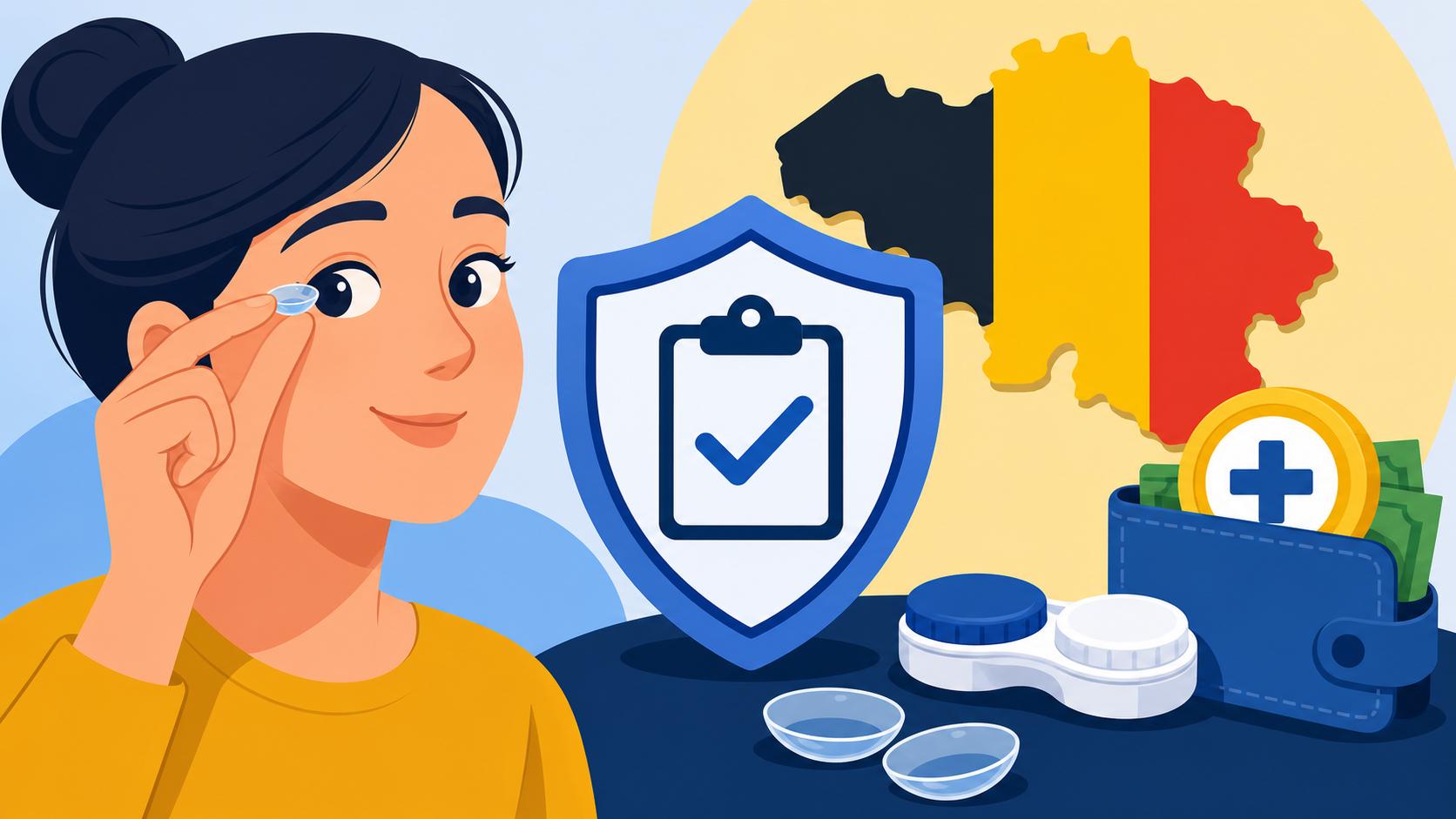
Standing at the counter of a high-end optician in Brussels, staring at a bill for six months of daily disposables that costs more than a weekend in the Ardennes, is a rite of passage for many newcomers. I remember my first year here, clutching my little yellow stickers and wondering why the reimbursement math never seemed to add up. This guide solves the mystery of how to get your contact lenses reimbursed in Belgium without losing your mind to the bureaucracy.
The Complex Reality of Belgian Vision Reimbursements
Navigating the Belgian healthcare system feels like a game where the rules are written in invisible ink, particularly when it comes to vision. To understand how to get money back for your lenses, you first have to understand the two-tier structure of Belgian health insurance. There is the federal "compulsory" insurance (the RIZIV/INAMI rules) and the "supplementary" benefits offered by your specific Mutuelle or Ziekenfonds.
The federal system is notoriously strict. For the national health service to cover your contact lenses, you generally need to have a very high prescription—usually a diopter of +/- 7.00 or +/- 8.25 depending on the specific condition. This is a common source of frustration for expats who might have a -4.00 prescription, which feels significant but doesn't meet the "medical necessity" threshold for federal aid. If you are just starting your journey, you should check the Mutuelle and Ziekenfonds: Public Health Insurance Registration Guide to ensure you are at least in the system before trying to claim anything.
Fortunately, the "supplementary" part of your insurance—the part you pay a small monthly fee for—is where most of us actually get our money back. Most Belgian Mutuelles offer a yearly or biennial "optical package" that covers between €50 and €100 for glasses or lenses, regardless of how "bad" your eyesight is. This is a life-saver, but you have to know exactly which forms to submit to trigger the payment.
The Diopter Threshold and Medical Necessity
If you have a severe visual impairment, the reimbursement rules change dramatically. For those with conditions like keratoconus, irregular astigmatism, or a massive difference in prescription between both eyes (anisometropia), the federal insurance may cover a significant portion of the cost. In these cases, the reimbursement is not just a flat "gift" of €50; it is a calculated percentage of the medical fee.
However, for the average expat with standard myopia or hyperopia, the federal government views contact lenses as a lifestyle choice rather than a medical requirement. This is where Understanding the 75% Reimbursement System for Medical Consultations becomes relevant, as while the consultation to get the prescription is largely covered, the lenses themselves fall under different rules. You are essentially relying on the "extra" perks of your chosen fund.
Why Your Age Matters for Reimbursement
Belgium is much more generous with children and young adults. If you have children under the age of 18, their vision care is often reimbursed at a much higher rate, sometimes with no minimum diopter requirement for the lenses themselves. As an adult, you lose these "early years" benefits, and the system assumes you have a stable income to support your vision needs.
If you are a student or a young professional under 25, some funds like Partenamut or Helan have specific "youth" advantages. Always check if your age bracket qualifies you for a "Start" or "Junior" package within your Mutuelle. If you are still setting up your life here, understanding Social Security Contributions: How Employers Deduct Health Costs will help you see where your money is going and why you're entitled to these benefits in the first place.
The Prescription Trail: Ophthalmologists vs. Opticians
In some countries, you can walk into a shop, have an eye test with a technician, and walk out with lenses. In Belgium, if you want the Mutuelle to pay for even a cent of those lenses, you must follow the medical paper trail. This starts with an MD—specifically, an ophthalmologist.
You cannot simply use a prescription from an optician (the person in the shop) to claim money back from your insurance. The Mutuelle requires a medical certificate signed by a doctor. I learned this the hard way after submitting a receipt from a local boutique only to have it rejected because it lacked the "Ophthalmologist's Stamp." It’s worth the wait for an appointment, even if specialists in cities like Brussels have long lead times. You can find more advice on this in our guide on Finding Medical Care in Belgium: GPs, Specialists, and Hospitals.
Visiting the Ophthalmologist
When you visit the eye doctor, tell them explicitly that you need the document for your Mutuelle (the "attestation de soins donnés" or "getuigschrift voor verstrekte hulp"). They will give you a prescription that includes your diopter measurements. This document is golden. Without it, your reimbursement claim is dead on arrival.
During the consultation, the doctor will also check the health of your eyes, which is vital if you wear lenses daily. Since eye health can impact your general well-being, keeping track of your visits through The Global Medical Record (DMG/GMD): Why You Need It for Better Refunds system is highly recommended. This ensures all your medical data is centralized and can actually increase the amount of money you get back for the consultation fee itself.
Buying Your Lenses: Online vs. Local
Once you have your medical prescription, you are free to buy your lenses. You can go to a high-street optician like Pearle or Hans Anders, or you can order online. However, there is a catch: to get reimbursed, you need a "detailed invoice" that mentions your name, the prescription details, and the fact that they are corrective lenses.
Many expats use international sites for better prices, but you must ensure the invoice is "Belgian Mutuelle friendly." If the invoice is in English and from a company outside the EU, the Mutuelle might get grumpy. If you prefer to manage your health needs with supplements for eye health, such as lutein or omega-3s, you might find options on iHerb. While iHerb won't provide the medical invoice for prescription lenses, it's a great resource for the preventative side of vision care that the Belgian system often ignores.
Submitting the Claim: Stickers and Boxes
After you have your lenses and your detailed invoice, it's time for the "vignettes." These are the small white or yellow stickers you receive when you register with your Mutuelle. You must stick one on the invoice or the specific "optical reimbursement form" provided by your fund.
You then drop this envelope into one of the physical "Mutuelle boxes" found on the streets or at the office. Most funds allow you to upload these documents via an app, which is a massive relief. However, always keep the original paper for at least two years. If you are confused about these little stickers, check What Are Mutuelle Stickers Used For and Where to Put Them for a visual breakdown of the process.
Maximizing Your Refund: Mutuelle Comparison and Private Options
Not all Mutuelles are created equal. In Flanders, you might choose CM (Christelijke Mutualiteit), while in Brussels or Wallonia, Partenamut is very popular among expats because of its English-friendly interface. Each of these funds has a different "cap" on vision care.
| Mutuelle / Fund | Standard Vision Benefit | Frequency | Conditions |
|---|---|---|---|
| Partenamut | €50 | Per calendar year | No minimum diopter required |
| Helan | €50 | Per calendar year | Must buy from a recognized optician |
| CM | €40 – €50 | Every 2 years | Varies by region and extra insurance |
| Solidaris | €75 | Every year | Often requires a specific "Optio" plan |
| CAAMI/HZIV | €0 (Public base) | N/A | Only covers severe medical cases |
If you are a heavy user of expensive daily lenses or require specialized toric or multifocal lenses, a €50 annual benefit is just a drop in the bucket. This is where Private Health Insurance in Belgium: When Do Expats Really Need It? becomes a vital question. For those who want 100% coverage or have complicated vision histories, a plan from Cigna Global can provide the extensive vision modules that local Belgian public insurance simply doesn't offer.
The Role of Private International Insurance
For many expats, the Belgian system is just a "base layer." If you have a high-pressure job or travel frequently, you might want more than the standard public refund. Cigna Global offers specific vision riders that cover not just a flat fee, but a percentage of the total cost of lenses and frames, often with much higher limits than the local Mutuelle. This is particularly useful if you prefer to see English-speaking specialists who may not be "conventioned" (doctors who follow the state-set pricing).
Having this extra layer of protection means you aren't waiting for a €50 refund to hit your bank account three weeks later. Instead, you're operating on a system designed for international lifestyles. If you find the local system too restrictive, looking into Cigna Global is a proactive step to ensure you aren't paying out of pocket for basic necessities.
Conventional vs. Non-Conventional Doctors
When booking your eye appointment, you’ll see the terms "Conventioned" and "Non-Conventioned." A conventioned doctor agrees to the official state price. A non-conventioned doctor can charge whatever they like. Your Mutuelle will only reimburse you based on the state price.
For example, if the state price for an eye exam is €30 but your fancy Louise-area ophthalmologist charges €80, you will only get the percentage of the €30 back. This leaves you with a large "gap." If you are on a tight budget, read How to Find a Conventioned GP in Your Commune to learn how to apply the same searching logic to find an affordable eye doctor.
Practical Tips for Saving on Eye Care in Belgium
Beyond the paperwork, there are cultural and logistical ways to keep your costs down. The Belgian system rewards the organized. If you lose your prescription or forget to ask for the invoice at the time of purchase, it is incredibly difficult to get them retrospectively.
- Sync your appointments: Schedule your eye exam at the end of the year so you can use your current year's benefit for one batch of lenses, and the next year's benefit for the next batch just a few weeks later.
- Use the apps: Apps like Rosa and Doctena are great for finding specialists. For more on this, see Using the Rosa App: Booking Medical Consultations Online.
- Preventative care: Don't neglect the health of the eye surface. You can find high-quality preservative-free eye drops and eyelid wipes on iHerb to keep your eyes healthy, which reduces the need for expensive "comfort" lens upgrades.
- Check your employer's benefits: Many large companies in Belgium offer a "hospitalization insurance" that sometimes includes an ambulatory care module. This can cover the remaining 25% that the Mutuelle leaves behind.
If you ever find yourself in a situation where your glasses break or you lose a lens and can't get to a doctor, knowing Emergency Medical Care in Belgium: 112, Hospitals, and Pharmacies is useful, though standard opticians are rarely considered "emergency" services. Always keep a spare pair of glasses—Belgian bureaucracy moves slow, but the rain in Brussels is constant, and you'll want to see it coming.
Finally, remember that the system is designed to be slow to prevent fraud. Don't panic if your refund takes two or three weeks to appear in your bank account. As long as you have your vignettes, your doctor's certificate, and a detailed invoice, you are legally entitled to your benefit. For a broader look at managing your health as an expat, I highly recommend our Healthcare in Belgium for Expats: Complete System Overview (2027) guide. It will give you the confidence to navigate everything from a common cold to complex eye surgery.
Healthcare Disclaimer
This article is for informational purposes only and does not constitute professional medical or legal advice. Belgian healthcare regulations and reimbursement rates are subject to change by the RIZIV/INAMI and individual insurance funds. Always verify current coverage limits with your specific Mutuelle (Partenamut, CM, Helan, etc.) or private insurance provider like Cigna Global before making significant medical purchases. Consult a qualified ophthalmologist for all vision health concerns.