Pharmacies and Medication in Belgium: Prescriptions and OTC Rules
You’re standing in a supermarket aisle at 7 PM on a rainy Tuesday, frantically looking for a box of paracetamol or some cough syrup, only to realize the shelves are filled with chocolate and beer instead of medicine. I spent my first two months in Brussels wondering why I had to treat a minor headache like a controlled substance transaction at a specialized counter. This guide solves the mystery of the Belgian pharmacy system, explaining exactly how to get your medications, understand the "de garde" system, and navigate the strict prescription rules.
The Green Neon Cross: Understanding the Belgian Pharmacy Landscape
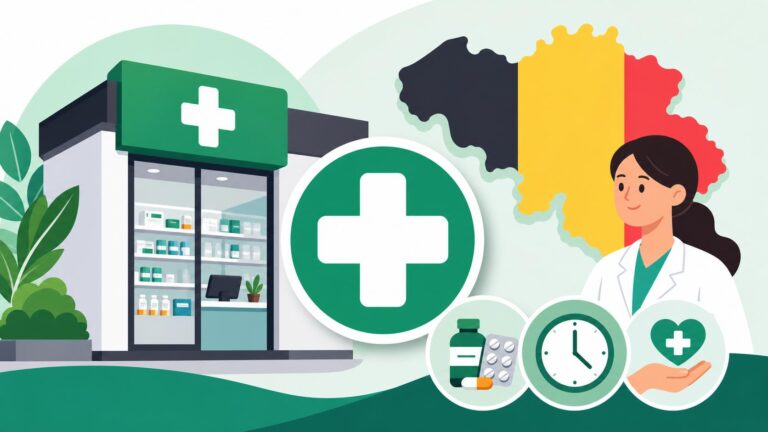
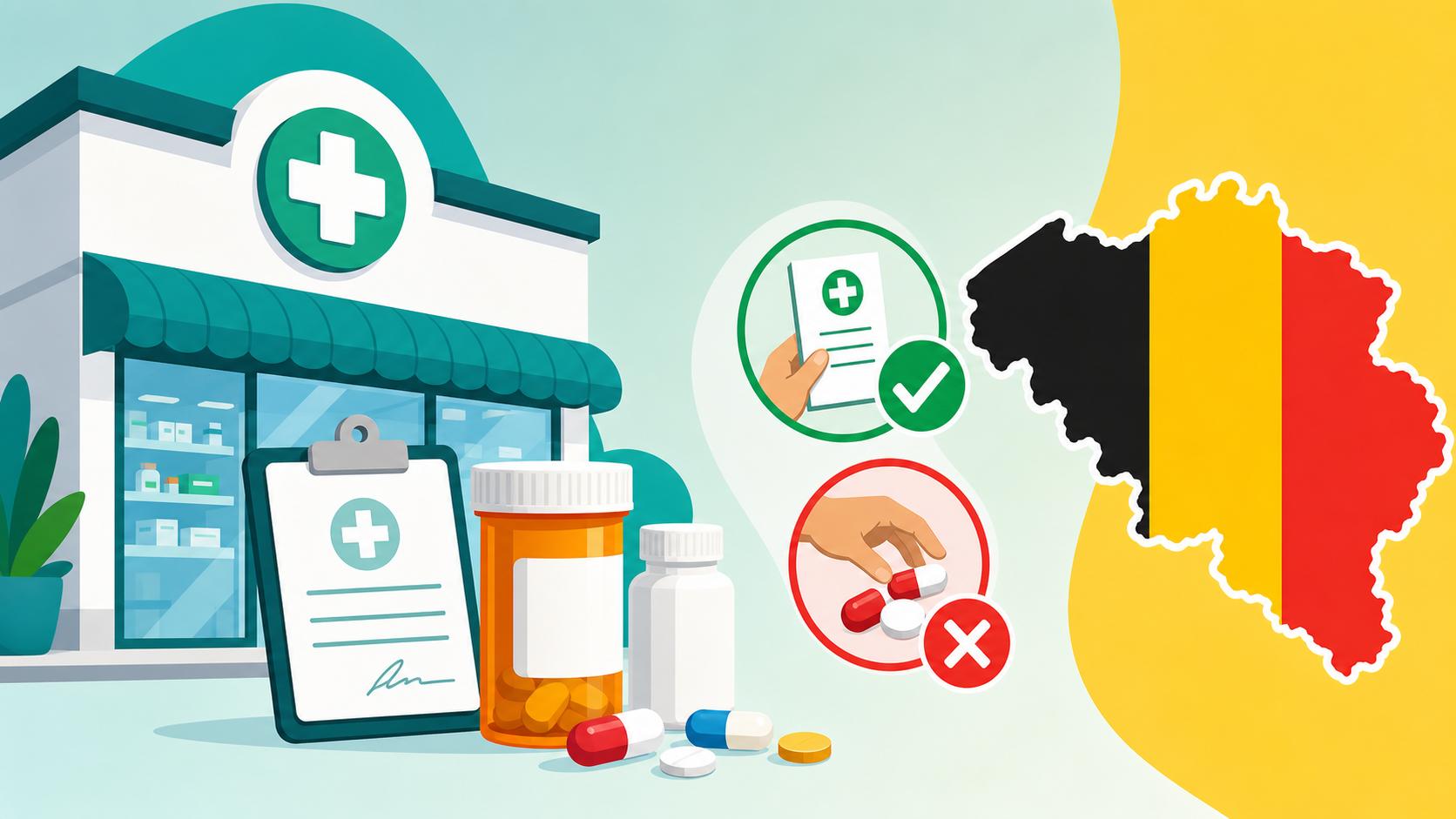
In most countries, you can grab a pack of aspirin while buying milk and bread. In Belgium, that is a legal impossibility. Every single item classified as a medicinal product—even something as simple as throat lozenges or saline spray—must be purchased inside a licensed pharmacy, identifiable by the ubiquitous green neon cross hanging over the sidewalk. These establishments are not just shops; they are highly regulated medical outposts. When you walk in, you aren't just a customer; you are a patient being served by a professional who has undergone years of rigorous pharmaceutical training.
I remember my first interaction with a pharmacist in Antwerp. I wanted a specific brand of antihistamine I used back home. Instead of just pointing me to a shelf, the pharmacist spent ten minutes explaining the active ingredients, checking if I was on other medications, and making sure I knew the side effects. It felt intense at the time, but this level of care is standard. For expats, this means you can’t "self-medicate" by browsing aisles. You must approach the counter and ask for what you need. This is why Finding Medical Care in Belgium: GPs, Specialists, and Hospitals is often the first step to getting the medications you are used to having on hand.
Finding an Open Pharmacy and the Garde System
The standard operating hours for pharmacies in Belgium are usually 9:00 AM to 6:30 PM or 7:00 PM, with a long lunch break (often 12:30 PM to 1:30 PM or 2:00 PM) in smaller towns. On Saturdays, they might only be open in the morning, and on Sundays, everything is shut tight. This can be a massive shock if you are used to 24/7 drugstores. However, Belgium operates a strict "Pharmacien de Garde" (Apotheek van Wacht) system. At any given time, there is a designated pharmacy open in your area to handle emergencies.
If you find yourself in need of medicine at 11 PM, you cannot just drive around looking for a green light. You need to find the specific pharmacy on duty. You can find this list posted in the window of any pharmacy (even the closed ones), or by visiting the official website, pharmacie.be. Keep in mind that if you use an on-duty pharmacy during "emergency" hours (usually after 10 PM or on Sundays), you will be charged a "garde fee." This fee is often waived if you have a valid, urgent prescription, but if you are just buying aspirin because you forgot to restock, expect to pay a premium. You can learn more about this in our specific guide on How to Find an On-Duty Pharmacy (Pharmacie de Garde) at Night.
The Role of the Pharmacist as a Healthcare Provider
Pharmacists in Belgium hold a high degree of social trust and medical authority. They are often the first line of defense in the healthcare system. If you have a minor ailment like a skin rash, a mild cough, or a stomach upset, it is perfectly normal to go to the pharmacy and ask for advice before booking a doctor's appointment. They can recommend OTC treatments or tell you honestly when your symptoms require a visit to the GP.
This relationship is vital because Belgian GPs are often fully booked. The pharmacist can bridge the gap. They also keep a "pharmaceutical record" linked to your eID (electronic identity card). This record allows any pharmacist in the country to see what medications you have been prescribed recently, preventing dangerous drug interactions. If you are a newcomer still waiting for your residence card, you might find this transition tricky. While you wait for your official documents, Private Health Insurance in Belgium: When Do Expats Really Need It? can provide a safety net, as companies like Cigna Global often offer 24/7 helplines to assist with medical navigation.
Deciphering the Prescription System: Electronic and Paper Rules
Belgium has moved almost entirely to a digital prescription system. Gone are the days of trying to read a doctor’s illegible handwriting on a crumpled piece of paper. Today, when you visit a doctor, they "upload" the prescription directly to your national registry number. When you go to the pharmacy, you simply hand over your eID card. The pharmacist scans it, sees the pending prescriptions, and hands you the medication.
However, technology isn't always perfect. Sometimes the system is down, or you might be seeing a doctor who still prefers the old-fashioned way. In those cases, you’ll receive a "Recet" or a paper slip with a barcode. You must present this barcode at the pharmacy. It is important to note that prescriptions have an expiry date—usually three months from the date of issue for reimbursement purposes, though the "validity" for actually receiving the drug can sometimes be longer. If you have moved here with a chronic condition, you should prioritize Choosing Your First GP (General Practitioner) in Belgium to get your local prescriptions established early.
Electronic Prescriptions and Your eID Card
The eID card is the "master key" to your medical life in Belgium. Once your GP has prescribed a medication, it is stored in the cloud. You can even check your own pending prescriptions via the "MyHealth" portal or apps like Helena. This is incredibly convenient for expats because it eliminates the risk of losing a paper script. If you are a regular user of supplements or parapharmacy items that don't require a script, you might still prefer to shop online for better prices, often using sites like iHerb for international brands that aren't stocked locally.
One thing to watch out for is the "quantity" prescribed. Belgian doctors are often quite conservative. If you need a medication long-term, ensure you ask the doctor to prescribe enough "repeats." Even though the prescription is electronic, the pharmacist can only give you what is authorized in the system. If you run out and have no repeats left, the pharmacist cannot legally give you more, even if they can see you’ve been taking it for years. You will have to call your GP for a "renewal," which they can often do remotely by pushing a new digital script to your ID card.
Handling Paper Prescriptions and International Scenarios
If you are just arriving and have a prescription from your home country, things get complicated. Technically, a prescription from another EU country should be recognized in Belgium, provided it contains specific information (the "Cross-border prescription" rules). However, prescriptions from the US, Canada, India, or the UK (post-Brexit) are generally not accepted at Belgian pharmacy counters.
I learned this the hard way when I tried to refill an American prescription for my asthma inhaler. The pharmacist was sympathetic but firm: I needed a Belgian doctor to sign off on it. If you are in this situation, you should read our guide on Refilling Foreign Prescriptions at a Belgian Pharmacy to avoid a stressful situation at the counter. For those with international coverage through Cigna Global, you can often get reimbursed for the GP visit required to "convert" your foreign prescription into a Belgian one.
How to Submit Medical Receipts for Reimbursement
When you buy prescribed medication, you usually only pay the "out-of-pocket" amount at the counter. This is thanks to the "tiers-payant" system, where the pharmacy bills your "mutuelle" (health insurance fund) directly. However, for some medications or if your insurance paperwork isn't fully processed yet, you might have to pay the full price upfront.
If you pay the full price, the pharmacist will give you a document called a "BVAC" (Bijkomende Verzekering/Assurance Complémentaire) or a "vignette." This is not just a receipt; it is the official document you need to send to your insurer to get your money back. Navigating this can be one of the most frustrating parts of the "Brussels shuffle." For a step-by-step walkthrough, check out How to Submit Medical Receipts for Reimbursement in Belgium.
Over-the-Counter (OTC) Realities: Why You Can't Buy Ibuprofen in a Supermarket
The Belgian approach to OTC drugs is rooted in the "monopoly of the pharmacist." This is a shock for anyone used to buying 500-count bottles of Advil at a warehouse club. In Belgium, you will buy a box of 20 or 30 pills, and you will pay significantly more for them than you would in the UK or the US. The logic is that medicine is not a "commodity" and should always be accompanied by professional advice.
Medication Exclusivity: The Pharmacy-Only Rule
In Belgium, drugs are categorized into different "tables." Even things that are OTC require the pharmacist to pull them from a drawer behind the counter. You cannot walk through the aisles and pick up a bottle of cough syrup. You have to ask. This can be intimidating if your French or Dutch is still basic. Most pharmacists in major cities like Brussels, Antwerp, or Ghent speak excellent English, but in smaller villages, you might need to have the active ingredient name (the "molecule") ready on your phone.
Because of this exclusivity, the prices are fixed and generally higher. You won't find "buy one get one free" deals on paracetamol. This is why many expats turn to iHerb for their vitamins, minerals, and non-medicinal health products. While you can't buy antibiotics or heavy painkillers there, you can find high-quality supplements that are often much cheaper than the "parapharmacy" section of a Belgian apothecary.
Essential OTC Essentials for Your First Week
When you first arrive, it is wise to build a "Belgian First Aid Kit." Since you won't have your eID card immediately and might not have registered with a mutuelle yet, you will be paying full price for everything. I always recommend newcomers pick up the following basics as soon as they see a green cross:
- Paracetamol: Known locally as Dafalgan or Panadol.
- Ibuprofen: Often sold as Nurofen or Brufen.
- Antihistamines: Zyrtec or Cetirizine are common.
- Disinfectants: Cedium or Betadine.
Remember that Over-the-Counter (OTC) Drugs in Belgium: What You Can Buy Freely still requires you to interact with the pharmacist. If you are used to specific brands from home, be prepared for them to have different names. For example, Tylenol doesn't exist here; you ask for Dafalgan. Pepto-Bismol is also non-existent; you’ll likely be steered toward Gaviscon or something similar for stomach issues.
Bringing Your Own: Importing Medication and Global Shipping
Many expats try to avoid the high costs and bureaucracy by bringing a year's supply of medication from home. While this seems logical, Belgian customs are notoriously strict. If you are caught at the airport or if a package is intercepted, you could face heavy fines or even criminal charges for "illegal importation of medicinal products."
Customs Limits and Bringing Medication from Home
The general rule is that you can bring a "reasonable quantity" of medication for personal use, usually defined as a three-month supply. You must have a copy of your prescription and a letter from your doctor in English, French, or Dutch explaining why you need the medication. This is especially critical for anything containing stimulants (like ADHD meds) or strong painkillers (opioids), which fall under the Narcotics Act.
If you are planning to have a family member mail you medication from outside the EU, my advice is simple: Don't. It is almost certain to be seized by Bpost or customs at Zaventem. Instead, look into Importing Medication to Belgium: Customs Limits and Expat Rules to understand what is legal. For non-medicinal items like protein powders, specific vitamins, or organic skincare, using a reputable international shipper like iHerb is usually fine, as they handle the VAT and customs declarations correctly for the Belgian market.
Using Services for Supplements and Parapharmacy
The "parapharmacy" section of a Belgian pharmacy is where they sell things like expensive French skincare (Vichy, La Roche-Posay), vitamins, and specialized baby formula. These items do not require a prescription and aren't "medicines" in the legal sense, but they are still sold in the pharmacy.
Prices for these items in Belgium are often very high. If you are on a budget, it pays to shop around. I often find that for specialized supplements or "clean" beauty products, ordering online is the only way to keep costs down. If you have a complex health history, having a global policy from Cigna Global can also be a lifesaver, as they often have partnerships that make getting your "specialty" items easier or provide advice on where to find them locally.
Costs and Reimbursements: Navigating the Financial Side
Understanding what you pay at the pharmacy involves knowing the "reimbursement category" of your drug. Medications in Belgium are categorized into classes (A, B, C, Cs, Cx) based on how essential they are.
| Category | Type of Medication | Reimbursement Level |
|---|---|---|
| Class A | Life-saving (Insulin, Cancer meds) | 100% (You pay €0) |
| Class B | Essential (Antibiotics, Asthma inhalers) | ~75% |
| Class C | Comfort/Chronic (Certain skin creams) | ~50% |
| Class Cs/Cx | Specific context (Flu vaccines, Contraceptives) | 25% to 40% |
| OTC | Painkillers, Cough syrup, Vitamins | 0% (You pay 100%) |
The Tiers-Payant System for Medications
The beauty of the Belgian system is that for prescribed meds in Classes A and B, you don't usually have to pay the full price and wait for a refund. As long as the pharmacist scans your eID and your mutuelle is active, the discount is applied instantly. You only pay your "personal share" (the copay).
If you are a freelancer or have a high income, these costs can still add up over a year. It is worth looking into the "MAF" (Maximum à Facturer) system, which caps your total annual medical out-of-pocket expenses. Once you hit a certain limit based on your household income, all further medications in that year become free. This is a vital part of Healthcare Budgeting: Copays, DMG/GMD, and Reimbursements that every expat family should understand.
Private Health Insurance and Medication
While the public mutuelle is excellent, it doesn't cover everything. Many expats choose a private "Hospitalization" insurance or an international plan like Cigna Global to cover the gaps. Some private plans will reimburse the "personal share" you paid at the pharmacy for prescribed drugs.
This is particularly useful if you require medications that aren't on the "approved" list for public reimbursement. Some newer, high-tech drugs or specific hormonal treatments might not be fully covered by the state system yet. Having that extra layer of private coverage ensures that your health isn't dictated by the government's current reimbursement list.
Specialized Medications: ADHD, Contraception, and Antibiotics
Certain classes of medication in Belgium are handled with extra caution. If you are coming from a country where these are easily accessible, the Belgian "gatekeeper" approach might feel frustrating at first.
Managing ADHD Medication and Strict Stimulant Rules
ADHD medications like Ritalin or Concerta are strictly regulated in Belgium. They are considered controlled substances. To get a prescription, you usually need a report from a certified psychiatrist or a specialized neurologist. A regular GP often cannot start the prescription; they can only "renew" it once the specialist has set the protocol.
If you are moving here with a child who has ADHD, do not wait until your supply runs out to find a doctor. The waitlists for pediatric neurologists in Brussels or Antwerp can be months long. Read our guide on Neurodiversity in Belgium: ADHD and Autism Diagnosis for Expats to get a head start on the paperwork required to ensure a continuous supply of medication.
Accessing Contraception and the Morning-After Pill
Contraception is widely available in Belgium, but most forms (the pill, IUDs, implants) require a prescription from a GP or a gynecologist. The good news is that for women under 25, many forms of contraception are significantly subsidized or even free.
The "morning-after pill" (contraception d'urgence) is one of the few exceptions where you can get the medication without a prescription. You can walk into any pharmacy and ask for it. The pharmacist might ask a few questions to ensure it's safe for you, but they are legally required to provide it. For more details on women's health services, see Women’s Health in Belgium: Gynecology, Screenings, and Birth Control.
Antibiotics: Why You Need a Strict Prescription
Belgium has very strict rules regarding antibiotic resistance. You will never be able to buy antibiotics over the counter. Even if you are 100% sure you have a sinus infection that you’ve had ten times before, a doctor must examine you and issue a digital prescription. Pharmacists are strictly audited on this; they can lose their license for dispensing antibiotics without a valid script. If you are feeling unwell and need a quick diagnosis, Finding English-Speaking Doctors in Brussels, Antwerp, and Ghent is your best path to getting the right treatment.
Emergency Situations and Out-of-Hours Access
Health crises don't follow a 9-to-5 schedule. If you find yourself in a situation where you need medication urgently outside of business hours, you have two main options: the on-duty pharmacy or the hospital emergency room.
Calling the Belgian Poison Centre and Emergency Numbers
If someone has ingested something toxic or had a severe reaction to a medication, do not wait for a pharmacy to open. Belgium has a dedicated Poison Centre that is available 24/7 and staffed by experts who can speak English. You should keep their number (070 245 245) saved in your phone. For other life-threatening situations, the number is 112. You can find a full checklist of what to do in our guide on Emergency Numbers: Calling 112 in Belgium and What to Expect.
The Importance of the "Garde" Pharmacy
For urgent but non-life-threatening needs—like a child’s sudden high fever or an agonizing toothache—the "Pharmacien de Garde" is your destination. Remember that between 10 PM and 8 AM, the on-duty pharmacy might not have their doors open. You often have to ring a bell or talk through a small window. In some high-security areas, you may even need to call the local police station first to get the address of the pharmacy on duty, though this is becoming less common with the rise of the pharmacie.be website.
If you are using an on-duty pharmacy, try to have your eID or at least a digital copy of your residency documents ready. It makes the process much smoother for the pharmacist who is working the graveyard shift. For a deep dive into how these shifts work and how much you can expect to pay in extra fees, see our article on Pharmacies (Apotheek/Pharmacie) in Belgium: Operating Hours and Services.
Important Pharmacy Terms and Procedures
| French Term | Dutch Term | English Meaning |
|---|---|---|
| Pharmacie de Garde | Apotheek van Wacht | On-duty/Emergency Pharmacy |
| Ordonnance | Voorschrift | Prescription |
| Médicament | Geneesmiddel | Medication / Drug |
| Sur ordonnance | Op voorschrift | Prescription only |
| Vente libre | Vrij verkrijgbaar | Over-the-counter (OTC) |
| Notice | Bijsluiter | Patient Information Leaflet |
| Posologie | Dosering | Dosage instructions |
| Effets secondaires | Bijwerkingen | Side effects |
| Ticket modérateur | Remgeld | Your out-of-pocket copay |
Navigating the "Missing" Items: What You Can't Find
One of the weirdest things for expats is realizing that some common "staples" are just not used here. Melatonin, for example, is available but often in much lower doses than in the US or Canada. If you need a high dose for jet lag, you might need a prescription.
Similarly, many "combination" cold and flu medicines (the kind that have a painkiller, a decongestant, and a cough suppressant all in one pill) are frowned upon by Belgian doctors and pharmacists. They prefer to treat each symptom individually. If you ask for "something for a cold," they will likely give you three different boxes: one for the nose, one for the throat, and one for the fever. This is another reason why I often keep a small stash of my favorite "all-in-one" meds from a brand I trust on iHerb, though I am careful to only use them for minor issues.
Final Advice for New Expats
The Belgian pharmacy system is designed for safety and professional oversight, not for consumer convenience. Once you accept that you can't buy aspirin at the gas station, life becomes much easier. Get your mutuelle sorted as soon as you arrive, find a friendly local GP who speaks your language, and always carry your eID card.
If you have a complex medical history, consider an international plan like Cigna Global to ensure you have the highest level of support during your transition. And remember, the pharmacist is your friend—don't be afraid to ask questions, even if you have to use a translation app. They have seen it all before and are there to make sure you stay healthy in your new Belgian home.
Disclaimer
This guide is for informational purposes only and does not constitute medical or legal advice. Always consult with a qualified healthcare professional in Belgium regarding your specific medical needs and medications. Pharmacy regulations and reimbursement rates are subject to change by the Belgian Federal Public Service (FPS) Health. For the most current information, visit the official website of the RIZIV/INAMI or your local mutuelle.