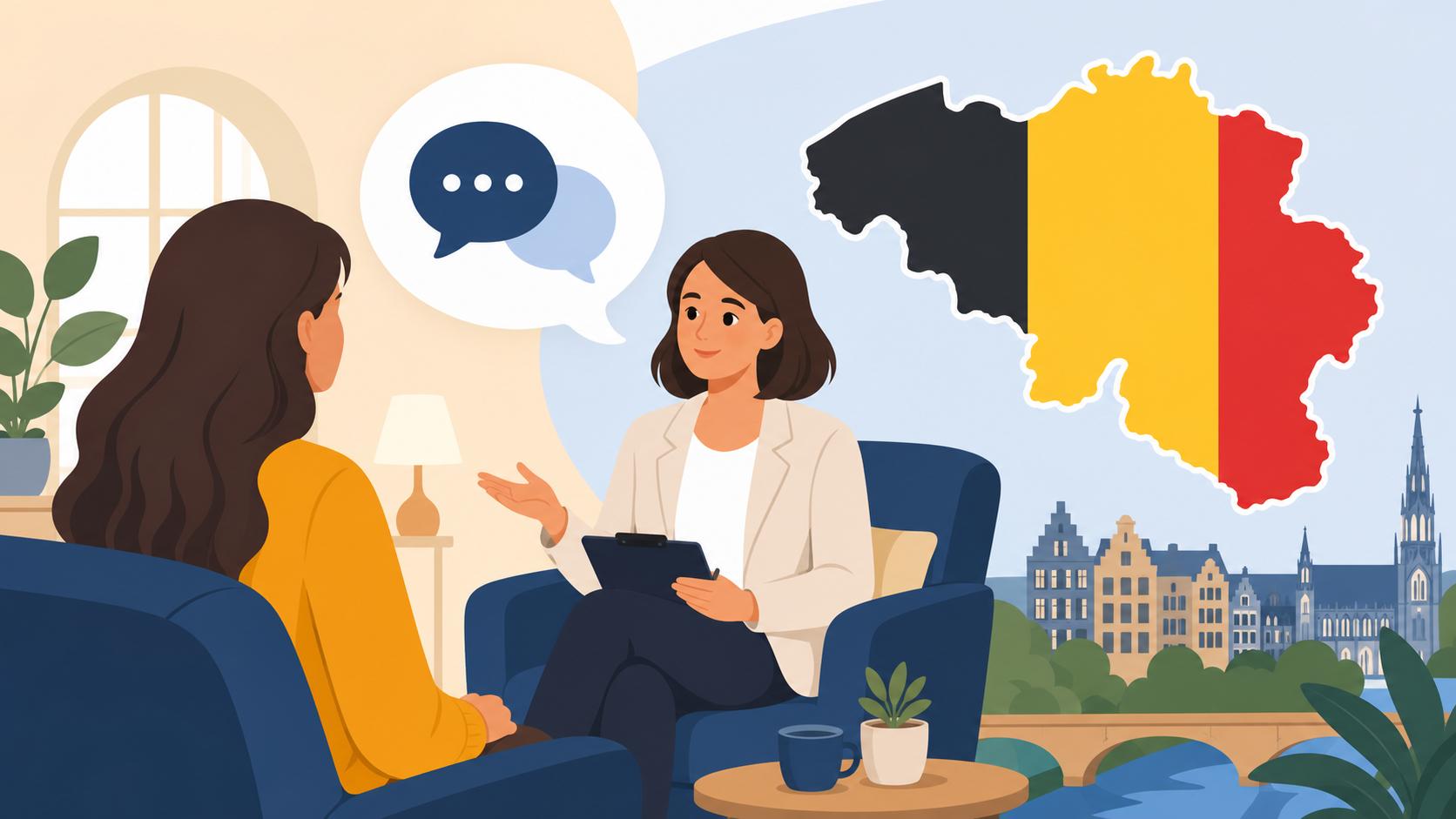
Finding English-Speaking Therapy and Counseling in Belgium
Finding a therapist who truly understands your cultural background and speaks your native language can feel like an impossible task when you are already struggling with the heavy weight of relocation. I remember sitting in my first rain-soaked Brussels apartment, overwhelmed by the "admin fog," wondering if I would ever find someone to talk to. This guide simplifies the search for English-speaking mental health support in Belgium.
Understanding the Mental Health Landscape in Belgium
The Belgian healthcare system is world-class, but for a newcomer, it can feel like a labyrinth of different titles and reimbursement rules. Before you start your search, it is vital to understand who does what. In Belgium, mental health care is divided among several types of professionals, and choosing the wrong one can lead to frustration with both your treatment and your bank account.
Psychologist vs. Psychiatrist vs. Psychotherapist
In Belgium, a Psychologue (Psychologist) typically holds a master’s degree in psychology. They are experts in talk therapy and behavioral interventions. While they are highly trained, they are not medical doctors and cannot prescribe medication. If you are looking for long-term therapy to work through anxiety, depression, or life transitions, this is usually your first port of call. You can find more detail on this distinction in our guide on Accessing Mental Health Services: Psychologists vs Psychiatrists.
A Psychiatre (Psychiatrist), on the other hand, is a medical doctor who has specialized in mental health. They are the only ones who can prescribe antidepressants, anti-anxiety medication, or ADHD stimulants. Because they are medical doctors, their sessions are often more heavily reimbursed by the public health system. However, in my experience, many psychiatrists in Belgium focus more on clinical diagnosis and "medication management" rather than hour-long talk therapy sessions.
Then there is the term "Psychotherapist." This was unregulated for a long time in Belgium, but recent laws have tightened things up. Now, a psychotherapist must generally be a recognized psychologist or doctor who has completed additional specialized training in a specific therapeutic school, such as Cognitive Behavioral Therapy (CBT) or Psychoanalysis. When searching for Mental Health in Belgium: Therapy, Psychiatry, and Expat Support, always check that your provider is registered with the Commission des Psychologues to ensure they meet national standards.
The Public vs. Private System
Belgium operates on a "fee-for-service" model. You pay the provider, and then you seek a refund. The public system is accessible to anyone who has completed their Mutuelle and Ziekenfonds: Public Health Insurance Registration Guide. Under the public system, you can access "conventioned" care, which offers therapy at a significantly reduced rate—sometimes as low as €11 per session.
The catch? The waitlists for conventioned English-speaking therapists are notoriously long. Most expats end up in the private sector, where sessions can cost anywhere from €65 to €120. While the out-of-pocket cost is higher, the availability is much better, and you have a wider choice of specialists who understand the unique pressures of the expat lifestyle. If the private costs feel daunting, checking if your employer offers a policy through Private Health Insurance in Belgium: When Do Expats Really Need It? can be a lifesaver, as these plans often cover several private sessions per year.
How to Find English-Speaking Therapists
Finding a therapist in your own language in a foreign country requires a bit of "detective work." You won’t always find them listed on the standard government websites, as many English-speaking professionals operate in private practices tailored specifically to the international community.
Online Directories and Platforms
The most efficient way to start is by using specialized medical booking platforms. In Belgium, two apps dominate the market: Rosa and Doctena. These platforms allow you to filter providers by language, which is a godsend. I highly recommend Using the Rosa App: Booking Medical Consultations Online because it tends to have a very clean interface and many therapists keep their calendars updated in real-time.
When using these directories, don't just look for "English" as a listed language. Many Belgian therapists speak excellent English but might not specialize in treating native English speakers. Look for profiles that mention international experience or degrees from English-speaking universities. This often indicates a deeper level of cultural fluency that goes beyond just being able to translate words. It is also helpful to cross-reference these names when Finding English-Speaking Doctors in Brussels, Antwerp, and Ghent to see if they are part of a larger multidisciplinary clinic.
Expat-Specific Counseling Networks
One of the best resources in the country is the Community Help Service (CHS). Based in Brussels, this is a non-profit organization that has been supporting the English-speaking community since 1971. They run a 24/7 mental health helpline and have a clinical team of psychiatrists, psychologists, and counselors who are all native or near-native English speakers.
The beauty of CHS is that they understand the "expat cycle"—the initial excitement, the "culture shock" phase, and the eventual long-term integration struggles. They also offer specialized services for children and adolescents, which can be much harder to find in the general Belgian system. If you are in a crisis or just don't know where to start, calling their helpline is a great first step. They can often provide referrals to private practitioners if their own clinical team is full.
Word of Mouth and Community Groups
Never underestimate the power of the expat community. Facebook groups like "Brussels Expats" or "Life in Belgium" are full of people who have been in your shoes. While therapy is a private matter, you can often find recommendations by searching the group archives for keywords like "English therapist" or "counselor."
Many international schools and large employers also maintain "preferred provider" lists. If you work for an EU institution or a major multinational, your HR department likely has a list of English-speaking therapists who are familiar with your specific insurance provider, such as Cigna Global. These providers are often used to the direct billing or specialized reimbursement forms required by international insurance plans.
Navigating the Costs and Reimbursements
The administrative side of Belgian healthcare is enough to make anyone’s head spin. However, once you understand the "vignette" (sticker) system and the role of your health insurance, it becomes much more manageable.
Public Health Insurance (Mutuelle) Coverage
Once you are registered with a mutuelle (like Partena, Hello, or CM), you are entitled to some reimbursement for mental health visits. However, the standard public reimbursement for a private psychologist is relatively low—usually around €10 to €20 per session, for a limited number of sessions per year (often between 8 and 12).
To get even this small amount back, you usually need a "referral" from your GP. This is why Choosing Your First GP (General Practitioner) in Belgium is so important. Your GP acts as the gatekeeper to the system. They will write a short note or fill out a specific form for your mutuelle. Without this, your insurance might reject the claim. It is also worth asking your doctor about Understanding the 75% Reimbursement System for Medical Consultations, as this applies more commonly to psychiatrists than psychologists.
Private Insurance and Employer Benefits
For many of us, the public system's mental health coverage isn't enough, especially if we need weekly sessions. This is where private expat insurance like Cigna Global becomes incredibly valuable. These "top-up" or comprehensive plans often have much higher limits for mental health care, sometimes covering up to 80% or 100% of private therapy costs, including those for specialists who don't work with the Belgian national system.
If you have a plan through Cigna Global, you can often skip the GP referral requirement, though you should always check your specific policy. Many expats find that having this private layer of protection allows them to see the best English-speaking therapists in the "EU Quarter" of Brussels or the trendy areas of Antwerp without worrying about the €100-per-hour price tag.
The Conventioned System for Mental Health
In recent years, Belgium has introduced a "First-Line Psychological Care" program. This is designed to make therapy affordable for everyone. Under this system, you can see a "conventioned" psychologist for a very low co-payment (usually €11, or €4 if you have "increased intervention" status).
The difficulty for expats is finding a conventioned therapist who works in English. Most of these professionals are focused on the local population and work in French or Dutch. However, it is always worth checking the official "myminfin" or mutuelle portals for the list of conventioned psychologists in your commune. If you find one, the savings are massive, though you should expect a longer wait for an intake appointment.
| Provider Type | Average Cost (Private) | Mutuelle Reimbursement | Prescribing Power |
|---|---|---|---|
| Psychiatrist | €60 – €90 | High (approx. 75%) | Yes (Medication) |
| Psychologist | €65 – €120 | Low (€10 – €20/session) | No |
| Conventioned Therapist | €11 (Co-pay) | Covered at source | No |
| CHS Counselor | Varies | Depends on provider | No |
Cultural Nuances and Specialized Support
Mental health isn't just about "feeling better"; it's about being understood. For an expat, the causes of distress are often rooted in the move itself. Living in Belgium means dealing with "the gray," the complex language divide, and the difficulty of making friends with locals who often have established social circles from primary school.
Dealing with Expat-Specific Challenges
There is a specific kind of burnout that comes with living abroad. It's the exhaustion of performing every daily task in a second language and the isolation of being far from your support network. Many therapists in Belgium specialize in "Expat Life Transitions." They can help you navigate Expat Health Trauma: Support Groups for Isolation and Culture Shock, providing a space where you don't have to explain why the Belgian "commune" system is making you cry—they already know.
Sometimes, the "blues" in Belgium are also physical. The lack of sunlight in the winter months can lead to Seasonal Affective Disorder (SAD). While therapy is the foundation, I’ve found that supplementing with high-quality Vitamin D or Magnesium can help support your mood. I usually order these from iHerb because they carry the specific high-dosage brands I used back home that are sometimes hard to find in a local apotheek. A little self-care through iHerb and a good therapist can make a rainy February in Ghent feel much more bearable.
Neurodiversity Support for English Speakers
If you are moving to Belgium with ADHD or Autism, or if you suspect you might be neurodivergent, finding an English-speaking specialist for a diagnosis is a priority. The Belgian system for adult ADHD diagnosis is quite rigorous and usually requires a psychiatrist.
We have a dedicated guide on Neurodiversity in Belgium: ADHD and Autism Diagnosis for Expats that breaks down the clinics that offer testing in English. Be aware that the waitlists for these assessments can be 6 to 12 months long. If you are already on medication, bring your home-country prescriptions and a detailed letter from your previous doctor. This will make it much easier for a Belgian psychiatrist to take over your care and ensure your Cigna Global coverage remains seamless.
Emergency Mental Health Resources
If you or someone you know is in immediate danger, do not wait for a therapy appointment. In Belgium, the emergency number for all medical crises is 112.
For mental health specifically, you can go to the "Urgences" (Emergency Room) of any major hospital. In Brussels, the St-Luc University Hospital and Erasme have dedicated psychiatric emergency departments. If you need to speak to someone immediately but are not in physical danger, the CHS Helpline (02 648 40 14) is available 24/7 in English. They are a lifeline when the walls feel like they are closing in.
Practical Steps for Your First Session
Once you have found a potential therapist, the first step is usually an "intake" session. This is as much an interview for them as it is for you.
Preparing for the Intake Interview
In your first session, the therapist will ask about your history, your goals, and why you are seeking help now. For expats, I recommend being very honest about your "relocation timeline." Did these feelings start before you moved, or are they a direct result of the culture shock?
If you are using private insurance like Cigna Global, bring your policy details or any specific forms they require the therapist to sign. Most therapists in Belgium are familiar with these forms, but it's better to have them ready from day one to avoid reimbursement delays. Also, check if the therapist expects payment in cash or via the Payconiq app, which is the standard way to pay for almost everything in Belgium these days.
Language Barriers and "Medical English"
Even if your therapist speaks English, there might be moments of "Lost in Translation." Behavioral health involves many idioms and emotional nuances. Don't be afraid to ask for clarification if a term doesn't sound right.
Conversely, if you are seeing a Belgian psychiatrist for medication, they might use the French or Dutch names for certain drugs. It is helpful to keep a list of your current medications and their active ingredients (not just the brand names). If you find that specific supplements help you manage your stress, mention those too. I’ve often discussed my iHerb orders for L-Theanine or Ashwagandha with my therapist to ensure they complement the clinical work we are doing.
Disclaimer
The information provided in this guide is for educational and informational purposes only and does not constitute medical or legal advice. Mental health regulations and insurance reimbursement policies in Belgium are subject to change. Always consult with a qualified healthcare professional or your insurance provider (such as Cigna Global) regarding your specific situation and coverage. In case of a medical or psychiatric emergency, please dial 112 or contact the Community Help Service (CHS) helpline immediately.