Occupational Health Checks: What the Medicine du Travail Does
Getting a mysterious summons for a medical appointment from your new Belgian employer can feel like a stressful interrogation is looming. I remember staring at my first invitation to the "Medicine du Travail" in Saint-Josse, wondering if my occasional back pain or love for Belgian fries would somehow disqualify me from my job. This guide demystifies the Belgian occupational health system, explaining exactly what happens during these checks and why they are actually designed to protect you, not catch you out.
Understanding the Concept: What is Medicine du Travail?
In Belgium, the health of workers is taken incredibly seriously, governed by a complex set of laws known as the Code of Well-being at Work. The term "Medicine du Travail" (in French) or "Arbeidsgeneeskunde" (in Dutch) refers to a specialized branch of medicine focused entirely on the relationship between your health and your professional environment. Unlike your family doctor, these physicians aren't there to treat your flu or prescribe antibiotics; their sole mission is prevention and protection within the workplace.
The Legal Obligation for Employers
Every single employer in Belgium, whether they are a massive multinational in the Antwerp port or a small non-profit in Namur, is legally required to affiliate with an External Service for Prevention and Protection at Work (SEPP/EDPB). You might see names like Mensura, Liantis, Cohezio, or IDEWE on your appointment slip. These are private, independent organizations that act as the middleman between the government’s labor laws and your company.
Your employer pays for these services, and they are mandatory. If you are a "risk-bearing" worker—which includes anyone working with chemicals, heavy machinery, high-stress environments, or even just those who spend more than four hours a day in front of a computer screen—you must undergo periodic medical evaluations. To get a broader sense of how this fits into the national framework, you should check out the Healthcare in Belgium for Expats: Complete System Overview (2027) to see how public and occupational health intersect.
The Role of External Prevention Services
These organizations (the SEPPs) don't just employ doctors. They house multidisciplinary teams including ergonomists, industrial toxicologists, and psychosocial risk experts. When you visit their clinic, you aren't just seeing a doctor; you are interacting with a system designed to ensure your chair isn't ruining your spine and your boss isn't creating a toxic environment that leads to burnout.
From a veteran expat's perspective, it’s helpful to view the SEPP as a neutral third party. They are not "company doctors" in the sense that they report your secrets to HR. In fact, their independence is protected by law. They are often the first line of defense if you feel that your workplace is becoming unsafe or unhealthy. If you have supplemental coverage like Cigna Global, you might find that while they handle your private specialist visits, the occupational health service is your best bet for documenting work-related physical strain.
Preventive Health vs. Curative Care
It is vital to understand that the occupational physician will never replace your GP. They cannot write you a standard prescription for a respiratory infection or refer you to a cardiologist for a non-work-related issue. Their scope is strictly "occupational." If they find something concerning during your checkup—like high blood pressure or a suspicious mole—they will advise you to consult your own doctor.
For this reason, Choosing Your First GP (General Practitioner) in Belgium remains a top priority when you arrive. You want to have a primary care provider who can receive the notes from the occupational health service if something is flagged. The Medicine du Travail is the "safety net" for your professional life, while your GP and Mutuelle and Ziekenfonds: Public Health Insurance Registration Guide cover your personal well-being.
The Mandatory Medical Examination: Process Step-by-Step
The actual appointment usually lasts between 20 and 40 minutes. It often takes place in a dedicated clinic owned by the SEPP, though larger companies might have an on-site medical suite. You are legally allowed to attend this appointment during your working hours, and your employer must pay for your travel costs.
The Physical Screening and Pre-tests
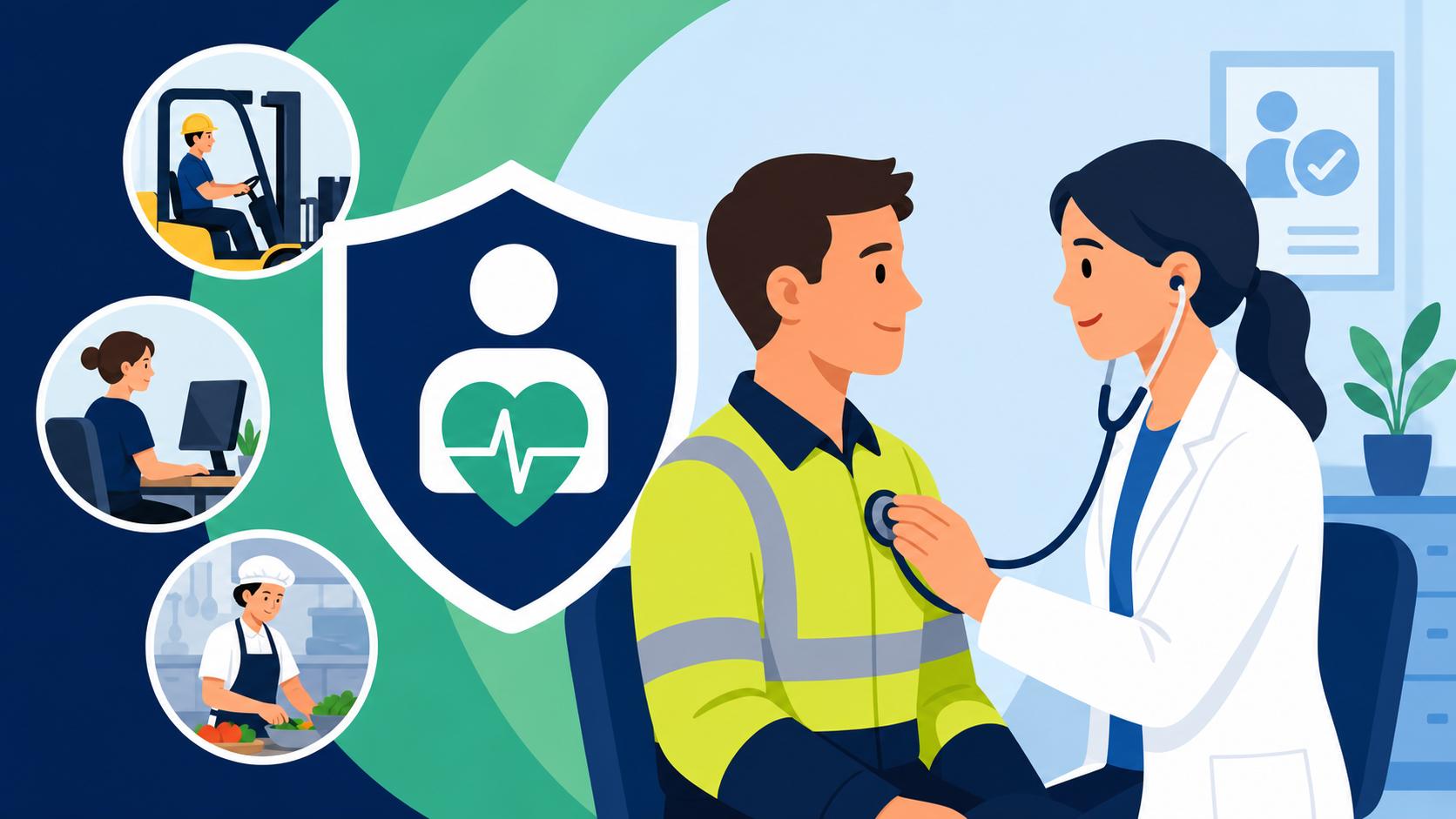
When you arrive, you’ll usually start with a nurse or a medical assistant. They will perform a series of standard screenings. Depending on your job description, this might include a vision test (especially if you work on screens), a hearing test (if you work in noisy environments), and a urine sample to check for glucose or protein levels.
In some cases, they might take your blood pressure and measure your height and weight. If your role involves physical labor, they may test your lung capacity or your grip strength. While these tests are routine, it’s always a good idea to maintain your general health with supplements or vitamins from iHerb to ensure you're feeling your best, though the doctor is mostly looking for baseline data to track over the years.
The Consultation with the Occupational Physician
After the initial screenings, you will sit down with the doctor. This is the "conversational" part of the exam. They will ask about your medical history, any surgeries you’ve had, and specifically how you feel at work. Are you experiencing unusual fatigue? Do you have recurring headaches? Is your workspace ergonomic?
This is also where "psychosocial risks" come into play. In Belgium, the law requires doctors to look for signs of excessive stress or potential burnout. If you are struggling with the transition to a new country or the pressure of a high-stakes role, this is a safe place to mention it. They can offer advice on workplace adjustments or refer you to the Mental Health in Belgium for Expats: Therapy, Psychiatry, and Expat Support resources available in the country.
The Evaluation Result: Fit or Unfit?
At the end of the visit, the doctor fills out a document called the "Health Assessment Form" (Formulaire d'évaluation de santé / Gezondheidsbeoordelingsformulier). There are four possible outcomes:
- Fit: You can do your job as described.
- Fit with conditions: You can do your job, but the employer must provide an ergonomic chair, a standing desk, or perhaps avoid night shifts.
- Temporarily Unfit: You cannot work right now, usually due to an injury or acute illness, and will be re-evaluated later.
- Unfit: You are permanently unable to perform this specific role.
Crucially, the doctor cannot tell your employer why you are unfit or what conditions you have. They simply state the functional conclusion. This protects your privacy while ensuring the employer meets their "Duty of Care."
| Type of Medical Visit | Who Needs It? | Frequency | Primary Goal |
|---|---|---|---|
| Pre-employment | High-risk roles / Safety sensitive | Once before starting | Baseline health assessment |
| Periodic | Anyone in a risk-bearing role | Every 1–5 years | Monitor changes over time |
| Return to Work | Anyone absent for >4 weeks | Upon return | Ensure workplace safety |
| Maternity | Pregnant/Breastfeeding employees | As soon as announced | Adjust risks (chemicals/lifting) |
| Spontaneous | Any employee with concerns | On demand | Address specific health worries |
Rights and Confidentiality: What Your Boss Doesn't Know
The biggest fear I see among the expat community is the "Big Brother" aspect. Will the company find out about my chronic condition? Will they fire me if I tell the doctor I'm stressed? The answer, thanks to Belgium's strict professional secrecy laws, is a resounding no.
The Professional Secrecy Rule
The occupational physician is bound by medical secrecy. This means they are legally prohibited from sharing your diagnosis, your medical history, or even the details of your conversation with your employer. The only thing the employer receives is the Health Assessment Form mentioned earlier.
This separation is vital. It allows you to be honest with the doctor. If you are managing a condition with specialized help from Finding Medical Care in Belgium: GPs, Specialists, and Hospitals, you can tell the occupational doctor so they can ensure your work doesn't aggravate it, knowing that your HR department will never see those clinical notes.
Refusing Certain Tests and Samples
You have the right to refuse certain parts of the exam if they aren't relevant to your job risks. For example, if you are an accountant and the doctor asks for a drug test without a specific safety justification (like operating a forklift), you can decline. However, in "safety-sensitive" roles (pilots, bus drivers, crane operators), refusal can lead to being declared "unfit" because the doctor cannot verify you are safe to perform the role.
Always ask: "How does this test relate to my specific job risks?" A good doctor will be happy to explain the connection. Most expats find that being cooperative actually helps, as the doctor can then advocate for you to get better equipment or more flexible hours.
Accessing Your Digital Health Records
Belgium has moved toward a highly digitized health system. Your occupational health results are often uploaded to a centralized platform. You can see these records yourself by following the MyHealth.belgium.be Guide: Accessing Your Medical Records Online. This is incredibly useful because it allows you to keep a history of your vaccinations, vision tests, and hearing results as you move between different employers in Brussels or Flanders.
Specialized Visits: Return to Work and Burnout
Occupational health isn't just about the routine checkup you have every few years. It becomes a vital lifeline during major life events or health crises. If you are on long-term sick leave, the Medicine du Travail is the gatekeeper of your return.
The Reintegration Path (Trajet de Réintégration)
If you have been off work for several months—perhaps due to a surgery or a severe burnout—the "Reintegration Path" is triggered. This is a formal process where the occupational physician, you, and (optionally) your employer discuss how to get you back to work safely. This might involve "progressive return," where you work 40% or 60% of your hours while still receiving some benefits.
Understanding Sick Leave in Belgium: Medical Certificates and Informing Employers is essential here. You need to know the paperwork trail to ensure your reintegration is handled legally. The doctor’s role is to ensure the company doesn't push you too hard, too fast.
Burnout and Mental Health Support
Belgium is one of the few countries that has specific legislation regarding "burnout" as a workplace risk. If you feel you are reaching a breaking point, you can request a "spontaneous consultation" with the occupational physician. You don't need your boss's permission to book this.
They can act as an early warning system, recommending that the employer reduce your workload or adjust your responsibilities before you fall into a long-term illness. For those on a What is a Flexi-job and Who is Eligible to Work One?, the rules can be slightly different, but the core protection for your mental well-being remains a priority of the state.
Maternity and Breastfeeding Protection
As soon as you inform your employer you are pregnant, the occupational health rules shift. If you work in a lab, a hospital, or an environment with physical risks, the doctor must perform a risk assessment immediately. In some cases, you might be moved to an administrative role or even put on "prophylactic leave" if no safe work is available.
The same applies to breastfeeding. If your work involves toxic substances that could pass through breast milk, the doctor can mandate protections or leave. You can find more details on how this interacts with your time off in the Maternity and Paternity Leave Regulations for Employees guide.
Practical Tips for Expats Navigating the System
Living in a country with three official languages means the administrative side of health can be a headache. However, with a bit of preparation, your Medicine du Travail visit can be a smooth, even helpful, experience.
Handling Language Barriers and Translation
In Brussels, most occupational doctors speak English, but it is not a guarantee. In deeper Wallonia or Flanders, you might encounter a doctor who only speaks the local language. You have the right to bring a translator or ask for a doctor who speaks English, though you should request this when the appointment is first booked by your HR department.
If you are worried about technical terms, bring a list of your medications (or your iHerb order history if you take specific supplements) and any recent medical reports from your home country. Having these translated or at least summarized in French or Dutch can be a lifesaver.
Scheduling and "Working Hours" Rules
Remember: you do not have to take "Congé" (holiday) for this appointment. It is considered working time. If the clinic is an hour away, that travel time is also working time. If your employer tries to make you go on a Saturday or after your shift, they are likely in violation of the labor code.
Also, keep an eye on your payslip. The cost of these visits and the general prevention system is funded through the Social Security Contributions: How Employers Deduct Health Costs that are automatically taken from your gross salary. You are paying into this system, so don't be afraid to use it to its full extent.
Comparing Costs and Supplementary Health
While the occupational checkup is free for you, it doesn't cover everything. If the doctor suggests you need specialized physiotherapy for a work-related back issue, the "Medicine du Travail" won't pay for the sessions. This is where your private insurance comes in.
Many expats choose to have a plan like Cigna Global to bridge the gap between what the public system (the Mutuelle) covers and what specialized therapists charge. While the occupational doctor identifies the need for care, your private insurance ensures you get the best care without long waiting lists.
The Future of Occupational Health: Digitalization
The Belgian system is currently undergoing a massive digital overhaul. By the end of 2026, the goal is for all occupational health assessments to be fully integrated with the "Working in Belgium" portal. This means that if you change jobs from a tech firm in Ghent to a pharmaceutical company in Wavre, your health history and risk profile will follow you seamlessly.
This digitalization aims to reduce the "lost in translation" moments that many expats face when moving between different SEPP providers. It also allows for better tracking of long-term risks, like noise exposure or chemical handling, over a 30-year career.
For you, the expat, it means less paperwork and more transparency. You will be able to see exactly what the doctor concluded and what your employer is required to do to keep you safe. It transforms the Medicine du Travail from a "scary mandatory checkup" into a powerful personal health tool that you control.
Occupational Health Checks: What the Medicine du Travail Does Disclaimer
This article is intended for informational purposes only and does not constitute legal or medical advice. Occupational health laws in Belgium are subject to change, and specific employer requirements may vary based on your sector and risk category. Always consult with your HR department, your trade union, or a qualified legal professional regarding your specific rights and obligations under Belgian labor law. For medical concerns, always seek the advice of your General Practitioner or a qualified healthcare provider.