EHIC and Temporary Cover: Using European Health Cards Before Mutuelle Setup
Arriving in Belgium and realizing your official health insurance isn't active yet is a classic expat panic moment. I remember sitting in my first dusty Brussels apartment, feeling a flu coming on, and staring at my plastic European Health Insurance Card (EHIC) like it was a cryptic relic. This guide solves the mystery of how to use that temporary cover to navigate the Belgian medical system before your local mutuelle is fully set up.
Understanding the European Health Insurance Card in the Belgian Context
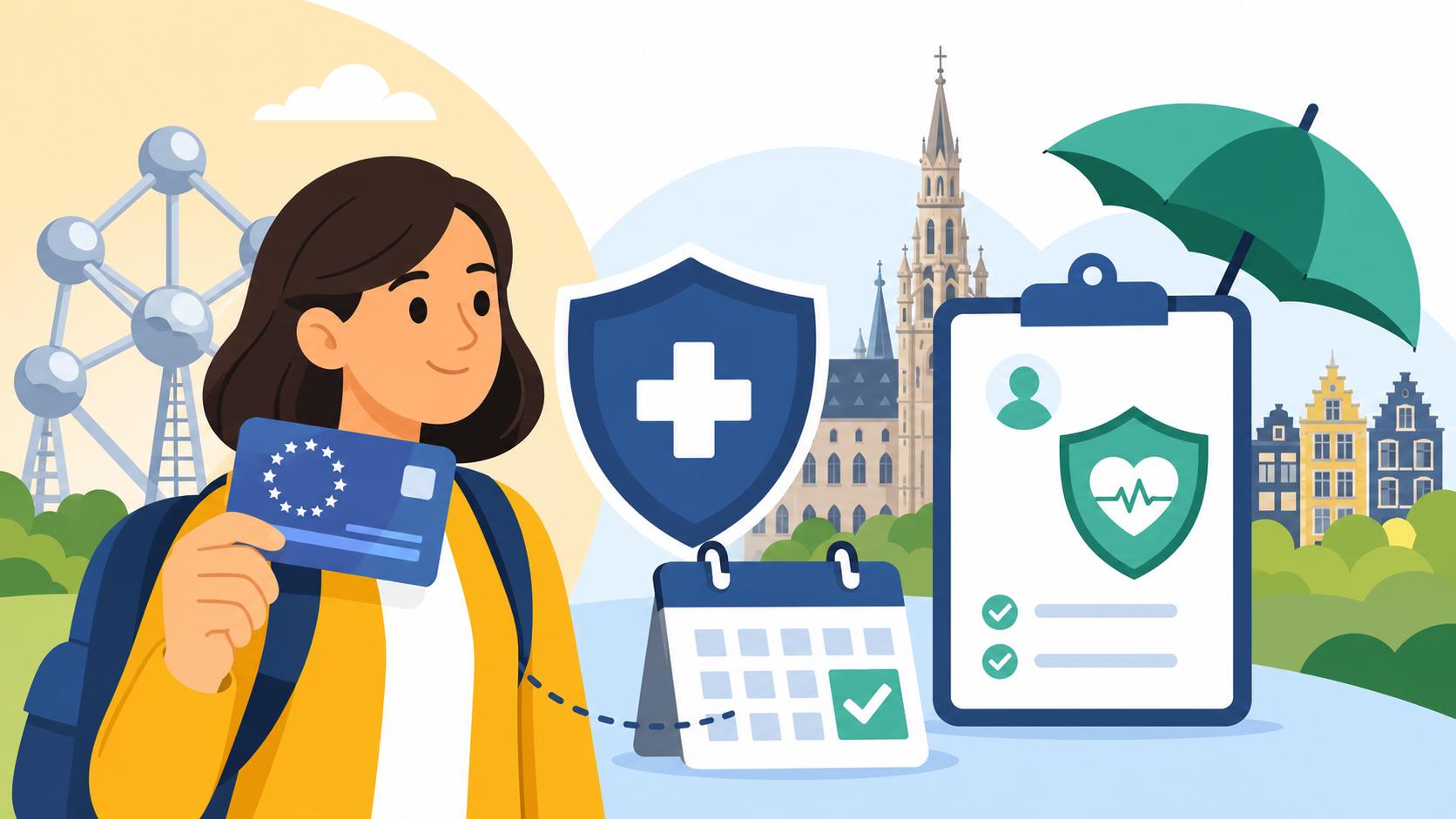
The EHIC is often misunderstood as a "golden ticket" that makes everything free. In Belgium, a country that loves its paperwork as much as its chocolate, the EHIC serves as a vital bridge. It is designed to give you access to state-provided healthcare during a temporary stay under the same conditions and at the same cost as people insured in Belgium. If you are an EU/EEA or Swiss national, this card is your lifeline while you navigate the weeks-long process of registering at the commune.
What is the EHIC and who is it for
The EHIC is a free card that provides access to medically necessary, state-provided healthcare during a temporary stay in any of the 27 EU countries, plus Iceland, Liechtenstein, Norway, and Switzerland. For a new expat in Belgium, "temporary" is the operative word. Until you have your residence permit and have completed the Registering for Public Health Insurance: Step-by-Step at Your Commune process, you are technically in a transitional state.
It’s important to realize that the EHIC is not a replacement for travel insurance or long-term Belgian residency insurance. It doesn't cover private healthcare or costs such as a return flight to your home country. I’ve seen many friends arrive from Spain or Italy thinking the EHIC would cover them forever, only to realize that once you become a resident, you must transition to a Belgian mutuelle. However, for those first 90 days, or while your eID is being processed, it is your primary defense against massive medical bills.
Why the EHIC is your safety net during the mutuelle wait
In Belgium, you cannot officially join a mutuelle (health insurance fund) until you have a national registry number, which usually comes after your police check and commune registration. This "limbo" period can last anywhere from three weeks to three months. During this time, if you need to see a doctor, you are essentially a ghost in the system. The EHIC allows you to be treated as a Belgian local rather than a "private patient" who might be charged higher, non-regulated fees.
When you present your EHIC, you are tapped into the Belgian "tiers-payant" (third-party payer) system where possible, or more likely, you pay upfront and claim it back later. This ensures you aren't stuck paying the full commercial rate for a hospital stay. If you’re coming from outside the EU and don't have an EHIC, this is exactly where a private provider like Cigna Global becomes essential, as they can cover that gap without the administrative hurdles of the Belgian state system.
Limitations of the EHIC: What it doesn't cover
I cannot stress this enough: the EHIC is for "necessary" care. This means you can’t use it for elective surgeries or to fly back home for a specialist appointment. It also won't cover the "remnant" or "co-payment" (ticket modérateur) that every Belgian resident pays. In Belgium, the state usually covers about 75% of a doctor’s visit, and you pay the remaining 25% out of pocket. The EHIC will help you get that 75% back, but that 25% is yours to keep—unless you have supplementary insurance.
Furthermore, if you use your EHIC at a doctor who is "non-conventioned" (meaning they don't follow the state-set price list), the EHIC will only reimburse you based on the official state rate. If the doctor charges double that rate, you are responsible for the difference. This is why many expats also look into Private Health Insurance in Belgium: When Do Expats Really Need It? to ensure they have 100% coverage, especially for dental work or private hospital rooms which the EHIC barely touches.
Using the EHIC at Belgian Doctors and Hospitals
Using your card in the wild can be intimidating. Unlike some countries where you just swipe a card and walk out, Belgium often requires a "pay-then-reclaim" approach. Whether you are in a sleek clinic in Antwerp or a neighborhood GP's office in Ixelles, the process remains relatively consistent, provided you know which questions to ask.
Choosing your first GP in Belgium with an EHIC
Your first task is Choosing Your First GP (General Practitioner) in Belgium. When you call to book an appointment, the first thing you should ask is: "Êtes-vous conventionné?" (French) or "Bent u geconventioneerd?" (Dutch). This confirms they follow the official price agreement. If they say yes, a standard consultation will cost around 30 to 40 Euros. You will pay this amount at the end of the visit, usually via the Payconiq app or a bank card.
Always tell the doctor's receptionist that you are using an EHIC from your home country. They will need to take a copy of the card. Instead of the digital "eAttest" system which Belgian residents use, the doctor will give you a paper receipt—a green or white slip of paper. Do not lose this! This paper is the only way you will get your money back. If you’re feeling under the weather and just need basic health supplies or vitamins while waiting for your appointment, a quick order from iHerb can save you a trip to the pharmacy for non-prescription needs.
Emergency medical care: 112 and hospitals
If you find yourself in a true emergency, the rules change slightly. For immediate life-threatening issues, you should call 112. In an emergency room (Urgences/Spoedgevallen), show your EHIC immediately. Belgian hospitals are highly efficient, and the EHIC should allow them to bill your home country's health service directly for a large portion of the costs, though you will still receive a bill in the mail for your personal share a few weeks later.
Be aware that Emergency Medical Care in Belgium: 112, Hospitals, and Pharmacies involves different billing structures. The ambulance ride itself is often billed separately and is only partially covered by the state. This is a common shock for expats. Make sure the hospital staff records your EHIC details correctly upon admission to avoid being billed as a "non-resident," which can result in a bill that is four to five times higher than the standard rate.
Identifying conventioned vs non-conventioned doctors
This is the most common pitfall for newcomers. A "conventioned" doctor adheres to the prices set by the National Institute for Health and Disability Insurance (INAMI/RIZIV). A "non-conventioned" doctor can charge whatever they want. If you use your EHIC with a non-conventioned doctor, you will still only be reimbursed the 75% of the official rate, not the actual price you paid.
To find these doctors, you can use the search tool on the INAMI website or look for the "Conventionné" sticker on their door. Most doctors in university hospitals are conventioned, but many specialists in private practices in wealthy areas of Brussels or Antwerp are not. Always verify this before you sit in the chair, or you might find that your "temporary cover" covers very little of a 150-Euro consultation fee.
Practical Steps for Reimbursement with an EHIC
Once you have your paper receipt from the doctor, the real work begins. Since you don't have a Belgian mutuelle yet, you can't just drop the receipt into a mailbox and expect a refund. You have to deal with the "Auxiliary Fund for Sickness and Invalidity Insurance" (CAAMI/HZIV).
How to submit medical receipts to CAAMI
CAAMI is the Belgian state body that handles health insurance for those who don't want to join a private, paid mutuelle, and it is also the body responsible for EHIC holders. To get your money back, you need to visit a CAAMI office in person or send your documents by post. You will need to provide a copy of your EHIC, a copy of your ID, and the original "Attestation de Soins Donnés" (the paper the doctor gave you).
I remember my first trip to the CAAMI office in Brussels. It felt like a scene from a bureaucratic spy movie. You take a ticket, wait in a quiet hall, and then hand over your papers. They will also ask for your bank details (IBAN). If everything is in order, the money should appear in your account within a few weeks. This is the manual version of How to Submit Medical Receipts for Reimbursement in Belgium, a process that becomes much easier once you are fully registered.
Understanding the 75 percent reimbursement system
Belgium's healthcare system is based on a "co-payment" model. For almost every service, the patient is responsible for a portion of the cost. This is why Understanding the 75% Reimbursement System for Medical Consultations is crucial. For a GP visit, if the official price is 30 Euros, CAAMI will refund you roughly 22.50 Euros. The remaining 7.50 Euros is the "Ticket Modérateur."
| Service Type | Official Rate (Approx) | EHIC/State Reimbursement | Your Out-of-Pocket Cost |
|---|---|---|---|
| GP Consultation | €30.00 | €22.50 | €7.50 |
| Specialist Visit | €50.00 | €37.50 | €12.50 |
| Standard Blood Test | €40.00 | €30.00 | €10.00 |
| Emergency Room (Base fee) | €100.00+ | 75% of base | Variable |
| Prescription Antibiotics | Variable | 20% to 75% | Variable |
This table shows why the EHIC is a "discount" rather than a "free pass." Even with the card, you need to budget for these small amounts. If you are a high-user of healthcare or have a chronic condition, companies like Cigna Global can offer plans that cover these co-payments, giving you more peace of mind.
The role of mutuelle stickers and when you get them
In Belgium, you’ll hear everyone talking about "vignettes" or stickers. These are little white stickers with your name and barcode that you stick onto every medical document. However, as an EHIC user, you don't have these yet! Do not panic if a pharmacist or doctor asks for your "vignette" and you don't have one. Simply tell them you are on EHIC cover.
You will only receive your stickers once you have completed your Mutuelle and Ziekenfonds: Public Health Insurance Registration Guide and paid your first quarterly membership fee (usually around 25-30 Euros per quarter). Until then, your EHIC and your passport are your primary identifiers. Once you get those stickers, it’s a sign that you have officially "arrived" in the Belgian health system, and the manual reimbursement headache at CAAMI will finally end.
When the EHIC Isn't Enough: Private and Supplementary Insurance
While the EHIC is great for a broken arm or a sudden fever, it is remarkably thin when it comes to the "lifestyle" side of Belgian medicine. If you need a new pair of glasses, dental cleaning, or help with mental health, the EHIC will likely offer zero support.
Private health insurance for expats
If you are moving to Belgium from outside the EU (like the USA, Canada, or India), you won't have an EHIC at all. In this case, you are legally required to have private insurance to obtain your visa. Even for EU citizens, Private Health Insurance in Belgium: When Do Expats Really Need It? is a question worth asking. Private insurance often covers things the state system ignores, such as 100% of hospital room costs (state insurance only covers a shared ward) and alternative therapies.
For many expats, having a global policy from a provider like Cigna Global is a huge stress-relief during the move. It allows you to skip the CAAMI lines and the confusion over "conventioned" status. It also covers you when you travel back home or to other countries for holidays, which the Belgian mutuelle only does in a limited capacity via the EHIC they will eventually issue to you.
Managing medication: Pharmacies and OTC rules
Belgium has very strict rules about what you can buy over the counter. You can't just grab a bottle of high-dose ibuprofen at the supermarket. Everything goes through the "Apotheek" or "Pharmacie." When you use your EHIC at a pharmacy, you pay the price at the counter. Some medications are "reimbursable," meaning if you have a Belgian prescription, you only pay a small fraction of the cost at the pharmacy.
If you have a prescription from your home country, it should be valid in Belgium, but the pharmacist might not be able to apply the state discount immediately. You may have to pay full price and then try to reclaim it via CAAMI. For vitamins, supplements, or specific skincare brands you trust from home, I often suggest using iHerb to avoid the "expat tax" sometimes found in high-end Belgian pharmacies. Check out the guide on Pharmacies and Medication in Belgium: Prescriptions and OTC Rules for a deeper dive into what you can and can't buy.
Transitioning to full Belgian residency
The moment your eID (the plastic residency card) arrives in your mailbox, the EHIC era of your life is over. You must legally register with a mutuelle. This is a mandatory part of living in Belgium. You can choose from several "families" of insurers, such as the Christian (CM), Socialist (Solidaris), or Neutral (Helan/Partena) funds. They all offer the same basic state coverage but differ in their "extra" benefits like sports club reimbursements or birth gifts.
The transition is usually smooth, but you must be proactive. Take your eID to the mutuelle office and tell them you want to register. They will give you your first set of vignettes and explain how to link your bank account to your ID card so that most reimbursements happen automatically via the "eAttest" system. This is the end-goal of every expat: a system where you see a doctor, they swipe your ID, and the refund appears in your bank account three days later without you lifting a finger.
Troubleshooting and Special Cases
Even with the best preparation, the Belgian system can throw you a curveball. Cards get lost, doctors get confused, and paperwork goes missing in the mail. Knowing the "emergency" backup plans is part of being a veteran expat.
Using European Health Cards for students and researchers
Students often have a slightly different experience. If you are in Belgium for a degree, your EHIC is usually valid for the entire duration of your studies, and you may not need to join a Belgian mutuelle at all—though it is often recommended for the extra benefits. Researchers on a "scientific host agreement" might have their insurance handled by their university.
If you are a student, always keep a digital scan of your EHIC on your phone. Universities often have a dedicated "Expat Welcome Desk" that can help you with the CAAMI reimbursement process if you find it too confusing. They can also point you toward English-speaking doctors who are used to working with international students and their temporary insurance documents.
Lost cards and emergency certificates
If you lose your EHIC or it expires while you are in Belgium, don't panic. You can contact the health authority in your home country and ask for a "Provisional Replacement Certificate" (PRC). This is a paper version of the card that serves the exact same purpose. They can usually email it to you within 24 hours.
If you show up at a Belgian hospital without a card or a PRC, they will treat you, but they will bill you as a private patient. You will then have a massive headache trying to get that money back from your home country later. Always, always have a PRC or your EHIC ready before any medical encounter.
EHIC and temporary cover for family members
If you are moving with a spouse or children, each person must have their own EHIC. You cannot use one card for the whole family. When you eventually register for your mutuelle, you can add your family members as "dependents" if they aren't working, but during the EHIC phase, everyone is an individual.
For kids, make sure you understand the Emergency Medical Care in Belgium: 112, Hospitals, and Pharmacies rules, as pediatric emergencies are handled at specific hospitals in larger cities. Having all your family's EHICs in one folder, along with copies of their birth certificates, will save you hours of stress at the admissions desk.
Important Disclaimer
The information provided in this guide is for general informational purposes only and does not constitute legal or professional medical advice. While we strive to keep the information up-to-date, Belgian health regulations and EU EHIC policies can change. Always consult with the official Immigration Office or your chosen [mutuelle] regarding your specific residency and insurance status. Healthcare decisions should be made in consultation with a qualified medical professional.