Importing Medication to Belgium: Customs Limits and Expat Rules
Running out of your home-country prescription just weeks after moving to Brussels is a unique brand of panic that usually involves frantic googling at 2 AM. I remember staring at my empty bottle of specialized thyroid meds, wondering if the Belgian customs officers would treat me like a smuggler for asking my mom to mail a refill. This guide breaks down the complex rules of importing medication to Belgium so you can avoid seizures, fines, and health gaps.
Bringing Medication in Your Luggage: Personal Use Rules
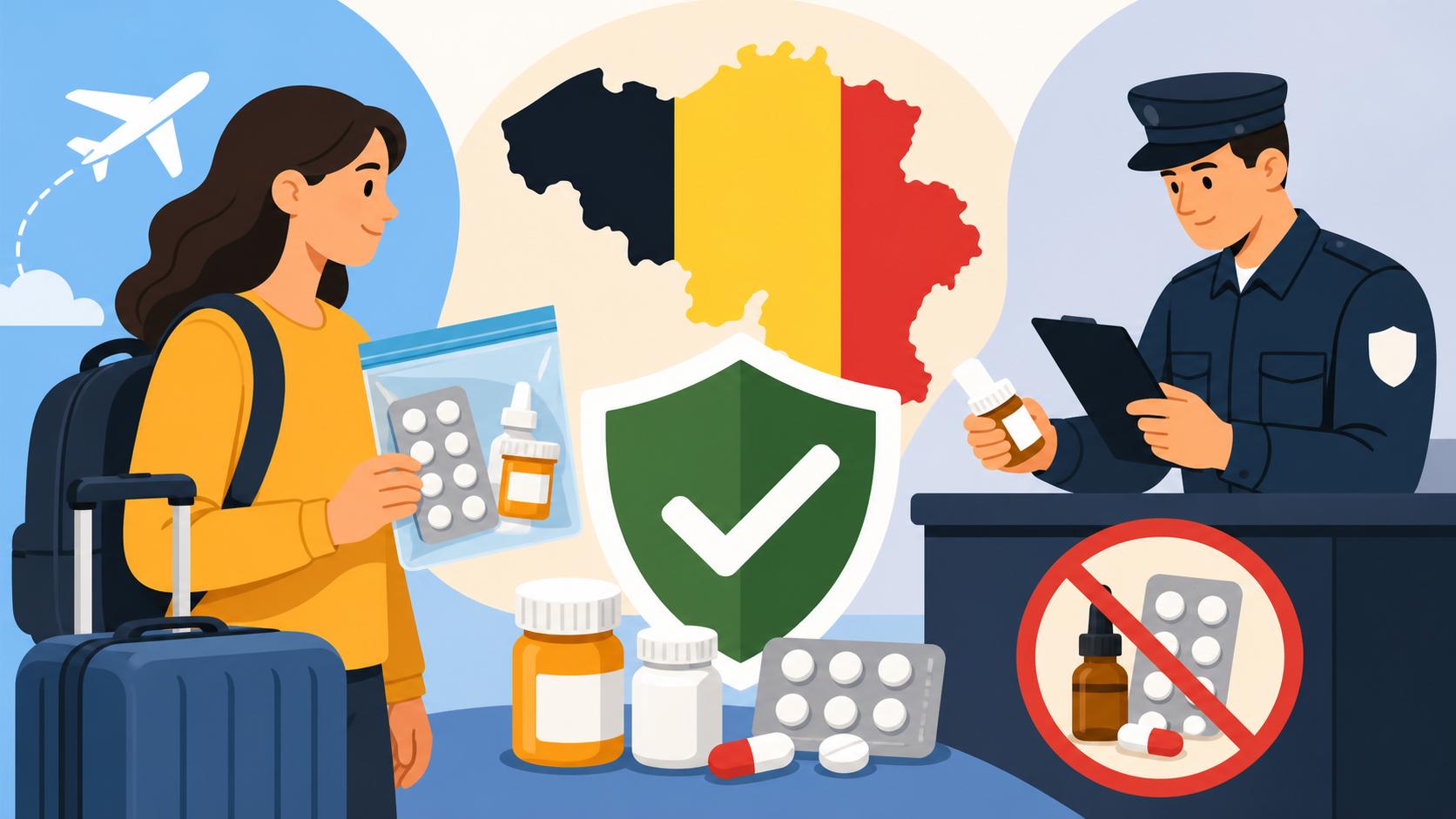
When you first arrive at Zaventem or Brussels South Charleroi, you are likely carrying a suitcase full of your life, including a stash of essential medications. Belgium is generally reasonable about what you carry on your person, provided it is clearly for personal use. The unofficial "grace period" for many expats involves bringing enough to last until they complete their Registering at the Commune: The 8-Day Rule After Arrival process and get settled into the local healthcare system.
The Three-Month Supply Rule
The Federal Agency for Medicines and Health Products (FAMHP) in Belgium generally allows travelers to carry a "reasonable" amount of medication for personal use. In practice, this is defined as a three-month supply. If you are moving here for a long-term contract and try to bring a full year’s worth of specialized medication, you are stepping into a legal gray area. Customs officers may suspect you of intent to distribute if the volume looks commercial. I’ve seen expats get pulled aside because they had six boxes of the same brand; the key is to stay within that 90-day window to avoid suspicion.
If your condition requires a supply longer than three months—perhaps because your specific medication isn't available in Europe—you must have a very detailed medical dossier. Even then, it is often easier to bring three months' worth and then work with a local doctor to find a Belgian equivalent. You’ll want to start Choosing Your First GP (General Practitioner) in Belgium as soon as you arrive to facilitate this transition, as they can write local prescriptions that are recognized by Belgian pharmacies.
Necessary Documentation and Doctor Letters
Never, under any circumstances, travel with prescription medication in "unmarked" containers or daily pill organizers if you haven't cleared customs yet. Everything should be in its original pharmacy packaging with your name clearly printed on the label. I always carry a "Letter of Medical Necessity" from my doctor back home. This letter should be in English, French, or Dutch and include the generic name of the drug (the INN), the dosage, and the specific condition it treats.
Having this documentation isn't just about customs; it’s about your safety in the Belgian medical system. If you end up in an emergency room before your Mutuelle and Ziekenfonds: Public Health Insurance Registration Guide is finalized, having a clear record of your current meds is vital. For those using specialized biologics or rare medications, consider using Medical Translation Services: Interpreters for Hospital Visits to ensure your home-country records are accurately understood by Belgian specialists who will eventually take over your care.
Traveling with Controlled Substances
This is where things get serious. If you are carrying narcotics, strong painkillers (like oxycodone), or certain psychotropic drugs, the standard doctor's letter isn't enough. If you are coming from within the Schengen Area, you need a "Schengen Certificate" legalized by the health authorities in your home country. If you are coming from outside the EU, like the US, Canada, or the UK, you need a legalized medical certificate that often requires an apostille or embassy verification depending on the strictness of the substance.
I have spoken to many parents who were terrified of bringing their child’s ADHD medication into the country. Because these are often classified as stimulants, the scrutiny is intense. It is highly recommended to read our specific breakdown on Bringing ADHD Medication (Stimulants) Into Belgium Legally to ensure you don't fall foul of the law. One wrong move here can result in the medication being confiscated at the border, leaving you or your family member in a difficult health situation during those first hectic weeks of relocation.
Ordering Medicine Online: The Customs Gauntlet
Once you are living in Belgium, the temptation to "just order it online" from your favorite home-country pharmacy is high. However, Belgium has some of the strictest postal customs in Europe regarding pharmaceuticals. The "personal use" defense that works at the airport luggage carousel rarely works with Bpost or DHL. When a package arrives from outside the EU, it is subject to inspection by both Customs and the FAMHP.
EU vs. Non-EU Shipping Realities
Shipping medication from another EU country is significantly easier because of the single market, but it still isn't a free-for-all. You can technically order over-the-counter (OTC) meds from an authorized online pharmacy in another EU member state. However, prescription-only medications (POM) cannot legally be mailed to an individual in Belgium from abroad, even from within the EU, unless you are using a very specific cross-border prescription system that most expats find too cumbersome to navigate.
If you are shipping from outside the EU—say, a refill from a pharmacy in New York or London—the package will almost certainly be intercepted. Customs will ask for a Belgian prescription to "clear" the package. But here is the catch: a Belgian doctor cannot legally write a prescription for a package that has already been sent from abroad. It’s a Catch-22 that usually ends with the package being sent back or destroyed. For your peace of mind, it is better to understand Pharmacies and Medication in Belgium: Prescriptions and OTC Rules and source what you need locally.
Prohibited Substances and Common Pitfalls
Many substances that are OTC in your home country might be strictly prescription-only in Belgium. Melatonin over a certain dosage, high-strength Vitamin D, and even certain hay fever medications require a script here. If customs finds these in a package, they will treat them as "unauthorized imports." I once tried to have a specific brand of American cough syrup sent over, only to have it seized because it contained an ingredient that is controlled in Belgium.
The administrative fee for "handling" a seized package can sometimes be more expensive than the medication itself. If you find yourself needing to navigate the local system for a refill, look into Refilling Foreign Prescriptions at a Belgian Pharmacy to see if your home-country script can be used at a local counter—though, spoiler alert, you usually need to visit a Belgian GP first to get a local version of that script for it to be valid for reimbursement.
Vitamins and Supplements through iHerb
For expats, iHerb is often a lifesaver for finding specific brands of vitamins, probiotics, or protein powders that aren't stocked in the local Apotheek. The good news is that supplements are generally treated as "foodstuffs" rather than "medicines," provided they don't make medicinal claims on the packaging. When ordering from iHerb to Belgium, ensure you keep your order value under the thresholds where heavy duties kick in, and always opt for shipping methods that include "duties and taxes paid" (DDP) to avoid the dreaded Bpost "administrative fee" at your doorstep.
However, be careful with herbal supplements that contain ingredients on the Belgian "Belfrit" list (a list of plants restricted in supplements). If you're using iHerb for routine wellness, it's a fantastic resource, but for anything that crosses the line into "treatment," the Belgian authorities will be much more eagle-eyed. If your supplement regime is part of a complex treatment for a chronic condition, you might want to discuss this with your insurer; check out Private Health Insurance in Belgium: When Do Expats Really Need It? to see if specialized supplements can be covered under certain premium plans.
Practical Comparison of Importing Methods
| Method | Limit | Documentation Needed | Risk Level |
|---|---|---|---|
| Luggage (In-person) | 3-month supply | Original labels + Doctor's letter | Low (if documented) |
| Mailing (Inside EU) | OTC only | Proof of purchase | Medium |
| Mailing (Outside EU) | Strictly prohibited for POM | None (usually seized) | High |
| Vitamins (iHerb) | Personal use amounts | Invoice/Ingredients list | Low/Medium |
| Controlled Meds | 30-day supply | Schengen Certificate or Legalized Letter | Very High |
Navigating the Belgian Pharmacy System
When your imported stash runs low, you’ll have to enter the Belgian pharmacy world. It’s a bit different than the aisles of a CVS or a Boots. In Belgium, pharmacies are highly regulated hubs where the pharmacist is a clinical expert who often knows your GP personally. You won't find aisles of candy or soda here—just medicine and high-end skincare.
Converting Foreign Prescriptions
If you have a prescription from an EU/EEA country, Belgian pharmacists are technically required to honor it, provided it contains all the necessary information (generic name, doctor's details, etc.). However, "technically required" and "actually doing it" can vary by commune. If you are coming from outside the EU, your home-country prescription is essentially a piece of scrap paper in the eyes of a Belgian pharmacist. It might help them identify what you need, but they cannot legally dispense medication based on it.
This is why your first month in Belgium should include a visit to a local doctor. They will take your foreign records and "translate" them into the Belgian system. This also allows you to set up a The Global Medical Record (DMG/GMD): Why You Need It for Better Refunds, which ensures that your medication history is centralized and that you pay the lowest possible co-pays. Without a DMG, you might find yourself paying full price for medications that should be 75% reimbursed.
Finding Equivalents for Home-Country Brands
Don't be surprised if your favorite brand name doesn't exist here. Tylenol is Paracetamols or Dafalgan; Advil is Nurofen. More importantly, the dosages might differ. I’ve seen expats get frustrated because they couldn't find the exact "Extra Strength" version of something they were used to. A Belgian pharmacist can usually find the chemical equivalent using the International Nonproprietary Name (INN).
If you are on a very specific brand-name drug for a chronic condition, your Belgian doctor can specify "no substitution" on the prescription, but be prepared to pay more. The Understanding the 75% Reimbursement System for Medical Consultations rules usually favor generic versions. If you insist on the imported brand name that the pharmacy has to special-order, the Mutuelle might not cover the price difference, leaving you with a hefty out-of-pocket bill.
The Role of the Mutuelle in Costs
The Belgian "Mutuelle" system is what makes healthcare here so affordable, but it only works if you play by the rules. Once you are registered, you will receive "vignettes" (stickers) or your eID will be linked to your insurance. When you go to the pharmacy with a Belgian prescription, you often only pay the "top-up" or co-payment at the counter—this is known as the "Tiers Payant" system.
If you are still waiting for your residence permit and using Private Health Insurance in Belgium: When Do Expats Really Need It? like Cigna Global, you will likely have to pay the full price at the pharmacy and then submit the receipt for reimbursement. Cigna Global is particularly useful for expats who have pre-existing conditions and need to maintain a specific medication brand that the local Belgian public system might try to swap for a generic. They offer the flexibility that the local Mutuelle sometimes lacks during your first year of integration.
Specific Challenges for Chronic Conditions
Managing a chronic illness as an expat adds a layer of administrative "fun" to an already stressful situation. Belgium has excellent care, but the gatekeeping for certain drugs is much stricter than in many other countries. You cannot simply "walk in" and get a refill for high-stakes medication.
Managing Insulin and Biologics
If you are moving with Type 1 Diabetes or an autoimmune disorder requiring biologics (like Humira), the logistics of "importing" your initial supply are stressful. These medications require a "cold chain"—meaning they must stay refrigerated. I’ve heard horror stories of people’s insulin being held in a warm customs warehouse for three days because of a missing form.
For these conditions, do not rely on the mail. Bring your three-month supply in a cooled travel pack in your carry-on luggage. Once in Belgium, you will likely need to see a specialist (Endocrinologist or Rheumatologist) rather than just a GP to get your local prescriptions. The wait times for specialists can be long, so book your appointments as soon as you have your temporary Residence Registration: Annexes, Communes, and the eID Card documents.
Long-Term Insurance and Specialized Care
If your condition is rare, your medication might not be on the "reimbursable list" in Belgium. This is where having a robust international policy like Cigna Global can be a literal lifesaver. While the Belgian state system is fantastic for 95% of people, that 5% with rare conditions can struggle with the local "formulary" (the list of approved drugs). Cigna Global can often cover treatments and "imported" medications that the local Ziekenfonds might reject.
It's also worth noting that if you are working for an international organization or a large multinational, you might have "extra-legal" insurance. Always check if this covers "ambulatory care" (medication outside the hospital). Many people assume their work insurance covers everything, only to find out it only pays for hospital stays, leaving them to cover their expensive monthly prescriptions out of pocket.
Communicating with Belgian Customs
If a package of yours is stuck in customs, don't just wait for a letter. The Belgian customs (Douane) and Bpost can be slow. If you have a tracking number that says "Held by Customs," you should proactively contact the Bpost "Foreign Mail" department. They will usually ask for an "Avis de Dédouanement" (customs clearance notice).
Be honest but firm. If it’s vitamins from iHerb, provide the invoice immediately. If it’s medication and you made the mistake of having it mailed, be prepared for the fact that it might be destroyed. Arguing with a Belgian customs officer about how "legal it is back home" is a losing battle. They follow the EMA (European Medicines Agency) guidelines to the letter.
Important Contacts for Medication Logistics
| Organization | Purpose | Contact Info |
|---|---|---|
| FAMHP (AFMPS) | Federal Agency for Medicines | www.famhp.be |
| Bpost Customs | Package tracking and clearance | 02 276 70 70 |
| Belgian Poison Centre | Emergency ingestion/reactions | 070 245 245 |
| Federal Public Service Finance | Import duties and VAT rules | finance.belgium.be |
Final Practical Tips for Smooth Transition
The best advice I can give after years of helping people navigate this is to treat your medication like your passport: it's the one thing you cannot afford to mess up. Plan your "handover" from your home doctor to your Belgian doctor with at least two months of overlap. Don't wait until you have two pills left to realize the Belgian specialist has a six-week waiting list.
Also, get to know your local pharmacist. In the smaller neighborhoods of Ixelles, Etterbeek, or Antwerp's city center, the pharmacists are incredibly helpful. If you show them your empty bottle from home, they will often go out of their way to find the Belgian equivalent or call a local GP to see if they can help you get a "bridge" prescription. They are your best allies in navigating the local rules.
Finally, keep a digital folder of all your prescriptions and your "Letter of Medical Necessity." If you ever lose your bags or a package gets seized, having those PDFs on your phone can speed up the process of getting a local doctor to help you. Belgium's medical system is world-class, and once you are "in," it’s seamless—you just have to survive the customs gauntlet to get there.
Medical Import Disclaimer
This guide is based on personal expat experience and current Belgian regulations. However, medical laws and customs policies are subject to change without notice. Always consult with the Belgian Federal Agency for Medicines and Health Products (FAMHP) or the Belgian Embassy in your home country before transporting or shipping controlled substances. This information does not constitute legal or medical advice.