SOS Médecins Brussels: How to Call a Doctor to Your Home
Waking up at 2 AM in a drafty Brussels apartment with a fever that won't quit and a throat that feels like it’s swallowing glass is a terrifying rite of passage for every expat. I still remember my first winter in Schaerbeek, shivering under three blankets and staring at my phone, wondering if I should call an ambulance or just suffer until morning. This guide is here to ensure you don't have to guess; I’m going to walk you through exactly how to use SOS Médecins Brussels to get a doctor to your front door when your regular GP is sound asleep.
Understanding the SOS Médecins Service in Brussels
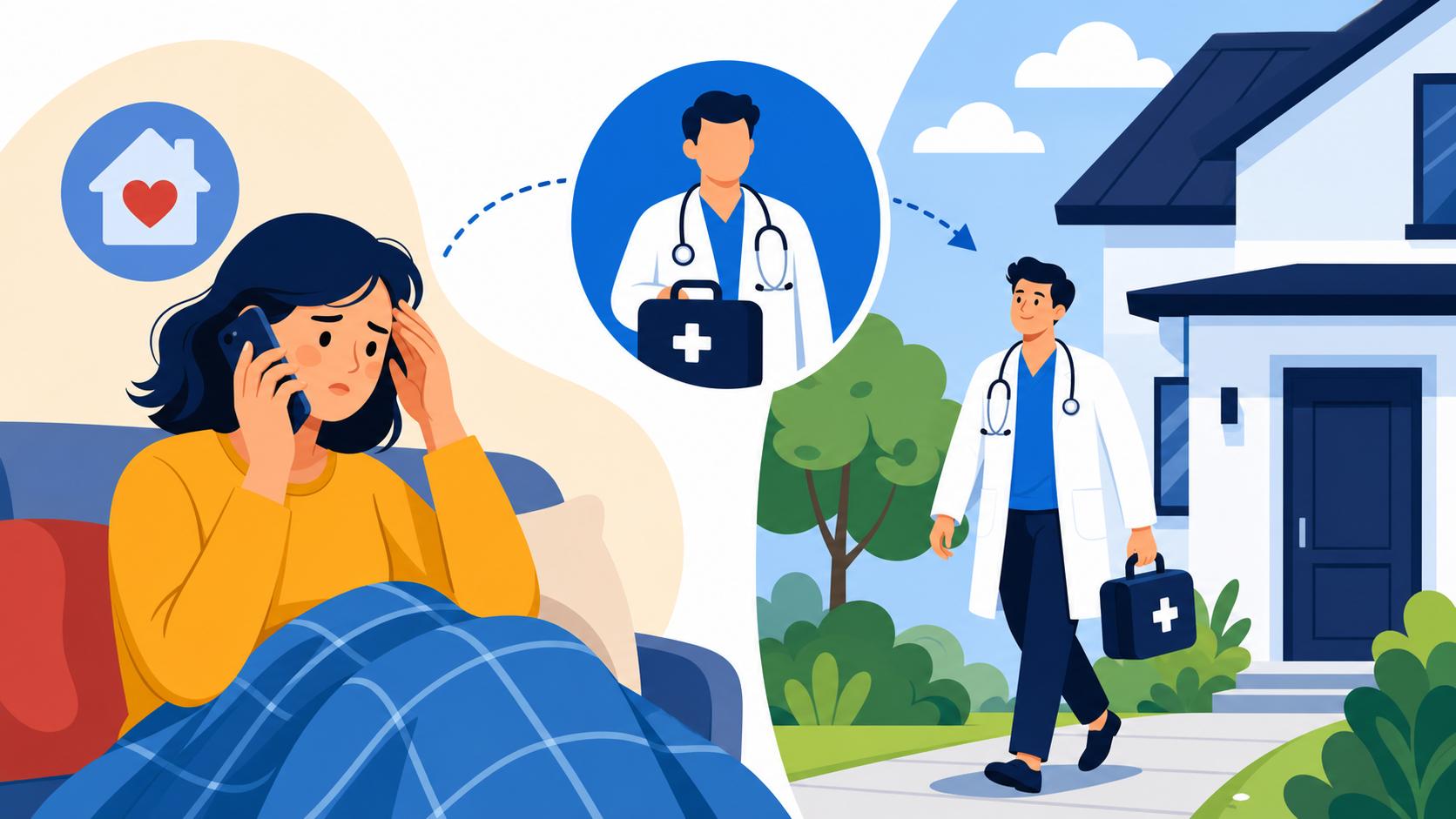
SOS Médecins is a private association of medical practitioners who provide 24/7 home-visit services across the 19 communes of Brussels. It is not a government agency, but it is deeply integrated into the Belgian healthcare landscape. They bridge the gap between your local GP's office hours and the heavy-duty emergency rooms of hospitals like Saint-Luc or Erasme. When you are too ill to commute or if it is a Sunday and every clinic in sight is shuttered, these are the people you call.
The service is designed for non-life-threatening medical issues that still require urgent attention. Think of things like severe flu symptoms, sudden rashes, acute back pain, or pediatric fevers. It is a lifeline for parents and those living alone who cannot easily navigate the city while incapacitated. However, it is vital to understand that they are a dispatch service. When you call, you aren't talking to a doctor immediately; you are talking to a dispatcher who evaluates your situation and puts you on a rotation list.
While the service is incredibly convenient, it operates on a "triage and travel" basis. This means if there is a spike in flu cases across the city, your wait time might be several hours. I’ve had doctors arrive in forty minutes, and I’ve had them arrive in three hours. The key is to stay patient and keep your phone nearby.
When to Call SOS Médecins vs Heading to the Emergency Room
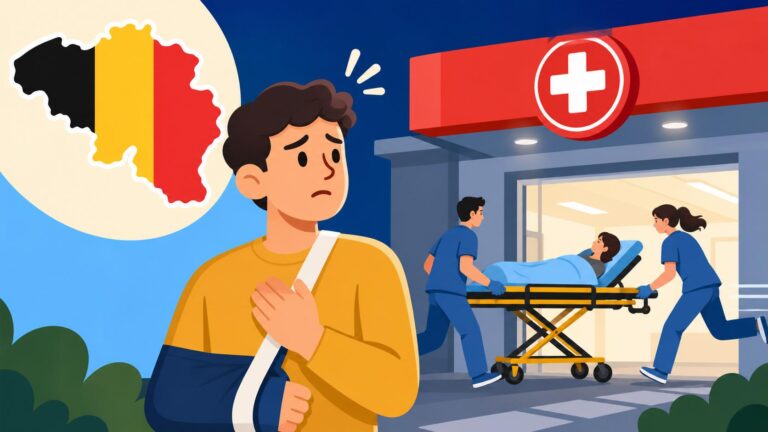
One of the biggest hurdles for foreigners in Belgium is knowing where to go for what level of pain. Calling SOS Médecins for a heart attack is a dangerous mistake, just as going to the ER for a simple prescription refill is a waste of your time and money. If you are experiencing chest pain, difficulty breathing, or heavy bleeding, you should immediately refer to our guide on Emergency Numbers: Calling 112 in Belgium and What to Expect. 112 is for life-and-death situations.
SOS Médecins is for "urgent but stable" conditions. If you can wait a few hours for a visit but cannot wait until Monday morning, they are your best bet. If you find that your condition is manageable but you just need a professional opinion, you might also consider visiting one of the fixed guard posts in the city. You can find more details on these in our article about After-Hours Medical Care: On-Call Doctors (Garde/Wacht).
The beauty of the home visit is that the doctor comes to your environment. They can see if your apartment is particularly damp (common in older Brussels buildings) or if there are environmental factors contributing to your illness. It also saves you from sitting in a crowded waiting room with other sick people, which is the last thing you want when your immune system is already compromised.
The Practical Steps of Booking a Home Visit
When you are ready to make the call, dial 02 513 02 02. This is the central number for SOS Médecins Brussels. While many dispatchers speak English, it is helpful to have your basic information ready in French or Dutch if possible, just in case. You will need to provide your exact address, including the floor and any specific door codes or intercom instructions. Brussels street names can be tricky, so be precise.
The dispatcher will ask for a brief description of your symptoms. Be honest and detailed. Mention your age and if you have any pre-existing conditions. After this, they will give you an estimated wait time. Do not expect a precise arrival time; they will usually say something like "between one and three hours." During this time, I highly recommend getting your paperwork ready. You will need your Belgian eID card or your ISI+ card for children. If you haven't received these yet, have your passport and any temporary residency documents handy.
If you are a new arrival and haven't fully set up your local insurance yet, you might feel a bit of "bureaucracy anxiety." In these cases, having a robust international policy from a provider like Cigna Global can be a massive relief, as they often cover these types of urgent home visits without the same administrative hurdles as the local mutuelles.
Fees and the Reimbursement Process
Let’s talk about the part everyone dreads: the bill. In Belgium, medical fees are regulated, but home visits, especially at night or on weekends, carry a premium. A standard daytime home visit might cost around 40 to 60 euros, but a night visit (after 9 PM) or a Sunday visit can easily climb to 80 or 100 euros.
The doctor will usually expect payment on the spot. Most SOS Médecins doctors now carry portable Bancontact terminals, but it is always a good idea to have some cash ready just in case the technology fails. Once you pay, the doctor will give you a paper receipt or an electronic "eAttest." This is your golden ticket to getting your money back. If you are registered with a local mutuelle, you will submit this to receive a significant portion of the cost back—usually around 60% to 75% depending on your status.
| Service Time | Estimated Cost (Base) | Mutuelle Reimbursement | Out of Pocket (Approx) |
|---|---|---|---|
| Weekday (8 AM – 6 PM) | €40 – €55 | ~75% | €10 – €15 |
| Evening (6 PM – 9 PM) | €60 – €75 | ~70% | €18 – €22 |
| Night (9 PM – 8 AM) | €85 – €110 | ~70% | €25 – €35 |
| Weekend / Bank Holiday | €70 – €95 | ~70% | €21 – €28 |
For a deeper dive into how these calculations work, check out our post on Understanding the 75% Reimbursement System for Medical Consultations. If you have private supplemental insurance through your employer or a company like Cigna Global, you can often claim back the remaining out-of-pocket "co-payment" as well.
Preparing Your Home for the Doctor's Arrival
When the doctor arrives, they are often on a very tight schedule. To make the process smoother, clear a small space where they can set down their medical bag and examine you. Ensure the path from your front door to your bed or sofa is clear. I always keep a list of my current medications on the nightstand. If you’ve been taking supplements or over-the-counter meds you ordered from iHerb to manage your symptoms before calling, make sure to show the bottles to the doctor.
The doctor will perform a standard check: blood pressure, listening to your lungs, checking your throat and ears. They can issue prescriptions (ordonnances) on the spot. In Belgium, most prescriptions are now digital and linked to your eID, but for SOS Médecins, they may still provide a paper version to ensure you can get to a pharmacy immediately. If it's the middle of the night, you will need to find a "pharmacie de garde."
If you are a frequent traveler or an expat who prefers specific brands of wellness products, you probably already use iHerb for your vitamins and minerals. While the doctor will prescribe the "heavy hitters" like antibiotics or high-dose painkillers, you’ll still want to keep up with your recovery using your trusted supplements. Just remember that the doctor’s advice always takes precedence over your usual vitamin routine.
Language Barriers and Communication Tips
Brussels is a multilingual city, but medical terminology can be stressful even in your native tongue. Most doctors working for SOS Médecins are highly educated and have a working knowledge of English, but it’s not guaranteed. If your French or Dutch is shaky, use simple sentences. "I have a fever" (J'ai de la fièvre / Ik heb koorts) or "It hurts here" (Ça fait mal ici / Het doet hier pijn) goes a long way.
If you are worried about the communication aspect, it might be worth looking into Finding English-Speaking Doctors in Brussels, Antwerp, and Ghent for your regular care so you have a baseline of support. However, in an SOS situation, the priority is the medical exam. If you have a friend who speaks the local language, having them on speakerphone to help translate can save a lot of frustration.
Don't be afraid to ask the doctor to write down the diagnosis. This helps later when you are trying to explain the situation to your regular GP or when you are filing a claim with Cigna Global. Having a written record prevents things from getting lost in translation during the haze of a high fever.
After the Visit: Follow-up and Documentation
The SOS Médecins visit is a temporary solution. The doctor's primary goal is to stabilize you or start a treatment plan that carries you through the weekend. One of their first questions will often be: "Who is your regular doctor?" If you haven't settled on one yet, you should read our guide on Choosing Your First GP (General Practitioner) in Belgium.
The visiting doctor will provide you with a medical report (rapport de consultation). It is your responsibility to share this with your regular GP. If you have a Global Medical Record set up, this process is much smoother. You can learn why this is so important in our article: The Global Medical Record (DMG/GMD): Why You Need It for Better Refunds.
Also, pay close attention to the medication instructions. Belgian pharmacies have strict rules about what they can dispense. You can find more info on this in Pharmacies and Medication in Belgium: Prescriptions and OTC Rules. If the doctor suggests a specific recovery regimen involving electrolytes or specialized vitamins, check if you have them in stock or if you need to place a quick order on iHerb to replenish your supply once you're back on your feet.
Common Obstacles for Expats Using SOS Médecins
The most common frustration I hear from fellow expats is the wait time. It is important to remember that SOS Médecins is a collective of doctors, not an infinite resource. On a snowy Monday night in January, the whole city is sick. If your wait time is quoted as four hours, use that time to rest, hydrate, and prepare your documents.
Another hurdle is the "Police Check" or address verification. If you have just moved and your name isn't on the doorbell yet, the doctor might have trouble finding you. In Brussels, many apartment buzzers are unlabeled or use the previous tenant’s name. Make sure you tell the dispatcher exactly what the name on the doorbell says. If you are currently in the process of Registering for Public Health Insurance: Step-by-Step at Your Commune, make sure you have your "Annex" documents ready to show the doctor you are legally in the system.
Finally, keep in mind that SOS Médecins doctors are not there to provide long-term sick notes (certificats médicaux) for weeks at a time. They can usually provide a note for 2 or 3 days to cover your immediate absence from work. For anything longer, you will need to see your regular GP once their office opens.
Why Having Private Backup Matters
While the Belgian public system is world-class, the administrative lag can be real. If you are waiting for your mutuelle stickers (vignettes) or your eID is stuck in a bureaucratic loop at the commune, paying for an SOS visit out of pocket can feel like a hit to your budget. This is where having a private international health plan becomes a literal lifesaver.
Providers like Cigna Global are accustomed to the high costs of private urgent care and can often process these claims based on the English-translated invoice the doctor provides. It gives you a layer of financial protection that the standard Mutuelle and Ziekenfonds: Public Health Insurance Registration Guide might not fully cover in your first few months in the country. It’s that extra peace of mind that allows you to focus on getting better rather than counting coins while you have a migraine.
Beyond the medical visit, your recovery is about self-care. I always keep a "sick kit" in my pantry that I restock regularly via iHerb. Having ginger tea, high-quality Vitamin C, and zinc lozenges ready to go means I can start fighting the bug the moment I feel that first tickle in my throat, potentially avoiding the need for an SOS call altogether.
SOS Médecins Brussels Disclaimer
This article is intended for informational purposes for expats and tourists in Belgium and does not constitute professional medical advice, diagnosis, or treatment. Always seek the advice of a qualified healthcare provider with any questions regarding a medical condition. In the event of a life-threatening emergency, dial 112 immediately. The author is an expat sharing personal experiences and research, not a medical professional. Costs and procedures are subject to change by the provider and Belgian health authorities.