Morning-After Pill in Belgium: Pharmacy Access and Age Rules
Realizing your contraception failed in a foreign country where you might not yet speak the language is a unique brand of heart-pounding panic. I remember staring at a closed pharmacy door on a rainy Sunday in Brussels, feeling completely overwhelmed by the bureaucracy I assumed was waiting for me. This guide clears the confusion regarding emergency contraception in Belgium.
Understanding Emergency Contraception in Belgium
The first thing you need to know is that emergency contraception, commonly known as the morning-after pill, is widely available and highly accessible across the country. In Belgium, this is treated as a fundamental part of reproductive healthcare. Unlike some other countries where you might face a barrage of questions or a moral lecture, the Belgian approach is generally pragmatic and professional. Whether you are an expat living in Antwerp or a tourist visiting the Ardennes, the process for obtaining help is standardized.
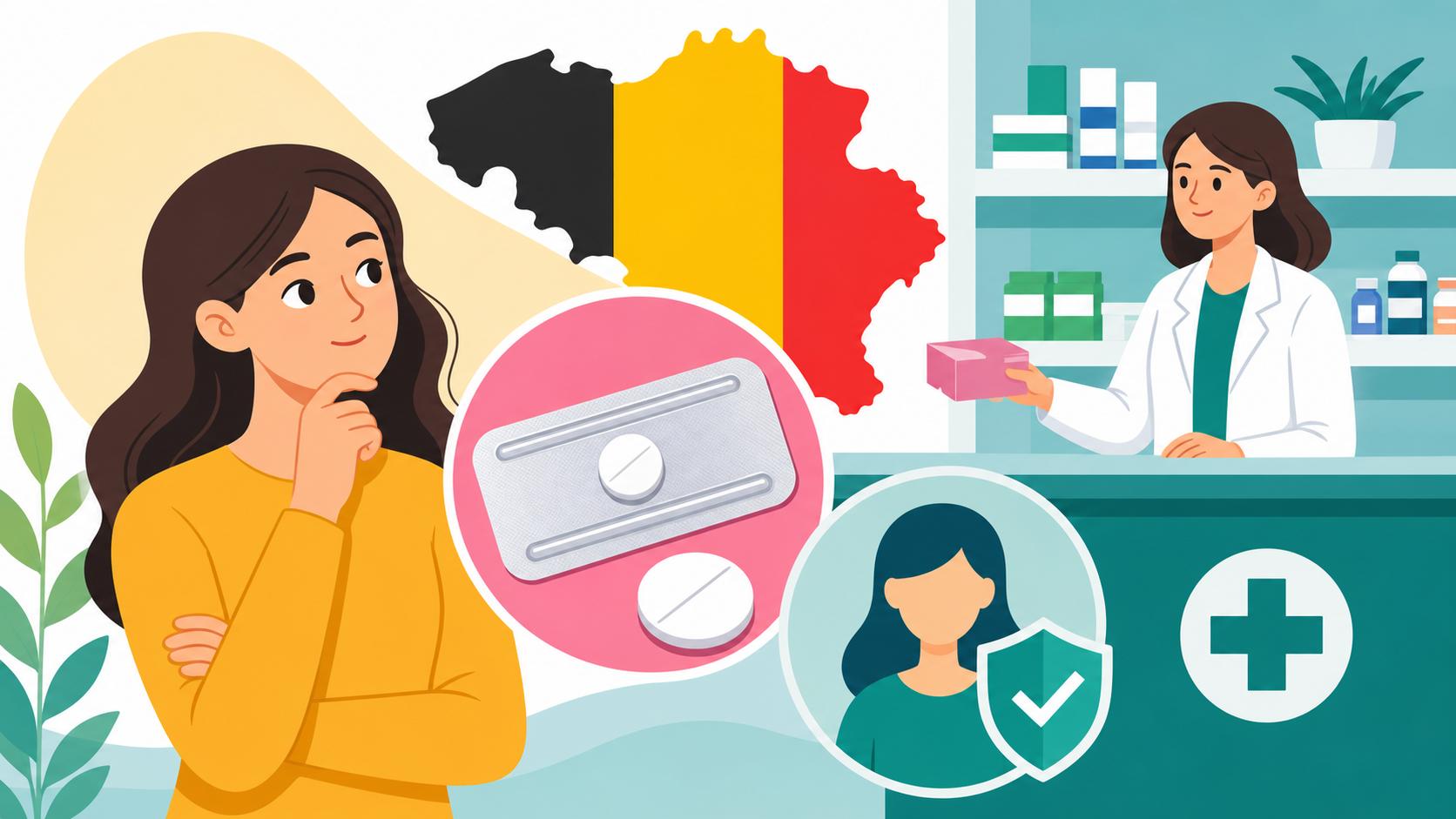
When you walk into a pharmacy, you are looking for what is locally called "la pilule du lendemain" in French or "de noodpil" in Dutch. You do not need a doctor's prescription to purchase it. This is a critical point because, as many of us know, Finding Medical Care in Belgium: GPs, Specialists, and Hospitals can sometimes take a day or two for a non-emergency appointment, and with emergency contraception, every hour counts. The availability of over-the-counter options ensures that you can take action immediately without waiting for a consultation.
It is worth noting that while basic public insurance is excellent, many expats prefer the additional peace of mind provided by private providers like Cigna Global. Having a premium international policy can often simplify the process of reclaiming costs for various health-related needs or accessing private clinics if you require follow-up care. Whether you are covered by the state or a private entity, the immediate access at the pharmacy counter remains the same for everyone.
Types of Morning-After Pills Available
There are two primary types of emergency contraceptive pills sold in Belgian pharmacies. The most common contains levonorgestrel (often branded as NorLevo or similar). This version is effective if taken within 72 hours (three days) of unprotected intercourse. However, its efficacy drops significantly the longer you wait, so the "morning-after" moniker is truly a suggestion to act as fast as possible.
The second type contains ulipristal acetate (often branded as ellaOne). This is a more modern formulation that remains effective for up to 120 hours (five days) after the event. While it has a longer window, it is also more expensive. When you speak to the pharmacist, they will likely ask how long it has been since the incident to recommend the most appropriate version for your situation.
While these pills are the primary solution, it is important to remember that they are not a substitute for regular contraception. If this is a recurring concern, you might want to look into Women’s Health in Belgium: Gynecology, Screenings, and Birth Control to discuss long-term options with a specialist. In the meantime, keeping your general health up is a priority; many expats use iHerb to source vitamins and supplements that support hormonal balance and recovery after the stress of an emergency health situation.
The Role of the Pharmacist
In Belgium, pharmacists are highly trained medical professionals who play a gatekeeper role in the healthcare system. When you ask for the morning-after pill, they are required to provide a brief consultation. This isn't an interrogation; it’s a safety check. They will ask about the timing of the unprotected sex, if you are currently breastfeeding, and if you have any severe allergies or underlying conditions like Crohn’s disease that might affect the pill's absorption.
If you are worried about the language barrier, don't be. In major cities like Brussels, Ghent, or Leuven, most pharmacists speak excellent English. If you are in a more rural area, using a translation app or simply saying the brand names "ellaOne" or "NorLevo" will get the point across immediately. They are used to helping internationals and generally maintain a very high standard of discretion.
For those who are in Belgium on a long-term basis, having a dedicated insurance plan from Cigna Global can be a lifesaver if any complications arise from medication. While the morning-after pill is generally very safe, having access to a 24/7 medical helpline through your private insurance can provide that extra layer of comfort when you're navigating a foreign medical system alone.
Age Rules and Confidentiality
Belgium has some of the most progressive laws in Europe regarding reproductive rights and age. One of the most common fears for younger expats or students is that they will need parental consent or that their "mutuelle" (health fund) will notify their family. This is not the case. The Belgian system is designed to prioritize the health and autonomy of the individual, regardless of their age.
For anyone over the age of 18, the process is entirely confidential. But even for minors, the morning-after pill is accessible without parental permission. Pharmacists are trained to handle requests from teenagers with sensitivity. The goal is to prevent unwanted pregnancies, and the Belgian government recognizes that barriers like parental consent often lead to delays that render the medication ineffective.
If you are a student or a young worker, it is helpful to understand Compulsory Coverage Basics: Who Must Enroll in Mutuelle/Ziekenfonds to ensure you are getting the most out of the system. For those under 25, there are often specific financial advantages that make the pill even more accessible, which we will detail in the following sections.
Rights for Minors and Young Adults
In Belgium, the morning-after pill is actually free (or nearly free) for women under the age of 25, provided they have a Belgian identity card or a valid social security number linked to a mutuelle. This is part of a national initiative to lower the barriers to emergency care for young people. When you go to the pharmacy, you simply present your eID card. The pharmacist scans it, and the system automatically applies the discount or full reimbursement.
If you are a minor and do not want the transaction to show up on a family insurance statement, you can discuss this with the pharmacist. Usually, the direct-billing system (tiers-payant) means the money is handled between the pharmacy and the health fund directly, but if you are truly worried, you can choose to pay the full price in cash to ensure no digital footprint remains on the family's "e-Fact" portal.
Beyond the emergency, maintaining your health as a young expat involves more than just crisis management. Many students in Belgium rely on iHerb for affordable, high-quality supplements that might be harder to find in local supermarkets. Keeping your immune system and stress levels in check is vital when you're juggling studies and the administrative hurdles of living abroad.
Privacy and Discretion in the Pharmacy
The layout of a typical Belgian pharmacy usually includes a discrete corner or a high counter to allow for private conversations. If the pharmacy is crowded and you feel uncomfortable, you can ask to speak with the pharmacist in a more private area. Most Belgian professionals will understand immediately. Your data is protected by strict GDPR laws, and the pharmacist is bound by professional secrecy.
If you are using a global health plan like Cigna Global, you might wonder how privacy works with international claims. Generally, these providers are very accustomed to handling sensitive reproductive health claims with total confidentiality. They provide a bridge between the local Belgian system and your need for a private, high-tier service.
It is also important to know what to do if you encounter a pharmacist who refuses to provide the pill based on personal beliefs. While rare, "conscientious objection" is technically allowed, but the pharmacist is legally obligated to immediately direct you to another nearby pharmacy that will provide the service. Never take a "no" as the final word; simply move to the next "apotheek" or "pharmacie" down the street.
Where and How to Buy It
Finding a pharmacy is usually easy, but the timing of your emergency might coincide with a public holiday or a Sunday. Belgium has a strict "garde" (on-call) system to ensure that at least one pharmacy in every district is open 24 hours a day. If your local pharmacy is closed, there will always be a list posted on the door indicating the nearest open pharmacy.
To find the nearest open location digitally, you can visit pharmacie.be (for French speakers) or apotheek.be (for Dutch speakers). You enter your postal code, and it provides a map of the "pharmacie de garde." Be aware that if you visit a pharmacy after hours (usually after 10:00 PM), there may be a small "emergency fee" added to the price of the medication, though this is often reimbursed by your mutuelle later.
If you are newly arrived and still Registering for Public Health Insurance: Step-by-Step at Your Commune, you may not have your eID card yet. In this case, you can still buy the pill, but you will have to pay the full price upfront. Keep the receipt! Once your insurance is active, you can submit the "attest" (the green or white slip) for a partial refund.
| Service Feature | Levonorgestrel (e.g., NorLevo) | Ulipristal Acetate (e.g., ellaOne) |
|---|---|---|
| Time Window | Up to 72 Hours | Up to 120 Hours |
| Prescription Needed? | No | No |
| Cost (Approximate) | €10 – €15 | €25 – €30 |
| Under 25 with Mutuelle | Free / Near Free | Free / Near Free |
| Where to buy | Any Pharmacy | Any Pharmacy |
Cost and Reimbursement (Mutuelle)
The price of the morning-after pill in Belgium is regulated, so you won't see wild price gouging between different shops. Typically, you can expect to pay between €10 and €30 depending on the brand and the time window it covers. If you have a Belgian mutuelle, a significant portion of this cost is covered. To make this work, the pharmacist will need to see your Belgian eID card.
If you are an expat who hasn't quite finished the paperwork, check How Long Does It Take to Get Your Mutuelle Stickers (Vignettes)? as these are sometimes used instead of the digital eID for older systems. However, almost everything is digital via the eID or the "Itsme" app. If you are using Cigna Global, keep your detailed invoice (the facture) to submit through their mobile app for reimbursement according to your specific plan.
For those looking to save on general wellness products after the expense of an emergency, iHerb is a fantastic resource for expats in Belgium. While they don't sell the morning-after pill, they are the go-to for everything from folic acid to probiotics, helping you save your "Belgium budget" for the higher costs of local pharmacy-only medications.
The On-Call (Garde) System Explained
The "pharmacie de garde" system is a lifesaver but can be intimidating if you've never used it. After hours, the pharmacy doors are often locked for security. You will need to ring a bell, and the pharmacist will speak to you through a small window or an intercom. Do not be discouraged by this; it is standard procedure. Simply explain what you need, and they will process the transaction through the window.
If you are in a situation where you cannot reach a pharmacy, or if you need medical advice first, you should look into Emergency Medical Care in Belgium: 112, Hospitals, and Pharmacies. In extreme cases, the emergency room (spoedgevallen/urgences) at a hospital can also assist, but the pharmacy is always the faster and more appropriate route for the morning-after pill itself.
Remember that if you are using the on-call system at night, you might be asked for a reason for the emergency. "Contraception d'urgence" is all you need to say. They are there to help, not to judge. Having a reliable insurance partner like Cigna Global means that even if you end up needing a hospital visit due to a severe reaction or other complications, your costs and transport are managed by experts who understand the local landscape.
Medical Considerations and Next Steps
Once you have taken the pill, the immediate crisis is over, but there are a few things to keep in mind. The morning-after pill works by delaying ovulation; it does not "undo" a pregnancy that has already begun. If your period is more than a week late, you must take a pregnancy test. You can buy these at any pharmacy or supermarket in Belgium.
Side effects are relatively common but usually mild. You might experience nausea, fatigue, or some spotting. If you vomit within three hours of taking the pill, you must go back to the pharmacy and get another dose, as the medication may not have been absorbed. This is a common mistake that many people overlook in their stress.
If you find yourself feeling anxious or if the situation has caused significant stress, it might be helpful to look into Mental Health in Belgium: Therapy, Psychiatry, and Expat Support. Living abroad adds a layer of isolation to medical emergencies, and talking to a professional can help you process the event. In the meantime, many expats find that taking magnesium or B-vitamins from iHerb helps manage the physical toll that high-cortisol situations like this take on the body.
When to Seek Professional Advice
While the morning-after pill is an over-the-counter solution, there are times when you should follow up with a doctor. If you experience severe abdominal pain or if your next period is unusually light or heavy, it is important to rule out an ectopic pregnancy or other issues. You can book a follow-up through the Using the Rosa App: Booking Medical Consultations Online system, which is the most popular way for expats to find English-speaking doctors quickly.
If you are on other medications, particularly for epilepsy or tuberculosis, the morning-after pill might be less effective. In these cases, a copper IUD is actually the most effective form of emergency contraception. To get one, you would need to visit a gynecologist or a family planning center (like "Planning Familial" in Wallonia/Brussels or "Lunas" in Flanders).
Using a premium insurance provider like Cigna Global allows you to skip the long wait times for specialists and get an appointment with a top-tier gynecologist within days. They can also help coordinate the costs of the IUD insertion, which is a more "medical" procedure than simply taking a pill.
Follow-up Care and Long-term Planning
After an emergency, it is the perfect time to re-evaluate your long-term contraception. Belgian healthcare is world-class, and there are many options from implants to hormonal rings. Discussing this with a GP is the best way to start. If you haven't found one yet, check our guide on Choosing Your First GP (General Practitioner) in Belgium to find someone you feel comfortable with.
Don't forget to take care of your body in the weeks following. Stress and hormonal shifts can deplete your system. I always recommend that my fellow expats keep a stock of high-quality supplements from iHerb—things like Zinc and Vitamin D are especially important during the grey Belgian winters when your body is already under strain.
Finally, keep a record of when you took the emergency pill. Your doctor will ask for this during your next routine check-up. The Belgian system is highly integrated, and having your data ready helps them provide better care. If you have any doubts about your records, you can always check our MyHealth.belgium.be Guide: Accessing Your Medical Records Online to see what has been logged in your national file.
Health and Medical Disclaimer
The information provided in this article is for educational and informational purposes only and is not intended as medical advice. Always seek the advice of a qualified healthcare provider, such as a pharmacist or doctor, regarding any medical condition or treatment. The morning-after pill is an emergency measure and does not protect against sexually transmitted infections (STIs). If you believe you have been exposed to an STI, seek immediate testing at a clinic or GP. Global insurance plans like Cigna Global and supplements from iHerb are mentioned as resources for expat lifestyle management and do not constitute a medical prescription.